
Whether you are formulating a new Ready-To-Drink (RTD) beverage, designing a seasonal cafe menu, or sourcing ingredients for a commercial bakery, choosing the right grade of matcha is a critical business decision.
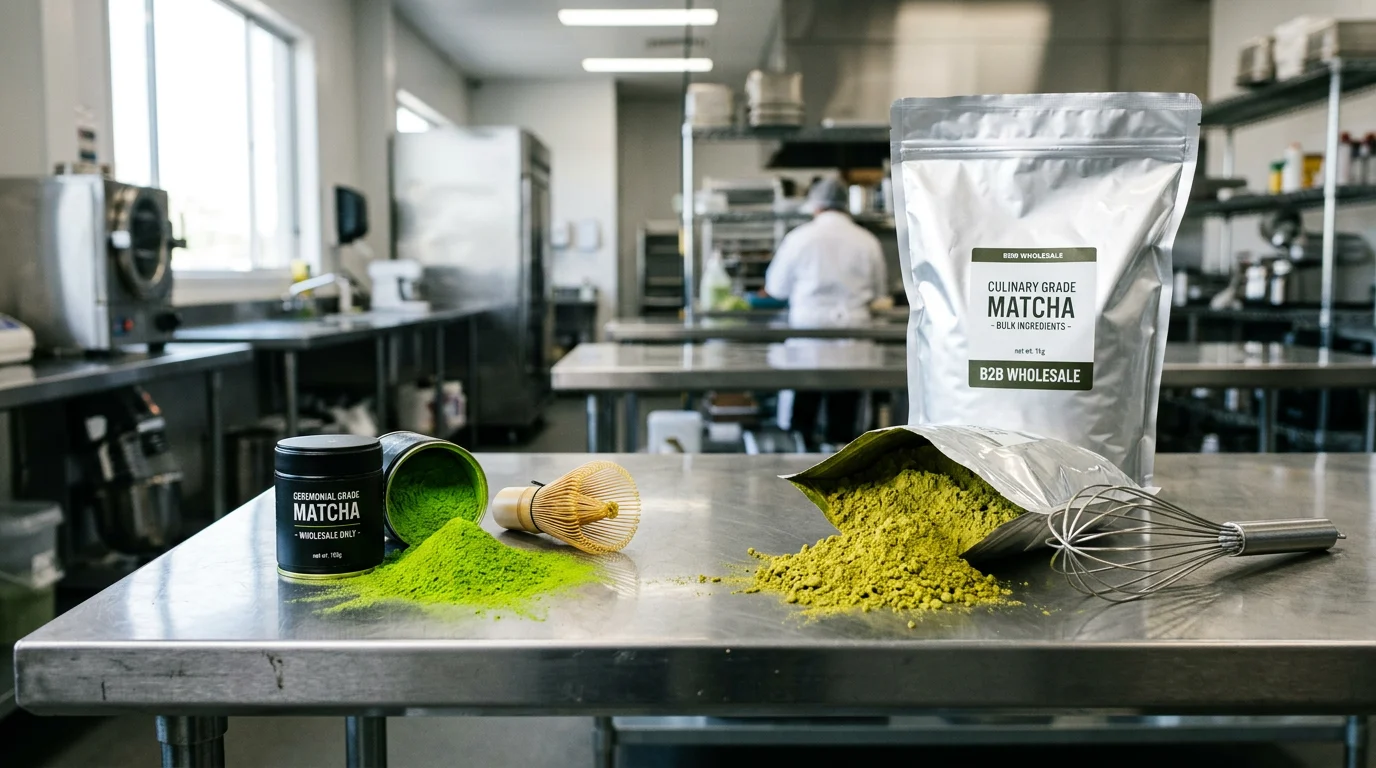
In the wholesale market, buyers are typically presented with two main categories: “Ceremonial Grade” and “Culinary Grade.” The price disparity between the two can be significant, often leaving product developers and procurement managers wondering: Are the premium grades necessary for our specific application, or will a cost-effective culinary grade yield the same results?
To optimize your supply chain and product quality, it is essential to understand that Japanese tea grading is not strictly regulated by a single governing body. Instead, terms like “ceremonial” and “culinary” serve as industry indicators of the tea’s intended commercial application. Neither is inherently superior; they are simply engineered for different end products.
Using a premium ceremonial matcha in a baked good destroys your profit margins and masks the tea’s delicate flavor, while serving a low-tier culinary matcha as a traditional tea will damage your brand’s reputation for quality.
Let’s break down the technical differences in agronomy, sensory profiles, and functional applications so you can make an informed sourcing decision for your business.
The Quick Comparison: Commercial Applications at a Glance
For procurement managers and R&D teams, here is a quick reference guide to distinguishing the two primary grades and their optimal commercial use cases.
| Specification | Ceremonial Grade Matcha | Culinary Grade Matcha |
|---|---|---|
| Visual Profile | Vibrant, neon emerald green | Muted, yellowish or brownish-green |
| Flavor Profile | Highumami, naturally sweet, smooth | Bold, astringent, robust |
| Harvest Period | Spring (First flush /Ichibancha) | Summer/Fall (Second or third harvest) |
| Processing | De-stemmed (Tencha), slow stone-milled | Machine-milled, higher volume production |
| Ideal Commercial Use | Traditional tea houses, premium RTD teas | Commercial baking, ice cream, FMCG products |
| Cost Implication | High material cost, premium retail pricing | Cost-effective, ideal for high-volume scaling |
The 4 Key Differences: A Technical Breakdown
Understanding the supply chain from farm to powder helps explain the price delta and dictates how each grade will perform in your commercial kitchen or manufacturing facility.
1. Agronomy and Harvesting (The Cost Driver)
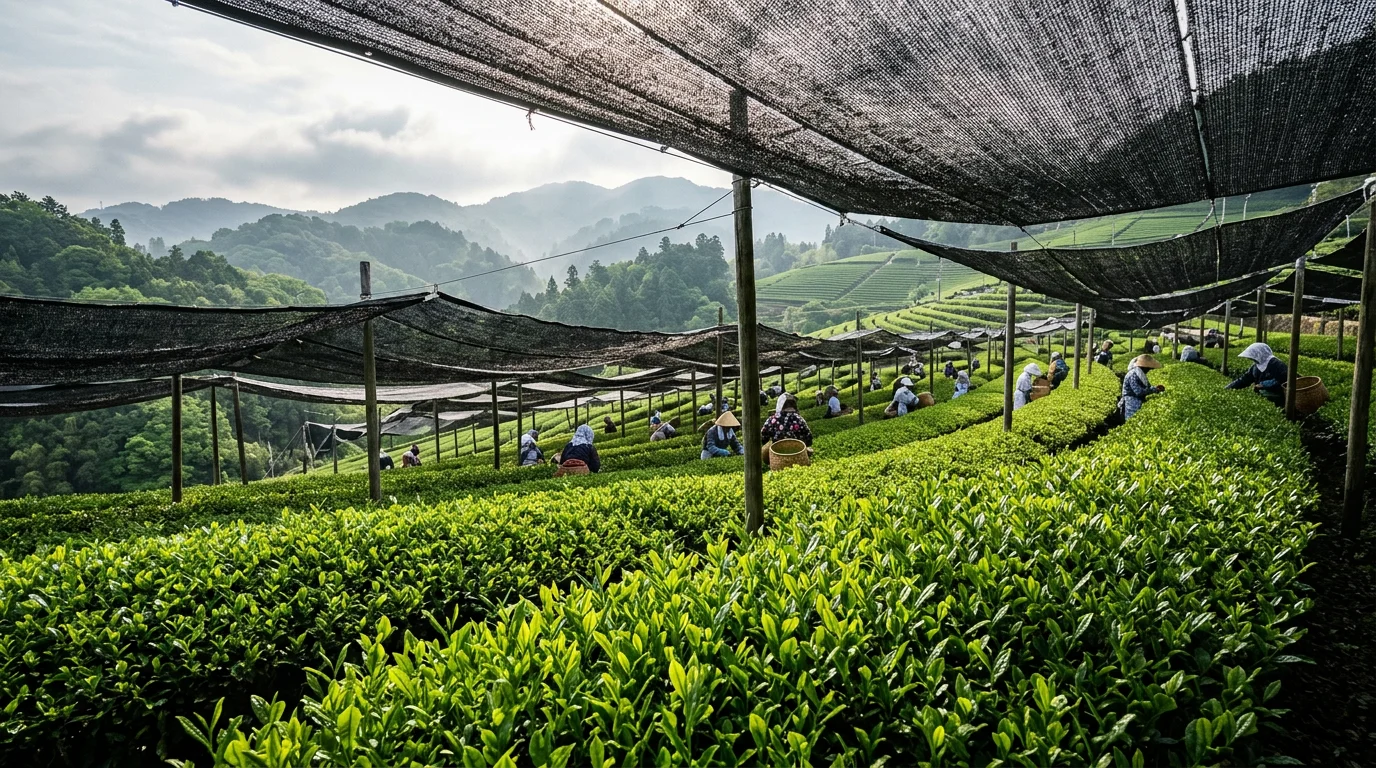
The extreme price premium of ceremonial matcha comes down to labor-intensive agronomy and low yield.
To cultivate ceremonial grade matcha, farmers implement a shading process (Tana technique) for 20 to 30 days prior to the spring harvest. This light deprivation triggers a stress response in the Camellia sinensis plant, forcing a massive overproduction of chlorophyll and amino acids. Only the youngest, most tender top leaves are harvested during the “first flush” (Ichibancha). The stems and veins are meticulously removed to create Tencha, which is then slowly ground using granite stone mills to prevent heat degradation.
Culinary grade matcha relies on a more scalable supply chain. It utilizes leaves from the second or third harvests (summer and fall), situated lower on the tea bush. These leaves are exposed to more sunlight and are structurally more mature. The processing is optimized for volume, utilizing modern ball mills or jet mills. This efficiency translates to a significantly lower wholesale cost, making it viable for mass-market food production.
2. Color and Mixability (Visual Appeal)
In the Food & Beverage industry, consumers eat with their eyes first.
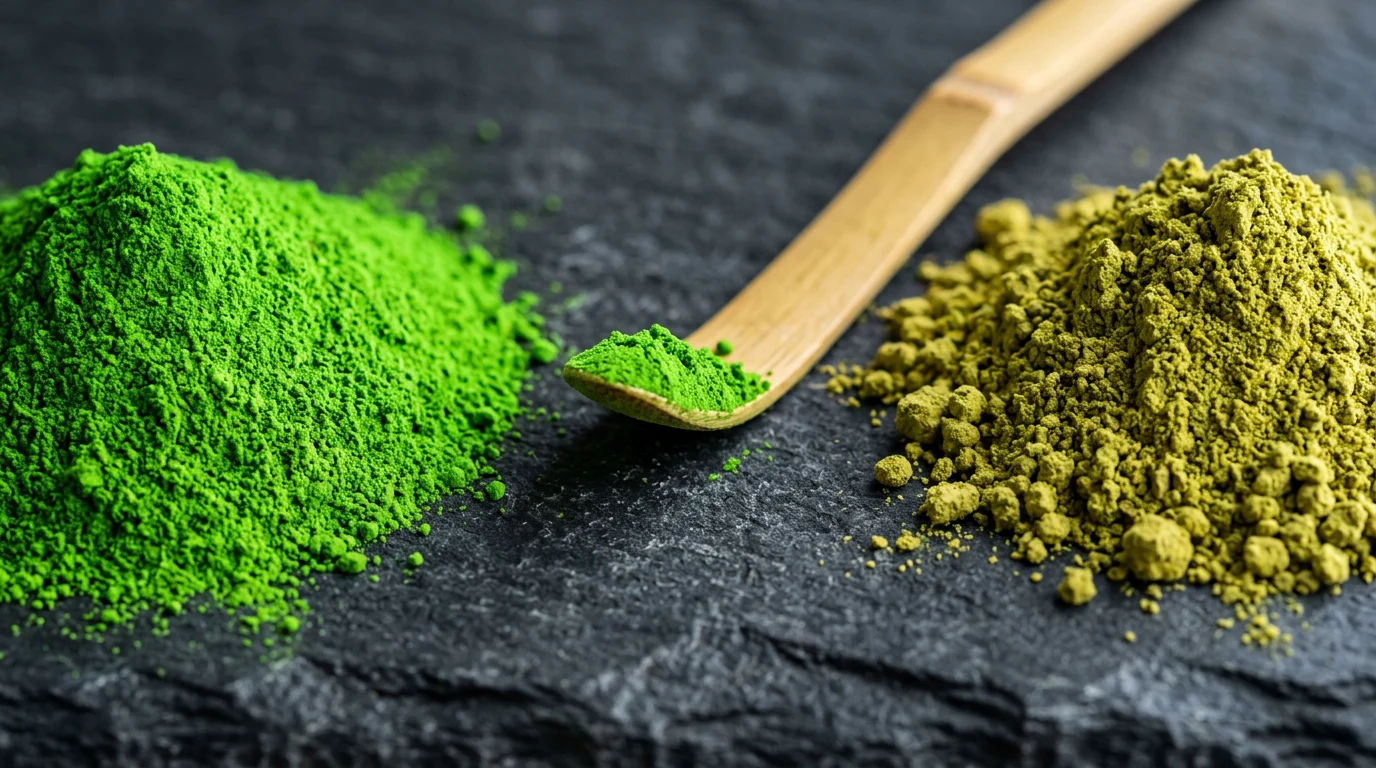
Because ceremonial matcha is heavily shaded and stems from the youngest leaves, it boasts an electric, vibrant emerald green. This high chlorophyll content is highly stable in water but delicate under heat. Its ultra-fine micron size (typically 5-10 microns) allows it to suspend beautifully in liquids, creating a luxurious mouthfeel for premium beverages.
Culinary matcha naturally exhibits a duller, slightly yellowish-green hue. Because its particle size can be slightly larger, it may require proper sifting or emulsification equipment when used in liquid applications. However, its robust cellular structure holds up incredibly well to the high temperatures of commercial ovens, making it the superior choice for baked goods where ceremonial matcha would turn brown and lose its visual appeal.
3. Flavor Formulation: Umami vs. Astringency
When formulating a product, the flavor interaction with other ingredients is your top priority.
High-quality ceremonial matcha is defined by umami—a high concentration of L-theanine that delivers a savory, naturally sweet, and smooth finish with minimal astringency. This grade is engineered to stand alone. If your product is simply “Matcha + Water,” this is your only option.
Culinary grade is defined by its bold, astringent, and slightly bitter profile (due to higher catechin levels). In food formulation, this astringency is a functional asset. If you are developing a matcha white chocolate, a heavily sweetened cafe latte, or a pastry, you need a bold flavor profile that can punch through heavy fats (butter, dairy, oils) and sugars. Ceremonial matcha’s delicate notes would be entirely neutralized in these applications, resulting in a bland end product and wasted capital.
4. Nutritional Marketing Claims
If your brand is positioned in the wellness or functional food space, the nutritional profile of your chosen grade will dictate your marketing claims.
Ceremonial grade’s shading process yields exponentially higher levels of L-theanine. This amino acid is highly sought after in the “clean energy” beverage sector because it works synergistically with caffeine to provide sustained focus without the typical “crash.”
Culinary matcha, having absorbed more sunlight, converts much of its L-theanine into catechins, specifically EGCG (a powerful antioxidant). If your product marketing focuses on metabolism boosting or high antioxidant content (e.g., detox smoothies or health bars), culinary grade provides an excellent, cost-effective functional ingredient.
Sourcing Guide: Which Grade Fits Your Business Model?
Align your procurement strategy with your specific menu items or product SKUs.
Source Ceremonial Grade If Your Business is a:
- Traditional Tea House or Premium Cafe: Serving traditional Usucha (thin tea) or Koicha (thick tea) prepared with water.
- Premium Wellness Brand: Formulating high-end dietary supplements or functional “clean energy” RTD beverages.
- Luxury Skincare Brand: Utilizing ultra-pure matcha for topical antioxidant formulations.
Source Culinary Grade If Your Business is a:
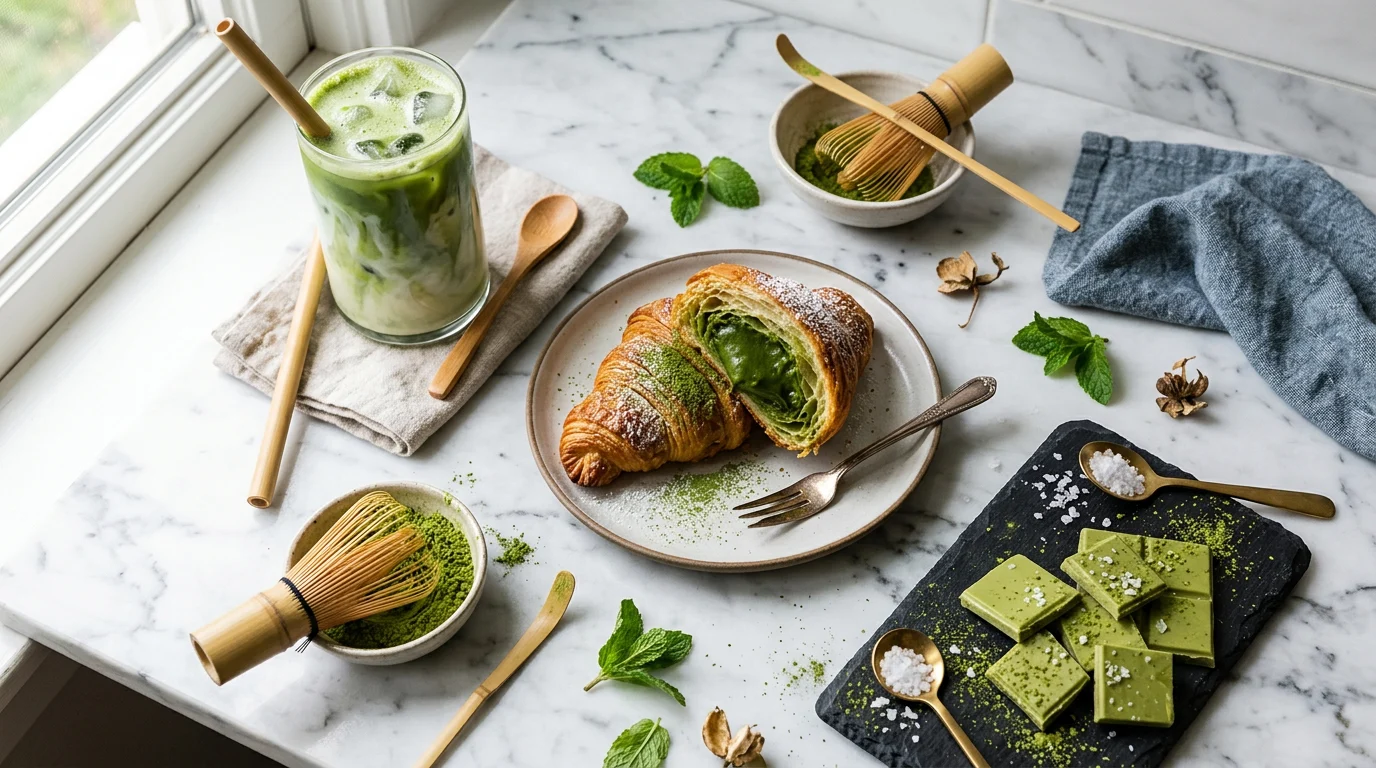
- Commercial Bakery or Patisserie: Producing matcha-flavored croissants, cookies, cakes, or mochi where the powder is subjected to high heat.
- Standard Cafe or Coffee Franchise: Serving heavily sweetened, milk-based matcha lattes or Frappuccinos. (Note: Many wholesale suppliers offer a mid-tier “Cafe Grade” or “Latte Grade” specifically formulated to balance cost and color for dairy applications).
- Ice Cream or Gelato Manufacturer: Requiring a robust flavor that can cut through heavy cream and sugar.
- FMCG Snack Brand: Developing flavored popcorn, chocolate bars, or protein snacks.
B2B Frequently Asked Questions
Can we use culinary grade for our cafe’s iced matcha lattes?
Yes, but with a caveat. Standard culinary grade may result in a muddy color. We highly recommend asking your supplier for a “Cafe Grade” or “Premium Culinary Grade.” This is a specialized blend that offers the bold flavor needed to cut through milk, while retaining a brighter green color for presentation and social media appeal.
What is the shelf life of bulk matcha?
Unopened, vacuum-sealed matcha stored in a cool, dark environment is typically viable for 12 months. However, once a bulk bag is opened, it oxidizes rapidly. For cafes and bakeries, we recommend purchasing in smaller, sealed increments (e.g., 100g to 500g bags) rather than large multi-kilo bags to ensure freshness and prevent color degradation.
Do you provide Certificates of Analysis (COA)?
Any reputable B2B wholesale supplier should provide a COA upon request. This document ensures the matcha has been tested for heavy metals, radiation, pesticides, and microbial content, which is essential for your brand’s compliance and quality assurance.
Partner With Us for Your Matcha Supply
Selecting the right matcha is critical to your product’s success and your bottom line. Our team specializes in sourcing authentic, directly traded Japanese matcha tailored for commercial applications.
Whether you need a bespoke ceremonial blend for your flagship cafe or a ton of consistent culinary powder for your manufacturing facility, we can help.
Contact our wholesale team today to request a product catalog, discuss bulk pricing, or order samples for your R&D kitchen.