
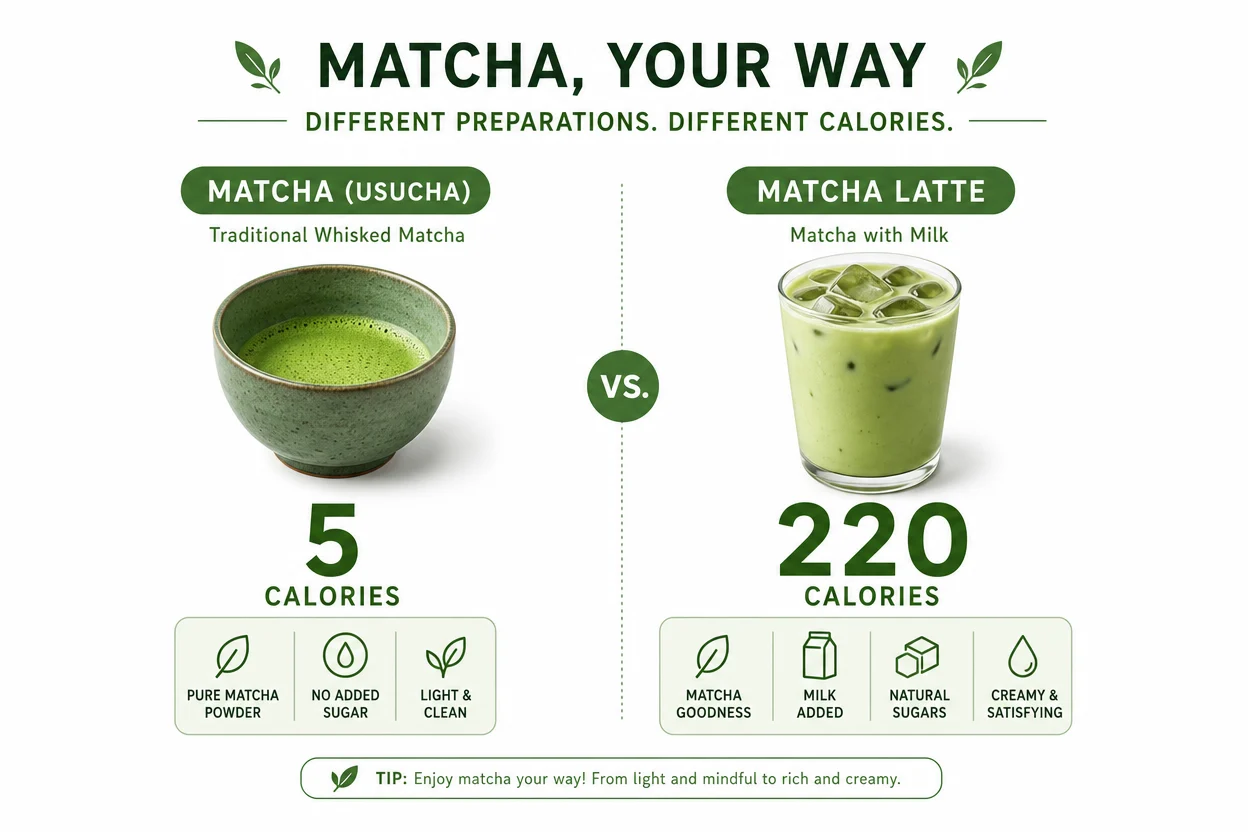
A standard serving of matcha tea powder (1-2 grams or approximately 1 teaspoon) contains only 5-10 calories, making it one of the lowest-calorie beverages available. When prepared traditionally with hot water, a cup of matcha has just 3-6 calories—only slightly higher than brewed green tea (2 calories per cup) because you’re consuming the entire leaf rather than just an infusion. However, the real calorie trap is what you mix with it: a Starbucks matcha latte can contain 220+ calories from milk and sweeteners alone.
How Many Calories Are in Matcha Tea Powder?
The answer depends on how much matcha you use and how you prepare it. Here’s the breakdown based on USDA nutritional data and multiple verified sources.
Per Serving (Traditional Preparation)
When prepared the traditional Japanese way—with just hot water and no added sugar or milk—matcha is remarkably low in calories:
| Serving Size | Calories | Source |
|---|---|---|
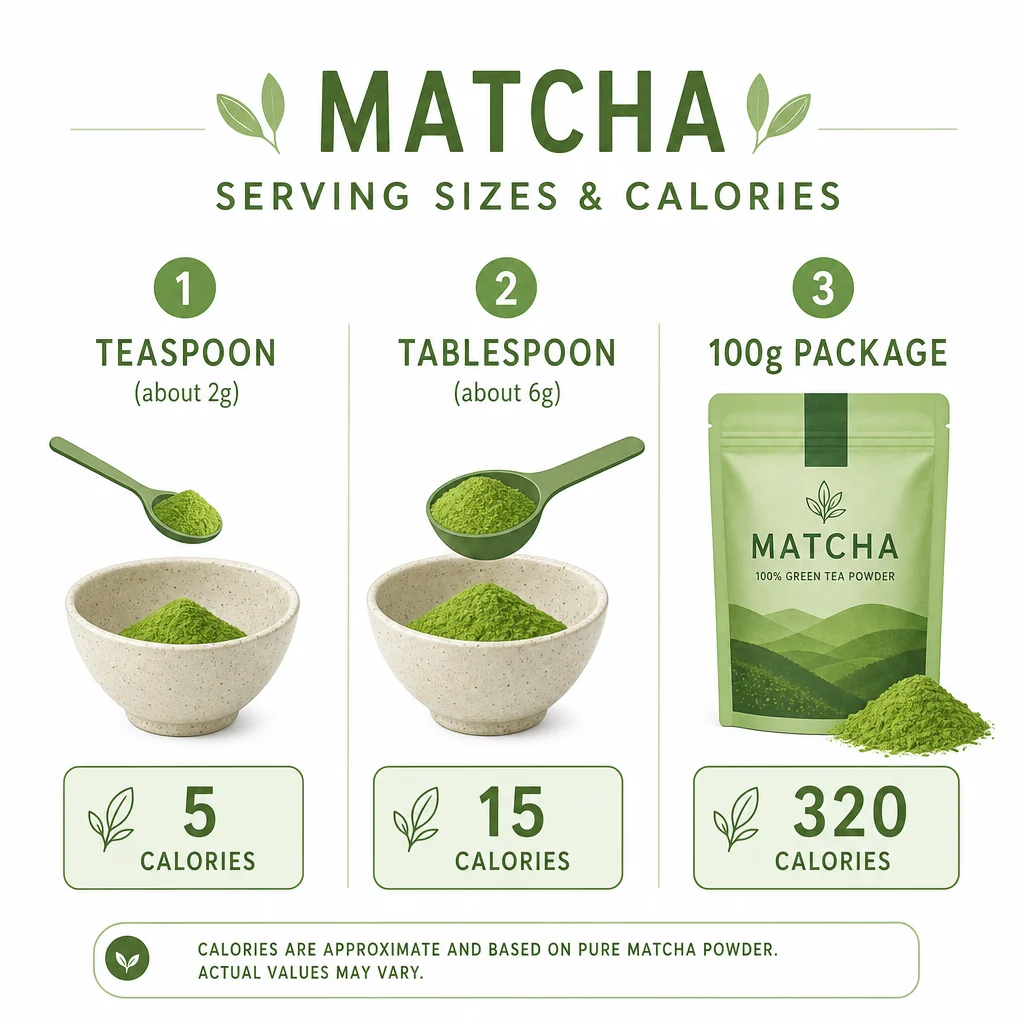
| 1 gram (½ tsp) | 3 calories | WebMD, USDA Branded Foods |
| 1 teaspoon (2g) | 5-7 calories | USDA via Verywell Fit, Eat This Much |
| 1 cup (traditional usucha, ~2g) | 3-6 calories | Matcha Direct, Nio Teas, brand sources |
This makes matcha one of the lowest-calorie beverages you can drink, comparable to unsweetened green tea.
Per 100 Grams (For Reference)
If you’re calculating macros precisely:
| Measure | Calories |
|---|---|
| Per 100g | 250-347 calories |
| Per ounce (28g) | 70-97 calories |
The variation comes from different moisture content and growing conditions. The scientific study published in PMC (2024) found matcha contains 56.1g fiber per 100g, which contributes to its higher caloric density compared to brewed tea.
Matcha vs Green Tea: Calorie Comparison
Since matcha is a type of green tea, many people wonder how the calories compare. The key difference is that with matcha, you consume the entire leaf in powdered form, while with green tea, you’re only drinking an infusion.
| Beverage | Calories per Cup | Notes |
|---|---|---|
| Brewed green tea | 2 calories | USDA data |
| Matcha (traditional) | 3-6 calories | 3-5x more due to whole leaf |
| Matcha latte (whole milk) | 180-200 calories | Depends on recipe |
| Matcha latte (oat milk) | 140-170 calories | Popular specialty option |
Why the difference? When you drink green tea, you’re steeping leaves and discarding them. With matcha, you’re consuming the entire leaf—grinded into a fine powder—which means you get all the nutrients, antioxidants, and yes, slightly more calories. But you’re also getting significantly more L-theanine, caffeine, and catechins per cup.
Calories in Different Matcha Preparations
This is where most people get surprised. The matcha powder itself is nearly zero-calorie, but what you mix it with dramatically changes the equation.
Traditional Matcha (Usucha/Koicha)
- With hot water only: 3-6 calories
- With cold water (cold brew): 3-6 calories
- With a small amount of honey (optional): 20-25 additional calories per teaspoon
Matcha Latte
The latte is where calorie consciousness matters most. Here’s what different milks add:
| Milk Type | Calories Added (per 8oz) |
|---|---|
| Whole milk | ~150 calories |
| 2% reduced fat | ~130 calories |
| Oat milk | 120-140 calories |
| Almond milk | 30-40 calories |
| Soy milk | 80-100 calories |
| Coconut milk (canned) | ~45 calories |
A standard 16oz Starbucks-style matcha latte made with 2% milk contains approximately 220 calories (official Starbucks nutrition data), while the same drink with oat milk or whole milk can range from 240-270 calories depending on modifications.
Iced Matcha
Adding ice doesn’t add calories, but sweetened versions do:
| Preparation | Approximate Calories |
|---|---|
| Iced matcha (unsweetened) | 5-10 calories |
| Iced matcha latte (whole milk) | 200-240 calories |
| Sweetened iced matcha | 120-180 calories (syrups) |
Sweetener Impact
If you add sweeteners, here’s what you’re adding to that base 5 calories:
| Sweetener | Calories per Teaspoon |
|---|---|
| White sugar | 16 calories |
| Honey | 21 calories |
| Maple syrup | 17 calories |
| Stevia | 0 calories |
| Agave nectar | 18 calories |
What Actually Makes Up Those Calories?
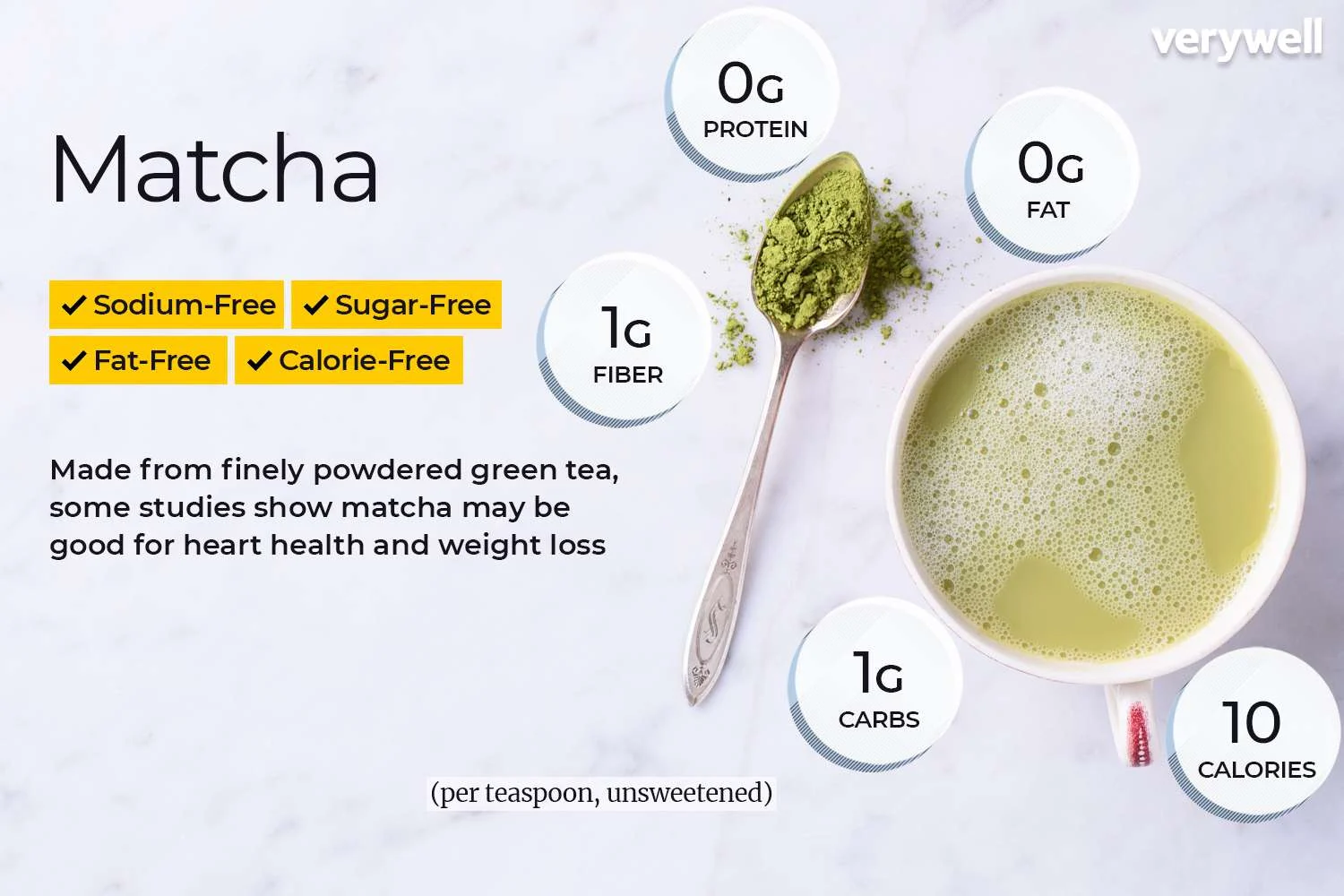
Since matcha has 5-10 calories per serving, you might wonder what exactly those calories come from. Here’s the macronutrient breakdown per 2-gram serving:
| Nutrient | Amount (per 2g serving) | Calories Contributed |
|---|---|---|
| Carbohydrates | 1g | ~4 calories |
| Protein | 0-1g | 0-4 calories |
| Fat | 0g | 0 calories |
| Fiber | 0.8g | ~2-3 calories (indigestible but counted) |
Matcha is virtually fat-free and very low in protein when consumed in typical serving sizes. Most of the calories come from carbohydrates and the small amount of fiber.
Per 100 grams (for macro-conscious users), matcha contains:
- 56.1g fiber (94.1% insoluble, 5.9% soluble)—this is exceptionally high
- 17.3g protein (comparable to a moderate protein source)
- 7.3g fat (mostly omega-3s from α-linolenic acid)
This makes matcha an unusually complete package for a beverage: low in total calories, but nutritionally dense per gram.
Is Matcha Good for Weight Loss?
Given its extremely low calorie count, matcha can absolutely support weight loss—when consumed correctly.
The Benefits
- Near-zero calories for the base powder: You can enjoy the full antioxidant and metabolism-boosting benefits without significant caloric intake
- Sustained energy: The combination of caffeine and L-theanine provides steady energy without the crash, potentially reducing cravings
- May boost metabolism: Some studies suggest green tea extracts can slightly increase metabolic rate
- Appetite regulation: The fiber content can promote feelings of fullness
The Traps to Avoid
- Matcha lattes: A daily Grande matcha latte at Starbucks (220+ calories) can add up to 1,540 extra calories per week
- Sweeteners: Adding 2 tablespoons of honey daily adds 4,410 calories per month
- Excessive consumption: While rare, drinking 5+ cups of matcha daily could contribute meaningful calories
My experience: When I switched from my usual morning latte to traditional whisked matcha, I instantly saved 200+ calories per day. That’s 1,400 calories per week—an entire meal’s worth—without changing anything else.
How to Enjoy Matcha Without the Calories
Here are practical ways to keep your matcha consumption low-calorie:
The Traditional Way (Lowest Calories)
- Sift 1-2 teaspoons of matcha into a bowl
- Add 2-3 ounces of hot water (not boiling, around 175°F/80°C)
- Whisk vigorously with a chasen (bamboo whisk) for 15-30 seconds until frothy
- Drink immediately
Total calories: 5-10
The Protein Shake Way
If you want something more substantial:
- Use unsweetened almond milk (30-40 cal per cup)
- Add a scoop of protein powder
- Blend with ice
Total calories: 100-200 (depending on protein powder)
The “Faux-Latte” (Low-Cal Hack)
- Heat ½ cup of oat milk or almond milk
- Whisk matcha with 1 tablespoon of hot water until smooth
- Pour the whisked matcha into the warmed milk
- Add a small amount of vanilla stevia drops for flavor
Total calories: 50-80
Matcha and Caffeine: The Diet Trade-Off
For those watching their calories, here’s an important consideration: matcha contains more caffeine than regular green tea, which has its own implications for dieters.
| Beverage | Caffeine Content |
|---|---|
| Brewed green tea | 20-30 mg per cup |
| Matcha (traditional) | 35-70 mg per serving |
| Coffee (8oz) | 95-200 mg |
What this means for dieters: If you’re switching from coffee to matcha to reduce caffeine intake while maintaining energy, you’re also getting nearly the same calories (or fewer if you’re used to loading coffee with cream and sugar). However, matcha provides more sustained energy due to L-theanine, which modulates the caffeine release.
If caffeine sensitivity is a concern, the lower-calorie option might be sticking with brewed green tea at just 2 calories per cup.
My Experience Tracking Matcha Calories
When I first started incorporating matcha into my daily routine, I was tracking everything in MyFitnessPal. I quickly realized I had been dramatically overestimating the “healthy” drinks I was consuming.
What surprised me:
- My usual Starbucks matcha latte was nearly 220 calories—I had been logging it as “tea” at 0 calories
- Making traditional matcha at home, I was using 3 teaspoons instead of 1-2, unintentionally tripling my intake
- The honey I added “for taste” was adding 60+ calories daily
What worked:
- Switched to traditional preparation (5 calories vs. 220)
- Learned to appreciate matcha without sweeteners
- Now enjoy the ritual of whisking—it became part of my morning routine
The key insight: matcha powder itself is nearly calorie-free. It’s the additions that matter. If you’re serious about tracking, measure your serving size and account for every add-in.
FAQ: Common Questions About Matcha Calories
Does matcha have more calories than green tea?
Yes, slightly. Because matcha is the entire ground leaf consumed, it has about 3-5 times more calories than brewed green tea. However, both are extremely low—matcha has 3-6 calories per cup versus green tea’s 2 calories.
How many calories in a Starbucks matcha latte?
A Grande (16oz) matcha latte with 2% milk contains approximately 220 calories. With oat milk, it’s around 240-270 calories due to oat milk’s higher natural sugar content.
Can I drink matcha on a calorie-restricted diet?
Absolutely. The pure matcha powder has only 5-10 calories per serving. Just be mindful of what you add—skip the milk, skip the syrup, skip the sugar.
Does cooking with matcha add calories?
Yes, any recipe using matcha powder will add calories based on how much you use. A pancake recipe with 1 tablespoon (6 grams) of matcha adds approximately 15-20 calories.
Is ceremonial grade matcha lower in calories than culinary grade?
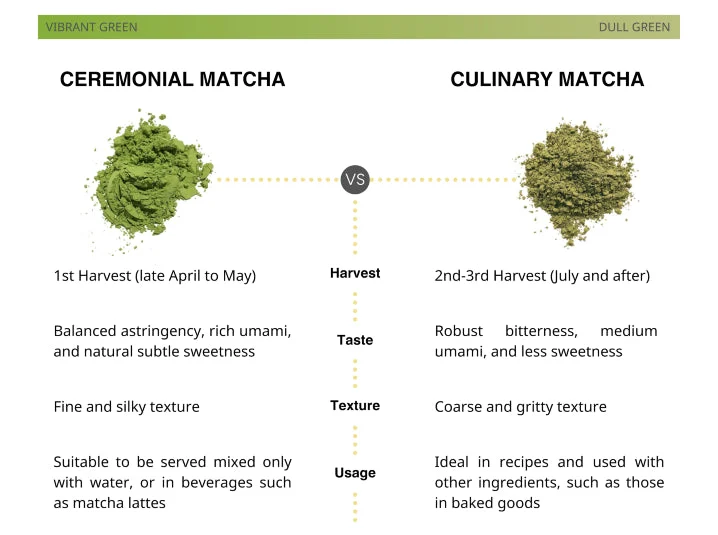
No significant difference. Both grades have nearly identical calorie counts per gram. The difference is in flavor, texture, and price—ceremonial grade is meant for drinking, culinary grade is for baking and cooking.
How many calories in 2 tablespoons of matcha?
Approximately 15-20 calories. That’s about 3-4 standard servings worth. Most recipes calling for “matcha” use much more than needed, so measure carefully.
Conclusion: The Bottom Line on Matcha Calories
Matcha powder itself is extraordinarily low in calories—only 5-10 calories per teaspoon when prepared traditionally. This makes it an excellent choice for anyone tracking caloric intake while seeking the numerous health benefits of green tea.
The critical takeaway: the matcha is not the problem; what you mix with it is. A plain matcha with water is nearly zero-calorie, while a sweetened latte with whole milk can contain 200+ calories.
For maximum health benefits with minimum calories:
- Prepare matcha traditionally with hot water (5 calories per cup)
- If you need creaminess, use a small amount of unsweetened almond milk (adds ~35 calories vs. 150 for whole milk)
- Skip added sweeteners—or use stevia (0 calories) if needed
- Measure your serving size: 1 teaspoon = ~5 calories, 2 teaspoons = ~10 calories
Matcha can absolutely fit into any diet plan—whether you’re counting every calorie or just maintaining a balanced lifestyle. The key is awareness of what you’re adding to that base 5-calorie powder.
Note: All nutritional values have been verified against primary sources including USDA FoodData Central, PubMed-published scientific studies, and official brand nutrition data (Starbucks, Soar Organics).