
As a procurement manager or product developer, sourcing the right ingredients can make or break your profit margins. When it comes to buying bulk organic matcha powder, the market is flooded with confusing labels, extreme price variations, and aggressive marketing. You are constantly faced with one defining question: Should we invest in the premium ceremonial grade, or is culinary grade enough for our needs?
Make the wrong choice, and you will either bleed your budget dry on unnecessary quality or completely ruin the flavor profile of your flagship product.
Think of it like buying wine for a high-end restaurant. You wouldn’t pour a rare, vintage Bordeaux into a beef stew, nor would you serve cheap cooking wine in a crystal glass to a VIP guest.
The exact same business logic applies to wholesale organic matcha. In the commercial manufacturing and food service space, there is no absolute “best” or “worst” grade—there is only the right grade for your specific formulation.
In this guide, we are stripping away the marketing fluff. We will break down the true, functional differences behind ceremonial vs culinary matcha from a supply chain and ROI perspective, helping you make the most profitable and consistent purchasing decision for your 2026 product line.
The Industry Secret: “Ceremonial” and “Culinary” Are Unregulated Labels
Before you place your next bulk order, you need to understand one crucial fact that many suppliers won’t tell you: There is no official, legally binding definition for “ceremonial” or “culinary” matcha.
Unlike the strict, government-regulated certifications required for an organic label (such as USDA, EU, or JAS organic), the terms defining matcha grades are entirely subjective. Neither the Japanese Ministry of Agriculture, Forestry and Fisheries (MAFF) nor the US FDA regulates what goes inside a bag labeled “ceremonial grade.”
These categories were largely created by the Western tea industry as a marketing shorthand to help consumers navigate a highly complex agricultural product.
This creates a dangerous blind spot for B2B buyers. A mid-tier, mass-produced green tea powder from one company might be aggressively marketed as “Premium Ceremonial,” while a high-quality, artisanal powder from a traditional farm might simply be labeled “Culinary.”
If the labels are arbitrary, how do you evaluate the actual quality of your supply?
As a reliable organic matcha supplier, we believe in transparency over marketing buzzwords. True quality is determined by the upstream agricultural process—specifically, the harvest season, the shading technique, the part of the leaf used, and the milling method.
By understanding these concrete, physical differences, you can stop paying for a fancy label and start paying for the precise flavor profile and functional properties your product line actually requires.
What is Ceremonial Grade Organic Matcha? (Origins and The Ultimate Experience)
To truly understand the value of ceremonial grade matcha, we must look at the upstream tea farms. It is considered the “crown jewel” of matcha purely because of its extremely rigorous agricultural standards and lengthy processing cycle.
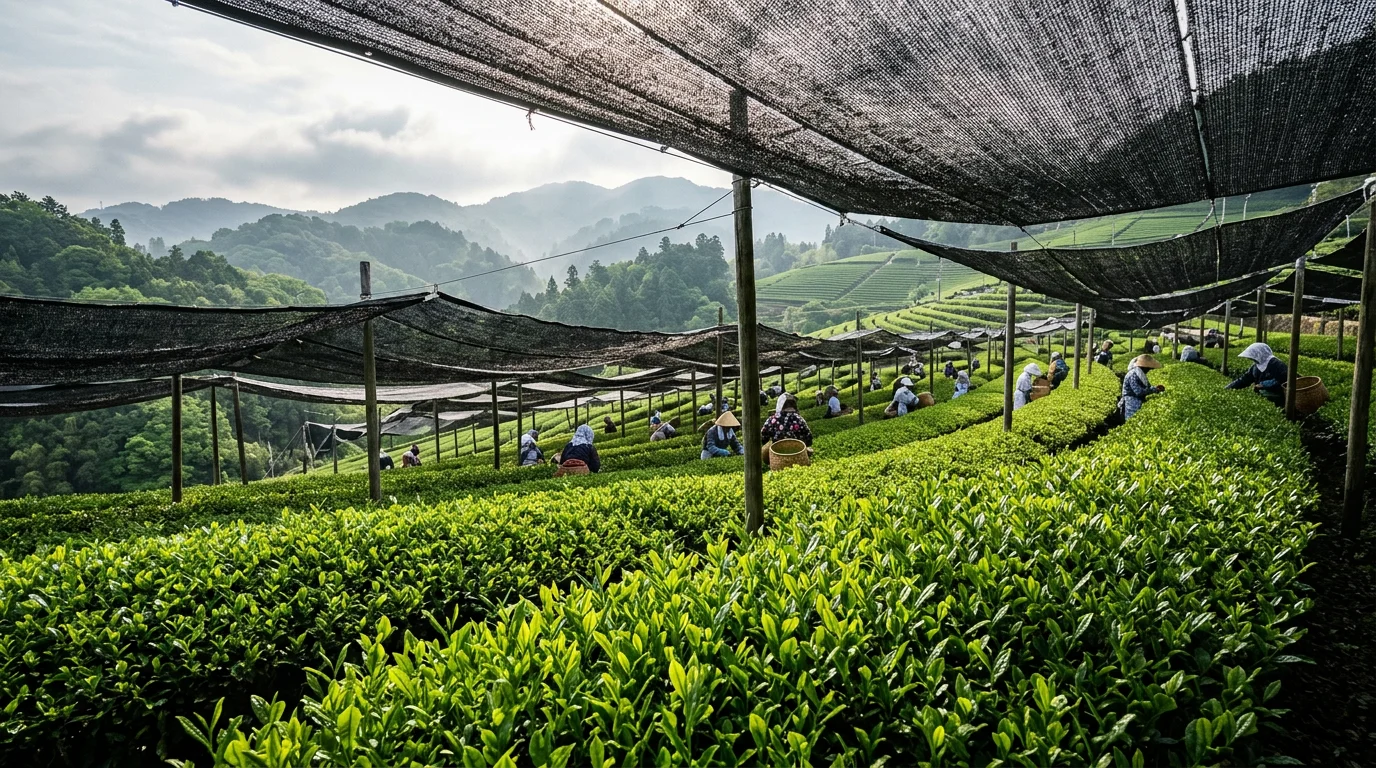
Authentic ceremonial grade matcha must use first harvest organic matcha (the very first tender tea shoots that sprout in spring). For several weeks prior to harvest, the tea plants must be carefully shaded to cut off direct sunlight. This crucial shade-grown green tea leaves technique forces the plant to struggle upward for light, accumulating massive amounts of chlorophyll and L-theanine in the leaves. This is the root cause of ceremonial matcha’s vibrant emerald green color and its deep, sweet “umami” flavor.
During processing, these delicate leaves undergo tedious manual de-vining to keep only the most tender leaf flesh (tencha), and are finally ground incredibly slowly using traditional stone mills at low temperatures. This near-draconian process guarantees its scarcity and high cost.
However, from a commercial sourcing perspective, there is a massive application trap here.
The flavor profile of ceremonial grade matcha is exceptionally subtle and delicate. It was born to be whisked purely with water in traditional tea ceremonies. If you plan to add dairy, oat milk, or syrups to your formula, these overpowering ingredients will instantly swallow the expensive, fragile, sweet notes of ceremonial matcha.
Your Best Commercial Application: If you operate a high-end tea brand focused on pure tea tasting, or plan to launch a wholesale ceremonial matcha line for an ultra-premium private label brand, investing in this grade is your only choice to build a brand moat. But if your core product line is lattes or commercial baking, stop your budget right here—the next section is where your true profit lies.
What is Culinary Grade Organic Matcha? (The Formulator’s Workhorse)
If ceremonial matcha is the delicate crown jewel of the tea world, culinary grade matcha is the heavy-duty workhorse of the food and beverage industry.
The distinction, once again, begins at the farm level. Culinary grade matcha is typically sourced from the later harvests of the year—usually the second (summer) or third (autumn) flush. These leaves are exposed to significantly more sunlight than their early-spring counterparts. From an agricultural standpoint, this extended sun exposure changes the chemical composition of the leaf, decreasing the chlorophyll (which provides the bright green color) and dramatically increasing the catechins and tannins. Furthermore, the processing is optimized for scale, often utilizing industrial milling techniques and retaining the stems and veins of the leaf.
Because of this robust processing and later harvest, the sensory profile shifts. The powder takes on a deeper, sometimes yellow-green hue, and the flavor becomes bold, earthy, and distinctly astringent (bitter).
To a consumer drinking pure tea, this astringency is a flaw. But to a product developer or cafe owner, this astringency is your greatest asset.
When you formulate a menu item or a packaged food product, your matcha has to compete with heavy, flavor-masking ingredients: dairy milk, oat milk, vanilla syrups, butter, and flour. The delicate, nuanced umami notes of ceremonial matcha will completely vanish when mixed with these fats and sugars. You will end up with a product that looks slightly green but tastes only like sweet milk.
Culinary grade matcha, however, has the sheer flavor density to punch through these heavy ingredients. Its robust, bitter edge acts as a necessary counterweight to sweeteners and fats, ensuring that the authentic, earthy green tea flavor is exactly what your customer tastes in the final bite or sip.
This functional strength makes it the undisputed champion for mixed applications. Whether you are a purchasing manager sourcing bulk matcha for cafes to standardize your iced latte menu, or a food manufacturer looking for stable culinary matcha for commercial baking that can hold its flavor profile under high oven temperatures, this grade is designed to protect both your profit margins and your product’s flavor integrity.
The “Overspending Trap”: Why Using Ceremonial Matcha for Lattes Ruins Your ROI
One of the most common—and expensive—mistakes we see new cafe owners and food and beverage brands make is falling into the “overspending trap.” Driven by the desire to offer the highest possible quality to their customers, purchasing managers often assume that buying the most expensive grade is the safest bet for their entire product line.
Let’s look at the math and the chemistry behind why this is a fundamentally flawed strategy.
Imagine you are formulating a new iced oat milk matcha latte for your cafe chain. To market it as an “ultra-premium” beverage, you decide to source top-tier, first-harvest ceremonial matcha.
Immediately, your Cost of Goods Sold (COGS) skyrockets. Because ceremonial grade is incredibly labor-intensive to produce, the per-kilogram wholesale price is significantly higher. If you are using 3 to 5 grams of powder per 16oz cup, your profit margin on that single beverage is instantly slashed.
But the financial loss isn’t even the worst part—the flavor fails.
As we established earlier, ceremonial matcha is prized for its delicate, sweet, and subtle umami notes. When you take that delicate powder and drown it in 12 ounces of creamy oat milk and a pump of vanilla syrup, those subtle notes are completely masked. Your customers are left drinking a mildly green beverage that tastes like sweetened milk, with almost zero authentic matcha flavor. You have essentially poured your profit margin down the drain to create an inferior tasting product.
When B2B clients come to us and ask, “What is the difference between ceremonial and culinary matcha?” we always point to this exact scenario. The difference isn’t just about how the tea is grown; it is about penetration power versus cost.
For mixed formulations—whether it is a latte, a smoothie, or a baked good—you do not need the delicate umami of a ceremonial tea. You need the robust, assertive, and cost-effective profile of a premium culinary grade. By matching the correct grade to your specific recipe, you simultaneously protect your profit margins and deliver a stronger, more satisfying flavor profile to your end consumer.
How to Choose the Right Matcha for Your Specific Product Line
Now that you understand the fundamental differences in processing and the dangers of the overspending trap, it’s time to build your purchasing strategy. The “best” organic matcha powder is simply the one that perfectly aligns with your recipe’s requirements and your target cost per serving.
Here is how to select the ideal grade for your business in 2026:
For Cafes & Bubble Tea Shops: The “Cafe Grade” Sweet Spot
When sourcing wholesale matcha for bubble tea or building a cafe beverage program, your primary concern is balancing vibrant color with a flavor that can stand up to dairy, plant-based milks, and sweeteners.
- The Recommendation: You do not need the delicate umami of a first-harvest ceremonial tea, nor do you want the overly astringent, yellowish profile of a low-tier culinary powder. Instead, look for a premium “Cafe Grade” or “Latte Grade.” This is typically a late-spring or early-summer harvest that bridges the gap. It offers a bright, appealing green hue for the perfect Instagram aesthetic, but packs enough robust, earthy bitterness to punch through 12 ounces of oat milk and syrup.
For Food Manufacturing & Commercial Baking: The Standard Culinary Grade
Baking presents a unique challenge: heat. When matcha is exposed to the high temperatures of an industrial oven, the delicate amino acids and chlorophyll inevitably degrade.
- The Recommendation: Sourcing expensive, vibrant green ceremonial matcha for baking is a guaranteed way to destroy your ROI, as the color will naturally dull and the nuanced flavors will evaporate. For these applications, you need a standard culinary grade. This late-harvest powder provides the strong, pronounced green tea flavor necessary to cut through heavy fats like butter and cream cheese. If you are sourcing matcha powder for baking wholesale or looking for an ingredient for ice cream manufacturing, prioritize a bold, astringent profile over a vibrant color.
For Nutritional Supplements & Superfood Blends: The Pure Function Grade
In the wellness industry, the priorities shift entirely. The end consumer is less concerned with the subtle tasting notes of a traditional tea ceremony and highly focused on the functional benefits: antioxidants (EGCG), L-theanine, and clean energy.
- The Recommendation: When formulating functional foods, your main criteria should be verified organic certification, absolute purity, and a high concentration of catechins. Interestingly, later-harvest culinary grades often contain higher levels of antioxidants than the early-harvest ceremonial teas because they have been exposed to more sunlight. Therefore, when sourcing organic matcha for superfood blends, a high-quality, pesticide-free culinary grade often provides the best functional value and the most competitive price point for your supplement line.
The B2B Bulk Sourcing Checklist: 3 Non-Negotiables
Buying a 30-gram tin of matcha for personal use is simple. Sourcing hundreds of kilograms for a commercial product line requires extreme due diligence. A single bad batch can lead to product recalls, ruined flavor profiles, and severe damage to your brand’s reputation.
Before you buy matcha powder in bulk, you must subject your potential supplier to a rigorous vetting process. In 2026, do not sign a purchase order unless the supplier can guarantee these three non-negotiables:
1. Authentic, Verifiable Organic Certifications
Many suppliers will claim their tea is “grown using organic practices” or is “naturally farmed.” In the B2B space, verbal claims are a liability. You need documented proof. Demand to see valid, up-to-date certificates from recognized regulatory bodies like USDA Organic, EU Organic, or JAS (Japanese Agricultural Standard). These certifications guarantee that the soil has been strictly managed and free of prohibited synthetic fertilizers and chemicals for years.
2. Transparent Laboratory Testing (COAs)
Because consuming matcha means ingesting the entire tea leaf—not just an infused liquid—any contaminants in the soil end up directly in your final product. A reliable factory must provide a comprehensive Certificate of Analysis (COA) for every batch. This document must prove rigorous third-party testing for heavy metals (especially lead and arsenic), radiation, and microbiology. Furthermore, it should validate true pesticide-free matcha farming practices, ensuring your brand is protected from compliance failures and health hazards.
3. Scalability and Custom Blending Capabilities
A middleman or broker might be able to source 50 kilograms of decent matcha once, but can they deliver 500 kilograms of the exact same color, flavor, and particle size six months from now? Consistency is the hardest metric to achieve in agricultural sourcing. Partner with a source factory that has robust, industrial milling capacity and offers custom blending. A true manufacturing partner won’t just sell you an off-the-shelf “culinary grade”; they will adjust the harvest selection and blending ratios to create a proprietary matcha specifically calibrated for your product line’s exact cost and flavor requirements.
FAQ: Sourcing Bulk Organic Matcha for Your Business
What is the typical shelf life of bulk organic matcha powder?
Most bulk organic matcha powder has a shelf life of 12 months from the date of grinding if stored in its original, unopened packaging. Once opened, we recommend using it within 1-2 months to ensure maximum freshness, color, and aroma.
How should we store large quantities of matcha to maintain quality?
Matcha is highly sensitive to light, heat, and oxygen. For bulk storage, keep the powder in an airtight, light-blocking container in a cool, dark place. For long-term storage of several months, refrigeration or even freezing in vacuum-sealed bags is recommended to preserve the vibrant green color and flavor.
Can I request a custom blend for my specific product line?
Yes. As a manufacturing partner, we can adjust the ratio of different harvests to meet your specific requirements for color intensity, flavor bitterness, and target price. This is common for cafe chains looking to create a “signature” latte profile.
Is certified organic matcha really worth the price premium for B2B?
For brands selling in the health, wellness, or premium cafe sectors, the “Certified Organic” label is a powerful trust signal that justifies a higher retail price. Furthermore, it ensures compliance with strict international food safety standards, reducing the risk of synthetic chemical contamination in your supply chain.
What are the typical lead times for international bulk shipments?
Lead times vary depending on the order volume and shipping method (air vs. sea). Generally, air shipments take 7–14 days, while sea freight can take 4–6 weeks. We grind our matcha fresh to order to ensure you receive the highest quality product with maximum remaining shelf life.
Partner with a Reliable Organic Matcha Supplier
Choosing between ceremonial and culinary matcha should never be a guessing game dictated by clever marketing labels. It is a strategic formulation decision that directly impacts your cost of goods, your flavor consistency, and ultimately, your brand’s reputation.
As we have explored, the secret to a highly profitable matcha product line isn’t simply buying the most expensive powder on the market. It is about understanding the upstream agricultural process and matching the exact flavor density and penetration power of the tea to your specific commercial application.
Whether you are a global cafe chain looking to standardize your iced latte menu, a food manufacturer seeking stable ingredients for baking, or an entrepreneur launching a premium private label organic matcha brand, your supply chain is your ultimate competitive advantage. You need more than just a vendor; you need a manufacturing partner.
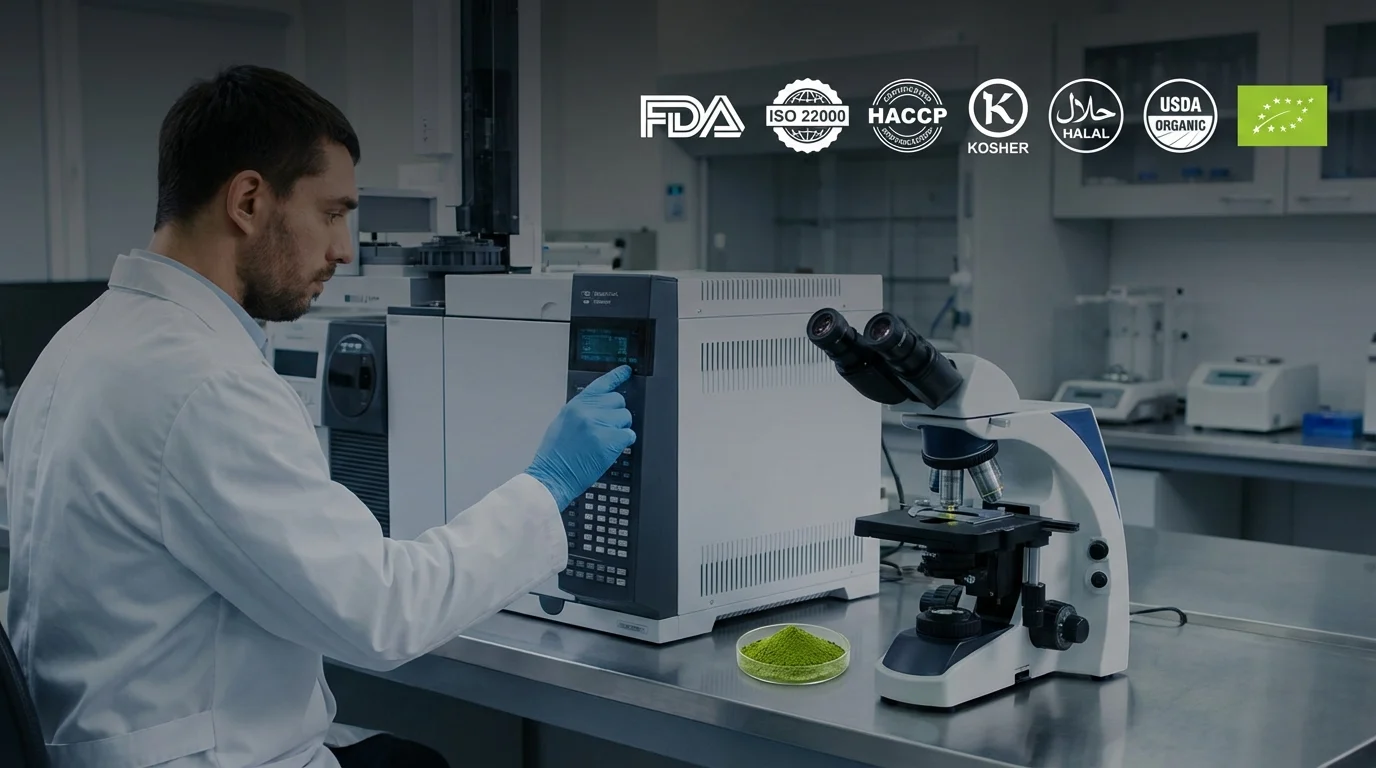
As a leading matcha OEM/ODM manufacturer and direct-source factory, we eliminate the guesswork and the middlemen. We provide 100% certified organic matcha (USDA, EU, JAS) backed by fully transparent laboratory testing and strict pesticide-free farming standards. From premium first-harvest ceremonial grades for traditional tea ceremonies to custom-blended, heavy-duty culinary grades for commercial formulation, we have the scalable capacity to support your growth in 2026 and beyond.
Ready to upgrade your formulation and protect your profit margins?
Stop overpaying for arbitrary labels. Contact our wholesale team today to discuss your specific product line requirements, request our 2026 Bulk Pricing Catalog, or order a Commercial Sample Kit to test our quality in your own R&D kitchen.