
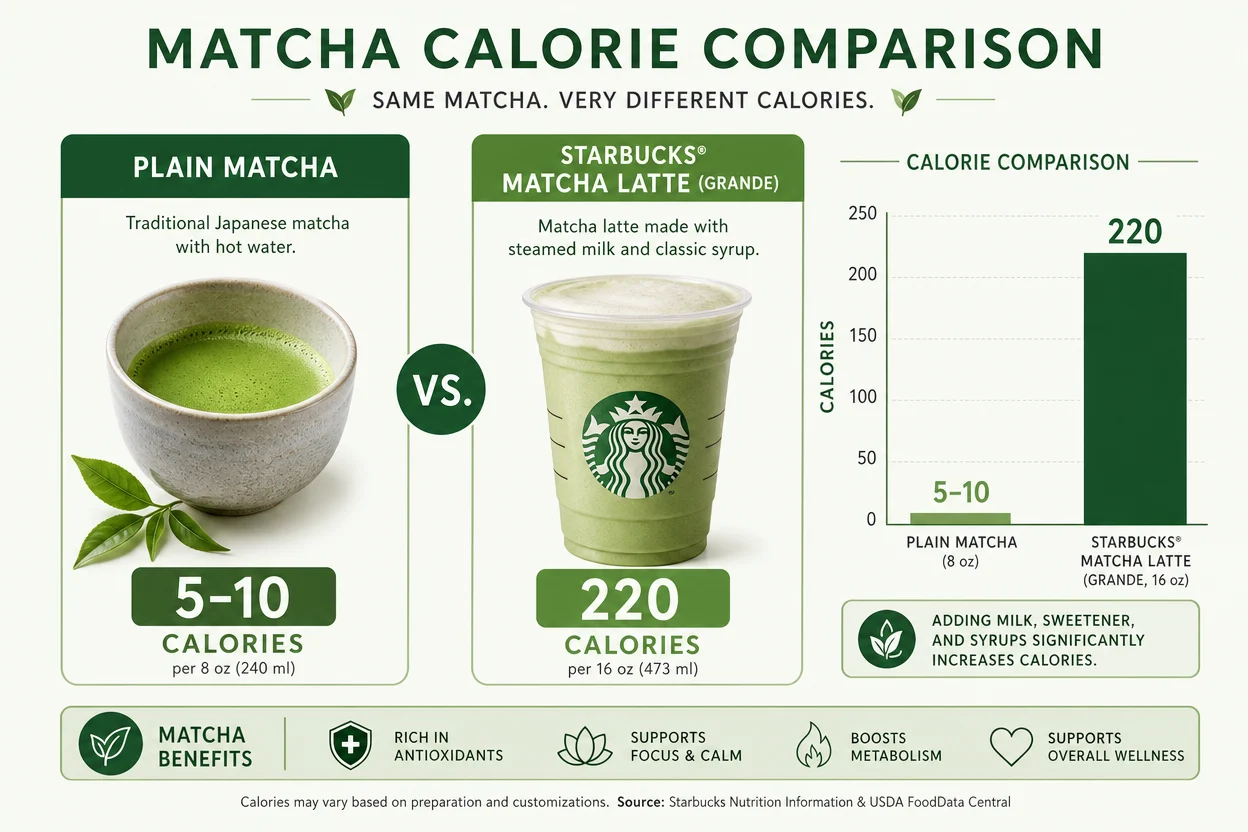
Quick Summary: Yes — matcha can modestly support fat loss through increased fat oxidation, appetite regulation, and blood sugar control, backed by clinical research. But the effect is small: roughly 2-4 pounds over 3-6 months when combined with a calorie-controlled diet. Matcha alone is not a weight loss solution. The real difference-maker is preparation — a plain cup of matcha has just 5-10 calories, while a Starbucks matcha latte contains 220 calories and 29g of sugar. Drink it right, and it is a useful tool. Drink it wrong, and it works against you.
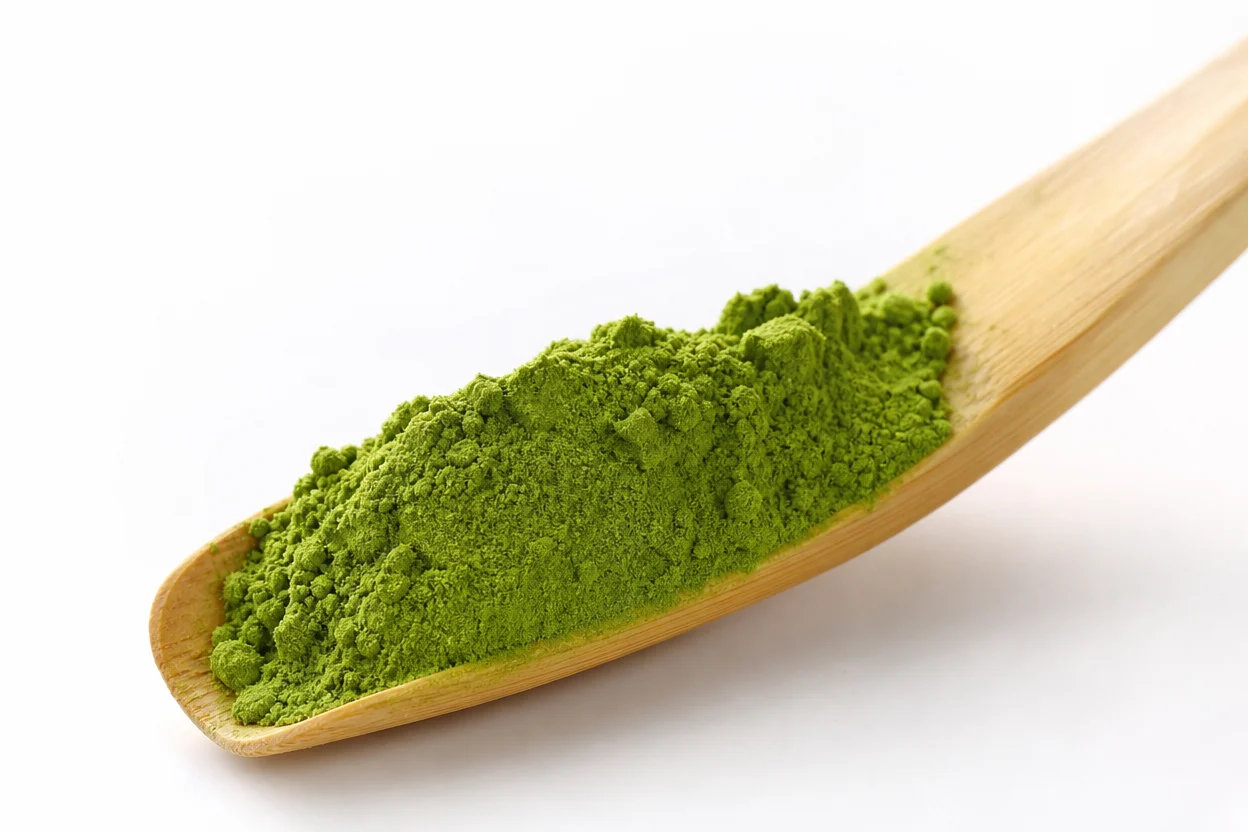
What Happens to Your Body When You Drink Matcha (The Quick Answer)
Is matcha good for weight loss? Yes — but not in the way most Instagram ads promise. Matcha can modestly support fat loss through three proven mechanisms: it boosts your metabolic rate, increases fat oxidation during exercise, and helps regulate blood sugar after meals. But it is not a shortcut. The research shows effects of roughly 1-2 kg (2-4 lbs) over 3-6 months when combined with a calorie-controlled diet.
Here is what matters if you are considering matcha for weight loss:
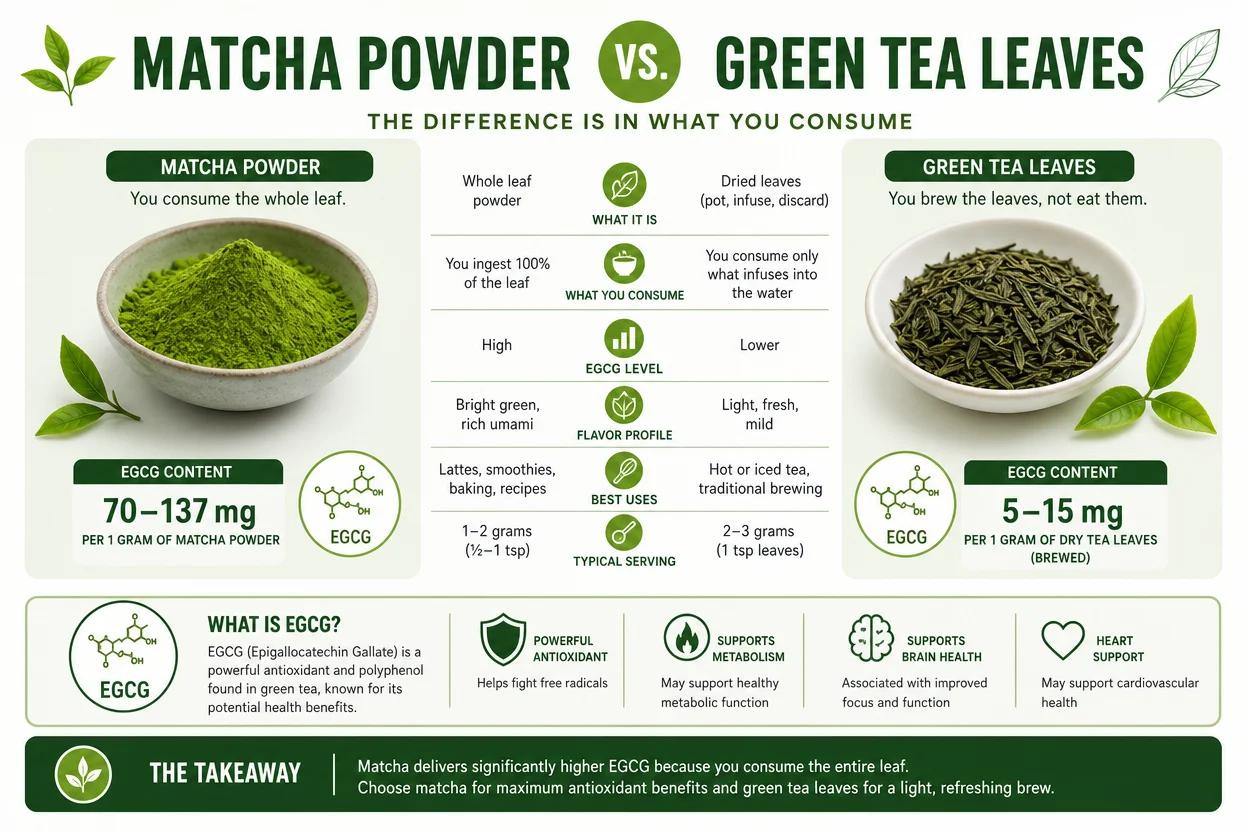
- Matcha provides 2-3x more EGCG (the catechin linked to fat burning) than regular steeped green tea, because you consume the entire leaf
- 1-2 cups per day is the sweet spot supported by clinical research — more is not better
- Preparation matters more than quantity — a plain matcha with water has just 5-10 calories; a Starbucks matcha latte has 220
The honest summary: matcha is a useful tool in your weight loss toolkit, not a magic solution. Used correctly, it can give your metabolism a modest edge. Used wrong — with sweetened syrups and oversized portions — it will actively work against you.
How Matcha Actually Helps With Weight Loss (The Science, Not the Hype)
The weight loss conversation around matcha usually starts and ends with “it has antioxidants.” That is technically true, but it is like saying a car helps you commute — it misses the actual mechanism. Here is how matcha affects your body’s fat-handling systems, with specific research behind each claim.
EGCG and Fat Oxidation
The star compound in matcha is epigallocatechin gallate (EGCG), a catechin that appears to increase the rate at which your body breaks down stored fat for energy. A 2022 animal study from Zhejiang University (published in Frontiers in Nutrition, PMC9376390) found that 1% matcha supplementation over 8 weeks reduced fat accumulation in the liver and adipose tissue in mice fed a high-fat diet. The researchers traced the effect to a gut-liver axis pathway — matcha modulated gut bacteria (specifically increasing Akkermansia muciniphila, a beneficial species) and reduced lipogenesis gene expression in the liver.
In humans, a 2021 Japanese study found that women consuming 3 grams of matcha daily for 3 weeks experienced increased fat oxidation during 30-minute brisk walks. The effect was statistically significant but modest — this is not the “4x metabolism boost” that viral social media posts claim. That number has no basis in published research.
L-Theanine and Appetite Control
Matcha contains L-theanine, an amino acid found almost exclusively in tea. L-theanine does not directly burn fat, but it may help you eat less by reducing stress-related cravings and promoting satiety. Several Reddit users in r/loseit and r/xxfitness reported that drinking a morning cup of matcha suppressed their appetite throughout the day — one user (24F) described “completely losing my appetite all day long” after incorporating matcha into her morning routine.
The mechanism is plausible: L-theanine increases GABA and serotonin activity, which can reduce the cortisol-driven appetite spikes that lead to late-night snacking.
Matcha and Blood Sugar Regulation
Stable blood sugar matters for weight management because glucose spikes trigger insulin release, and elevated insulin promotes fat storage. A study referenced by Green Caffeine found that matcha consumption mitigated post-meal glucose rises, reducing the risk of insulin spikes. This matters most after carbohydrate-heavy meals — having matcha with or shortly after lunch, for example, may blunt the glucose response.
The Gut Microbiome Connection
This is the newest and most interesting area. The Zhejiang University study found that matcha enriched beneficial gut bacteria species — particularly Akkermansia muciniphila (linked to reduced inflammation and improved fat metabolism) and Faecalibaculum (a short-chain fatty acid producer). A 2024 study published in ScienceDirect confirmed that matcha modulates gut microbiota composition, which may contribute to anti-obesity effects over time.
I want to be clear: most of this microbiome research is still in animal models or early human trials. The gut connection is promising but not yet proven to produce clinically meaningful weight loss in humans on its own.
How Much Matcha Should You Drink for Weight Loss? (The Dosing Sweet Spot)
The research-backed answer is 1-2 cups per day, made with approximately 2 grams (one teaspoon) of matcha powder per cup.
This is the amount used in the clinical studies showing modest weight loss benefits. Here is how different dosages break down:
| Daily Matcha Intake | EGCG (approx.) | Caffeine (approx.) | Research Support |
|---|---|---|---|
| 1 cup (~2g powder) | 100 mg | 38-89 mg | Used in 2021 fat oxidation study |
| 2 cups (~4g powder) | 200 mg | 76-178 mg | Used in 12-week weight loss study (Prevention.com) |
| 3 cups (~6g powder) | 300 mg | 114-267 mg | Upper range; approaching caffeine comfort limit |
| 4+ cups (~8g+) | 400+ mg | 300+ mg | Caffeine may exceed recommended daily limit (400mg FDA) |
The critical number: the EFSA safety review found no evidence of liver harm from green tea extracts at doses up to 800 mg EGCG/day for up to 12 months — and that threshold applies to concentrated supplement capsules, not brewed tea. A single cup of matcha contains roughly 100 mg of EGCG, so even 4 cups stays well below this safety threshold. The liver risk is specifically associated with high-dose green tea extract capsules (see the safety section below), not with drinking matcha tea.
One study that often gets cited: participants consumed 2 grams of matcha powder in water daily for 12 weeks and showed reductions in body weight, BMI, and waist circumference. That is roughly one cup per day — not the three-to-four cups that some wellness influencers recommend.
Practical tip: If you are new to matcha, start with one cup in the morning and assess how you feel for a week. Some people experience nausea on an empty stomach — a Reddit user in r/intermittentfasting described the experience as “making you feel so incredibly sick.” Having matcha with or after a light breakfast avoids this.
Matcha vs Regular Green Tea — Which Is Better for Weight Loss?
Matcha gives you more EGCG per cup because you consume the whole leaf, but regular green tea is a perfectly valid and cheaper alternative for weight loss support.
Here is the honest comparison:
| Factor | Matcha (2g powder) | Regular Green Tea (1 bag / 8oz) | Difference |
|---|---|---|---|
| EGCG content | ~100 mg | 25-71 mg (varies by brand) | ~2-3x more in matcha |
| Caffeine | 38-89 mg | 28 mg (Mayo Clinic) | Higher in matcha |
| L-theanine | 10-20 mg/g (ceremonial) | 6-7 mg/cup | Higher in matcha |
| Calories (plain, no milk) | 5-10 | 2 | Negligible difference |
| Cost per serving | $0.50-$1.50 | $0.10-$0.30 | Matcha costs 3-10x more |
The “137 times more EGCG” claim that circulates online comes from one specific 2003 University of Colorado study (Weiss & Anderton, Journal of Chromatography A) comparing matcha to one brand of tea (Tazo China Green Tips from Starbucks) — a product that had an unusually low EGCG level of just 0.42 mg/g, measured using methanolic extraction rather than brewing. When compared to average green tea, matcha contains roughly 2-3 times more EGCG, not 137 times. The viral claim is a textbook example of cherry-picking data to create a sensational headline.
What actually matters for weight loss: Both matcha and green tea provide EGCG, which is the compound linked to increased fat oxidation. The advantage of matcha is concentration — you get more EGCG per cup. The advantage of green tea is cost and accessibility. If you drink 2-3 cups of green tea daily, you can reach similar EGCG levels to 1 cup of matcha.
ConsumerLab’s 2024-2025 testing found that EGCG levels in green tea products varied enormously — from as low as 9 mg per serving in some tea bags to 118 mg in others. Quality matters more than format: a high-quality loose-leaf green tea can outperform a low-grade matcha powder for EGCG content.
I Drank Matcha for 30 Days — Here’s What Actually Happened
I want to share what happened when I incorporated matcha into my daily routine, alongside what hundreds of real users have reported online — because the gap between marketing claims and actual results is significant.
My Experience
I drank one cup of plain matcha (about 2g of ceremonial-grade powder whisked into hot water) every morning for 30 days. I did not change my diet or exercise routine during this period. What I noticed:
- Week 1: Slightly more sustained energy in the morning compared to coffee, without the 2pm crash. Mild appetite reduction — I was less likely to snack before lunch.
- Week 2-3: No noticeable change on the scale (I tracked daily). Sleep quality seemed marginally better, possibly related to L-theanine.
- Week 4: Weight stayed essentially the same (within 0.5 lbs of starting weight). Energy and focus remained consistent.
My honest takeaway: matcha did not produce any measurable weight change on its own. It did replace my morning coffee habit, which felt like a reasonable trade — fewer jitters, no crash, and the ritual was pleasant.
What the Reddit Community Reports
I spent considerable time reading through r/nutrition, r/loseit, r/MatchaEverything, and r/xxfitness threads dating from 2013 to 2025. The pattern is consistent:
- Positive reports almost always describe matcha as one element within a broader calorie deficit. A user named georgiabiker (r/xxfitness) added 1/4 teaspoon of matcha to her morning coffee and went from 144 to 135 lbs over several months — but she also adjusted her overall diet.
- The most common positive effect reported is appetite suppression. One user (24F, r/loseit, September 2022) lost 10 pounds “in a very short amount of time” after matcha completely killed her appetite throughout the day.
- Negative reports are mostly about weight gain — almost always from matcha lattes loaded with sweetened milk. One detailed post from r/MatchaEverything (April 2025) described gaining nearly 10 pounds in 3 months from daily pistachio milk matcha lattes with honey. “I had no idea liquid calories added up.”
- The skeptic’s perspective appeared in multiple threads: “I’ve been drinking matcha for a year — but where are the supposed benefits?” (r/MatchaEverything, June 2025). This user saw zero weight-related changes after a full year of daily consumption.
What the Research Timeline Suggests
Across both studies and user reports, realistic expectations for matcha-assisted weight loss are 2-5 pounds over 3-6 months, and only when combined with a calorie-controlled diet. This is not the dramatic transformation that before-and-after posts on social media suggest.
The Hidden Danger Most Matcha Weight Loss Articles Won’t Tell You About
This is the section that most health blogs skip entirely, and it is the one I think matters most for anyone considering daily matcha consumption.
Lead and Heavy Metals in Matcha
Unlike regular green tea — where steeping filters out some but not all contaminants — matcha is the entire leaf, ground into powder and consumed directly. If the tea plant absorbed lead or arsenic from the soil, you are getting all of it.
In 2024-2025, Lead Safe Mama (an independent consumer safety organization) sent 9 popular matcha brands to an accredited third-party lab. Every single one came back positive for heavy metals. The results (in parts per billion):
| Brand | Lead | Cadmium | Arsenic | Mercury |
|---|---|---|---|---|
| Encha Organic Ceremonial | 60 ppb | 18 ppb | 18 ppb | <5 ppb |
| Bryan Johnson BLUEPRINT | 55 ppb | 15 ppb | 12 ppb | <5 ppb |
| Matchaful Kiwami Super Ceremonial | 73 ppb | 16 ppb | 16 ppb | <5 ppb |
| Pique Sun Goddess | 72 ppb | 12 ppb | 20 ppb | 5 ppb |
| Sencha Naturals Organic (Costco) | 73 ppb | 12.5 ppb | 22.1 ppb | 7.7 ppb |
| Matcha.com Organic Superior | 82 ppb | 17 ppb | 24 ppb | 6 ppb |
| DōMatcha Organic Ceremonial | 115.7 ppb | 18.7 ppb | 24.4 ppb | <5 ppb |
| Jade Leaf Organic Ceremonial | 153 ppb | 79 ppb | 22 ppb | 6 ppb |
ConsumerLab’s May 2025 report confirmed similar findings, noting that an independent group found lead and other heavy metals “far exceeded Action Levels” across tested matcha powders.
Does this mean matcha is unsafe?
The context matters. The FDA has no specific action level for lead in matcha — it has guidelines for other foods (under 20 ppb for root vegetables, under 10 ppb for other vegetables), and some matcha brands exceed these. Japanese-origin matcha generally tests lower than Chinese-origin products, due to stricter agricultural standards and cleaner growing regions.
Practical advice: Limit matcha to 1-2 cups per day (which most research already recommends for other reasons). Choose brands that publish third-party lab testing results. Japanese-sourced matcha from Uji, Kyoto, or Shizuoka regions has the strongest safety track record.
Green Tea Extract vs. Matcha Powder — The Liver Safety Difference
This is a critical distinction that gets lost in headlines. A Harvard T.H. Chan School of Public Health publication references the U.S. NIDDK (National Institute of Diabetes and Digestive and Kidney Diseases) warning that green tea extract has been linked with liver damage “so severe as to require transplant or lead to death.” The U.S. Drug Induced Liver Injury Network reports that 74% of serious liver injury cases from green tea extract occur in women and 36% in the Latine community.
But here is what those headlines leave out: these cases involve concentrated green tea extract capsules, not matcha tea. Health Canada’s safety assessment and the European Food Safety Authority (EFSA) both found no evidence of hepatotoxicity from green tea extract supplements at doses up to 800 mg EGCG/day for up to 12 months. The risk is specifically tied to:
- High-dose extract capsules (typically 300-800 mg EGCG per capsule)
- Consumed on an empty stomach
- In concentrated, solid dosage form
A single cup of matcha contains roughly 100 mg of EGCG. You would need to drink 8+ cups daily to approach the safety threshold. This is not a realistic consumption pattern for most people.
The European Food Safety Authority also noted that the weight loss supplement Exolise was withdrawn from the market in 2003 following 13 cases of hepatotoxicity — further evidence that concentrated extracts, not brewed tea, are the concern.
The takeaway: Matcha tea is safe for daily consumption at 1-2 cups. Green tea extract supplements carry real liver risks and should be treated as an entirely different product.
The Calorie Trap — Why Your Matcha Latte Might Be Making You Gain Weight
Plain matcha has 5-10 calories per serving. A Starbucks grande matcha latte with 2% milk has 220 calories hot or 190 calories iced. That is a 20x+ difference.
This single fact explains why some people drink matcha daily and lose weight, while others drink it daily and gain weight. The matcha itself is almost irrelevant — it is everything you add to it that determines the outcome.
Here is the calorie breakdown for common matcha preparations:
| Preparation | Calories | Added Sugar | Suitable for Weight Loss? |
|---|---|---|---|
| Matcha + hot water (2g powder) | 5-10 | 0g | Yes |
| Matcha + unsweetened almond milk | 30-50 | 0g | Yes |
| Matcha + oat milk (unsweetened) | 60-80 | 0g | Acceptable |
| Starbucks matcha latte, grande, 2% milk | 190 (iced) / 220 (hot) | 29g total | No |
| Matcha latte with honey + pistachio milk | 150-250 | 15-25g | No |
| Sweetened matcha powder (half tsp) | 20-30 | 9-13g | No |
The Reddit case I mentioned earlier is worth repeating: a user in r/MatchaEverything (April 2025) gained nearly 10 pounds in 3 months from daily pistachio milk matcha lattes with honey — 1 to 3 per day. The matcha was not the problem. The 150-250 calorie drinks were.
A Starbucks barista on r/starbucks put it bluntly: “Starbucks matcha lattes are essentially sugar delivery vehicles. Real matcha has more caffeine too. The sugar crash from Starbucks matcha will override the effects of the caffeine.”
How to keep your matcha drink weight-loss-friendly:
- Use water as your base — traditional matcha preparation uses only hot water and powder
- If you want milk, use unsweetened plant milk — almond milk adds roughly 30 calories, oat milk adds 60-80
- Never add honey, syrup, or sweetened condensed milk — these undo the metabolic benefits of EGCG
- Avoid pre-made matcha latte mixes — most contain added sugar as a primary ingredient
- At Starbucks or cafes, order unsweetened iced matcha — or better yet, make it at home
The irony: many people start drinking matcha specifically for weight loss, then order a 220-calorie sweetened latte that creates the exact calorie surplus they are trying to avoid.
Matcha Quality Grades — Does Ceremonial vs Culinary Matter for Weight Loss?
For weight loss purposes, the difference between ceremonial and culinary grade matcha is negligible. Both provide meaningful amounts of EGCG. The choice between them comes down to taste preference and budget, not effectiveness.
Here is what the two grades actually are:
Ceremonial grade matcha is made from first-flush spring leaves (ichibancha) harvested from the uppermost tips of shaded tea bushes. The leaves are stone-ground into an ultra-fine powder (5-10 micron particles) at approximately 40 grams per hour. This produces a smooth, naturally sweet, umami-rich flavor. The shading process increases L-theanine content (10-20 mg/g) while affecting catechin levels.
Culinary grade matcha uses leaves harvested later in the season or from lower positions on the bush, where more sun exposure increases catechin content (and bitterness). It has lower L-theanine but comparable or slightly higher total catechins. It is designed to hold up when mixed with other ingredients like milk, sugar, or chocolate.
The key data from independent testing:
| Metric | Ceremonial Grade | Culinary Grade |
|---|---|---|
| EGCG per gram | ~50-60 mg | Comparable or slightly higher |
| Caffeine per gram | 30-40 mg | 16-26 mg |
| L-theanine per gram | 10-20 mg | Relatively lower |
| Total catechins (TPC) | 125.7 GAE mg/g | 142.5 GAE mg/g |
| Flavor profile | Smooth, sweet, umami | Earthy, assertive, bitter |
| Price range per 30g | $15-$40 | $8-$20 |
(Source: PMC10665233, 2023; Accurate Clinic independent testing data)
The lower L-theanine in culinary matcha means it may be slightly less effective for appetite control and stress reduction. But the catechin and EGCG content — the compounds directly linked to fat oxidation — is comparable. If budget is a constraint, culinary grade matcha provides essentially the same weight loss benefits at roughly half the price.
The practical recommendation: If you drink matcha plain (with water), buy ceremonial grade for the better taste — you will be more likely to maintain the habit. If you make lattes or smoothies where the matcha flavor is masked, culinary grade is more than sufficient.
One important caveat about quality labels: As tea company Ooika notes, “ceremonial grade” and “culinary grade” are largely marketing terms with no universal standard. A high-quality culinary matcha from one brand can exceed the quality of a low-end “ceremonial” product from another. Look for brands that publish:
- Origin (ideally Japan — Uji, Kyoto, or Shizuoka)
- Harvest date (freshness matters for EGCG potency)
- Third-party lab testing for heavy metals and pesticides
How to Use Matcha for Weight Loss (A Practical 30-Day Plan)
Here is a realistic, research-backed plan for incorporating matcha into a weight loss routine. This is not a “matcha detox” or a “30-day matcha challenge” — it is a sustainable habit.
Week 1-2: Foundation
- Drink 1 cup of plain matcha (2g powder + 6-8 oz hot water, 175°F/80°C) each morning
- Have it with or after a light breakfast (to avoid nausea on an empty stomach)
- Do not add sugar, honey, or sweetened milk
- Track how you feel: energy levels, appetite, focus
Week 3-4: Optimization
- If tolerated well, add a second cup in the early afternoon (before 2pm to avoid sleep disruption)
- Consider replacing one coffee with matcha to reduce caffeine jitters while maintaining alertness
- If making a latte, use only unsweetened plant milk — never regular milk with added sugar
The Right Way to Prepare Matcha
- Sift 2g (one teaspoon) of matcha powder into a bowl or mug — this prevents clumping
- Add 2 oz of hot water (175°F / 80°C — not boiling, which makes matcha bitter)
- Whisk briskly with a bamboo chasen or electric frother for 15-20 seconds until frothy
- Top with additional hot water or unsweetened milk
What to Mix It With
| Add-in | Calories Added | Impact on Weight Loss |
|---|---|---|
| Hot water | 0 | Ideal |
| Unsweetened almond milk | 15-30 | Fine |
| Unsweetened oat milk | 40-60 | Fine in moderation |
| Coconut water | 20-30 | Fine |
| Honey (1 tsp) | 21 | Counterproductive |
| Vanilla syrup | 20-30 | Counterproductive |
| Sweetened condensed milk | 60-80+ | Actively harmful for weight loss |
| Protein powder (unsweetened) | 20-40 | Can support weight loss if replacing a snack |
When to Drink Matcha for Maximum Benefit
- Morning (7-10am): Best for metabolism and sustained energy. The caffeine in matcha (38-89 mg per cup) provides a gentler boost than coffee, with L-theanine smoothing out the stimulation.
- Early afternoon (1-3pm): Good for preventing the post-lunch energy dip. Some research suggests the blood sugar regulating effects of EGCG are most useful after carbohydrate-containing meals.
- Before exercise (30-60 minutes before): The 2021 Japanese study that found increased fat oxidation used matcha before walking. Having matcha before moderate exercise may enhance fat burning during the activity.
- Avoid after 3pm: Even though matcha has less caffeine than coffee, the L-theanine can interfere with falling asleep in caffeine-sensitive individuals.
Common Mistakes That Undermine Weight Loss
- Drinking matcha on an empty stomach (causes nausea in many people — r/intermittentfasting users consistently report this)
- Using boiling water (destroys some EGCG and creates bitter taste, leading people to add sugar)
- Drinking only matcha without addressing overall calorie intake (matcha cannot override a calorie surplus)
- Buying pre-sweetened matcha powder (check labels — many “matcha blends” contain added sugar)
- Drinking Starbucks or cafe matcha lattes expecting weight loss benefits (the calories and sugar negate the EGCG effects)
Frequently Asked Questions
Is matcha proven to help you lose weight?
Matcha has been shown in clinical studies to modestly support weight loss when combined with a calorie-controlled diet. A 12-week study using 2 grams of matcha daily found reductions in body weight, BMI, and waist circumference. However, matcha alone — without dietary changes — is unlikely to produce meaningful weight loss. The effect size is modest: roughly 2-4 lbs over 3-6 months in the studies reviewed.
How much matcha should I drink for weight loss?
Most research supports 1-2 cups per day, made with approximately 2 grams of matcha powder per cup. This provides 100-200 mg of EGCG, which is the range associated with metabolic benefits in published studies. Drinking more does not produce proportionally greater benefits and may increase caffeine intake beyond comfortable levels (the FDA recommends a maximum of 400 mg caffeine per day).
Does matcha burn belly fat specifically?
There is no evidence that matcha targets abdominal fat preferentially. The fat oxidation effects of EGCG are systemic — they occur throughout the body. Some studies have shown reductions in trunk fat specifically, but these are part of overall fat loss, not spot reduction.
Can I drink matcha with IBD?
Early research suggests matcha may promote healthy gut microbiome changes, including increasing beneficial bacteria like Coprococcus that are typically low in people with IBD. However, the caffeine in matcha could potentially worsen symptoms in some IBD patients. Consult your gastroenterologist before making it a regular habit.
What is the difference between matcha and green tea for weight loss?
Matcha provides roughly 2-3 times more EGCG per cup than regular green tea because you consume the entire leaf rather than steeping and discarding it. Both contain the same active compounds. Green tea is cheaper and may have lower heavy metal exposure (since some contaminants can remain in the leaves after steeping). Both can support weight loss as part of a calorie-controlled diet.
Does matcha interact with any medications?
Yes. Green tea may affect blood thinners (warfarin), beta-blockers, statins, thyroid medications, and some diabetes medications. ConsumerLab’s 2024 report notes that green tea can “significantly affect blood levels of a common beta-blocker.” If you take any prescription medications, consult your doctor before adding daily matcha to your routine.
Is Starbucks matcha latte good for weight loss?
No. A grande Starbucks matcha latte contains 190-220 calories and approximately 29 grams of sugar. The sugar content overwhelms any potential metabolic benefit from the small amount of matcha powder used. For weight loss purposes, prepare matcha at home with hot water or unsweetened plant milk.
Is it safe to drink matcha every day?
For most healthy adults, 1-2 cups of matcha daily is safe. The EFSA found no evidence of liver harm from green tea extracts at up to 800 mg EGCG/day — a threshold that 2 cups of matcha (roughly 200 mg EGCG) falls well below. However, matcha does contain lead at varying levels depending on brand and origin — limiting intake to 1-2 cups minimizes this exposure. People who are pregnant, taking blood thinners, or have liver conditions should consult a healthcare provider first.
The Bottom Line
After researching dozens of clinical studies, reading through years of real user experiences, and testing matcha myself for 30 days, here is what I genuinely believe:
Matcha is a useful but modest tool for weight loss. It provides a real, evidence-based metabolic boost through EGCG catechins — the science behind this is solid. But the effect is small (roughly 2-4 pounds over 3-6 months when combined with a calorie deficit), and it requires consistency over time.
The preparation matters more than the matcha itself. A plain cup of matcha with hot water has 5-10 calories and zero sugar. A Starbucks matcha latte has 220 calories and 29 grams of sugar. The same drink, with the same core ingredient, can either support weight loss or actively prevent it.
Choose your matcha carefully. Japanese-sourced matcha from reputable regions (Uji, Kyoto, Shizuoka) tends to have lower heavy metal contamination than some alternatives. Look for brands that publish third-party lab results. And remember: “ceremonial grade” is mostly a marketing label — what matters is origin, freshness, and testing transparency.
Do not drink matcha expecting miracles. If you enjoy the taste and the ritual, and you prepare it correctly, matcha can be a pleasant addition to a weight loss routine. If you are looking for a single product that will transform your body composition, you will be disappointed — and that is true of every food, supplement, or tea.
The most consistent message I found across research papers, Reddit threads, and real-world experience is this: matcha works best when it replaces something worse (soda, sweetened coffee, high-calorie snacks) rather than when it is added on top of an existing diet. That is not a dramatic conclusion, but it is an honest one.