
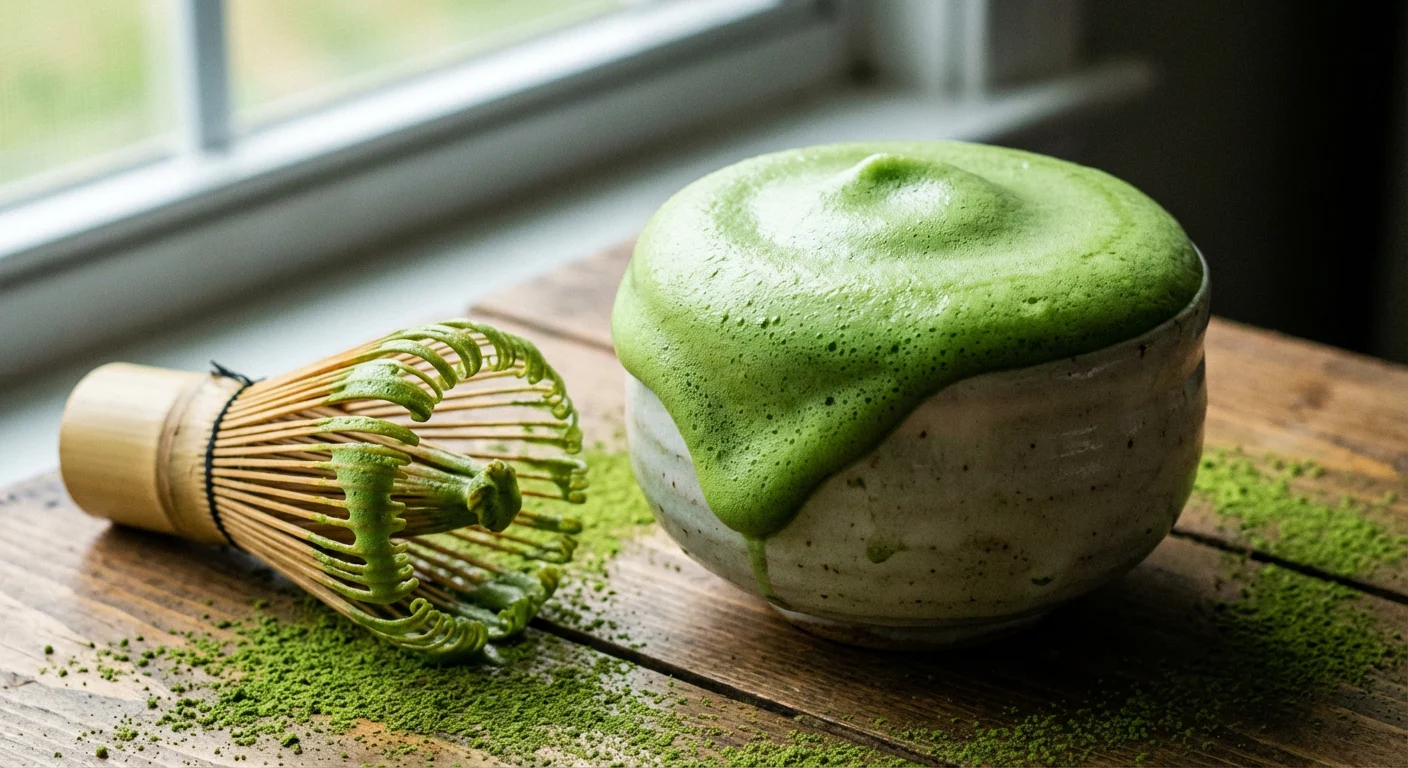
Pour beaucoup, la première expérience avec le matcha peut être inattendue.
Contrairement au thé vert infusé, le matcha a un profil de saveur robuste et concentré. Cependant, il existe une idée fausse sur le marché : de nombreux consommateurs associent le matcha à un goût excessivement amer, herbacé ou même “poissonneux”.”
C'est scientifiquement incorrect. Ces saveurs désagréables sont généralement des indicateurs d'une production de mauvaise qualité, d'une oxydation ou d'une mauvaise conservation, plutôt que des caractéristiques du thé lui-même.
La réponse courte
Lorsqu'il est préparé correctement, le matcha de haute qualité présente un équilibre sophistiqué entre trois éléments fondamentaux :
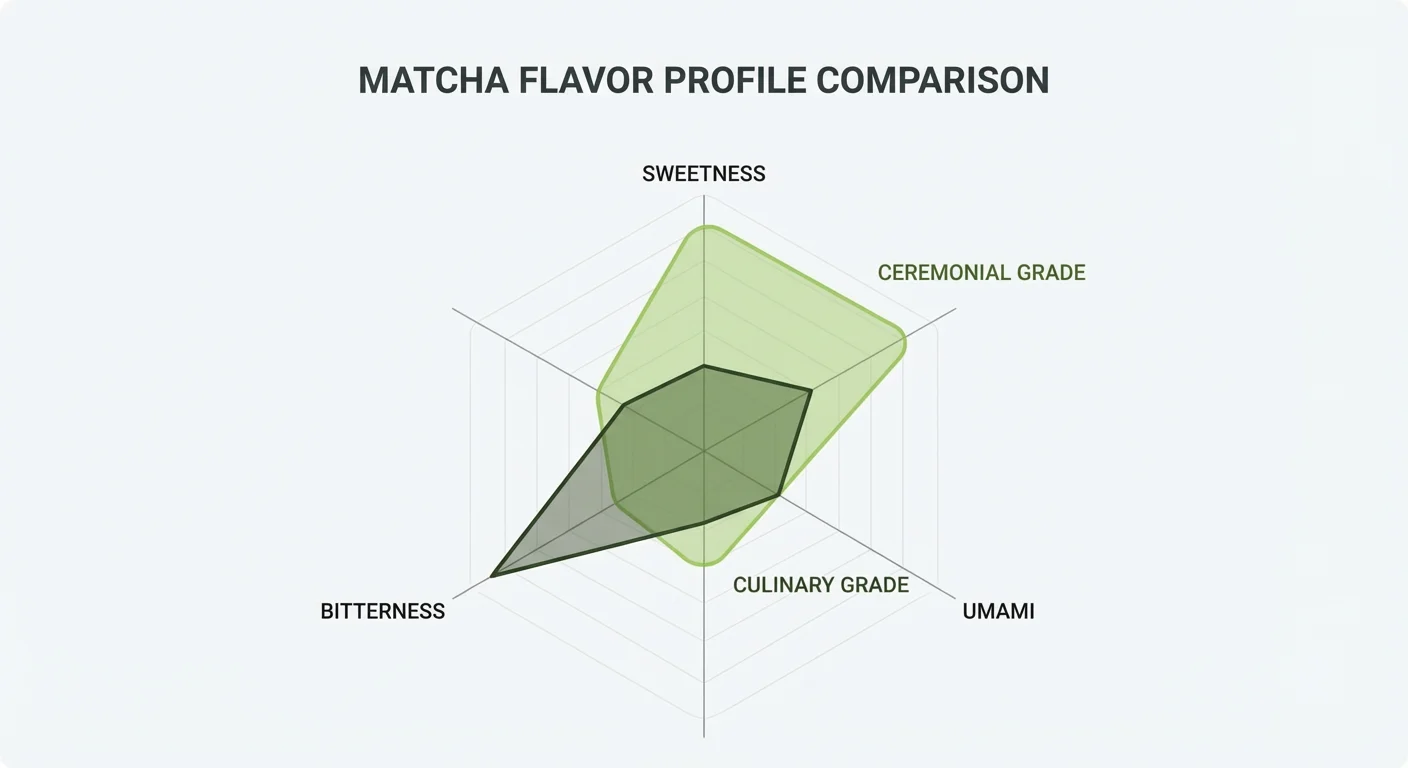
Le matcha de qualité supérieure se caractérise par un riche Umami (saveur), des notes végétales fraîches et un Amami (douceur) prononcé. La texture doit être corsée et crémeuse, sans astringence ni notes de poisson.
Dans ce guide, nous analyserons le profil sensoriel du matcha authentique, nous expliquerons la science qui sous-tend les défauts de goût les plus courants et nous fournirons des normes pour identifier la qualité.
Les mauvais goûts courants : Comprendre les défauts
Avant d'analyser le profil aromatique idéal, il est important de comprendre pourquoi certains matchas ont un goût désagréable. Si une tasse a un goût de poisson ou de boue, cela est généralement dû à des réactions chimiques spécifiques ou à des problèmes de classement.
1. L'odeur de poisson : oxydation et chaleur
Un arôme de poisson est la plainte la plus fréquente parmi les nouveaux consommateurs. Si le matcha doit avoir des notes marines, il ne doit jamais sentir les fruits de mer avariés.
- Oxydation : La poudre de matcha a une surface élevée, ce qui la rend sensible à l'oxydation. Lorsqu'ils sont exposés à l'air ou à la chaleur, les acides gras et les acides aminés contenus dans les feuilles de thé se décomposent. Cette dégradation crée une odeur de poisson distincte et désagréable.
- Chaleur de transformation : Le matcha authentique est moulu à la pierre à faible vitesse pour maintenir des températures basses. Le matcha produit en masse est souvent broyé à l'aide de moulins industriels à grande vitesse, générant une chaleur qui “brûle” les feuilles et détruit les délicats composés aromatiques, ce qui donne un goût terne et métallique.
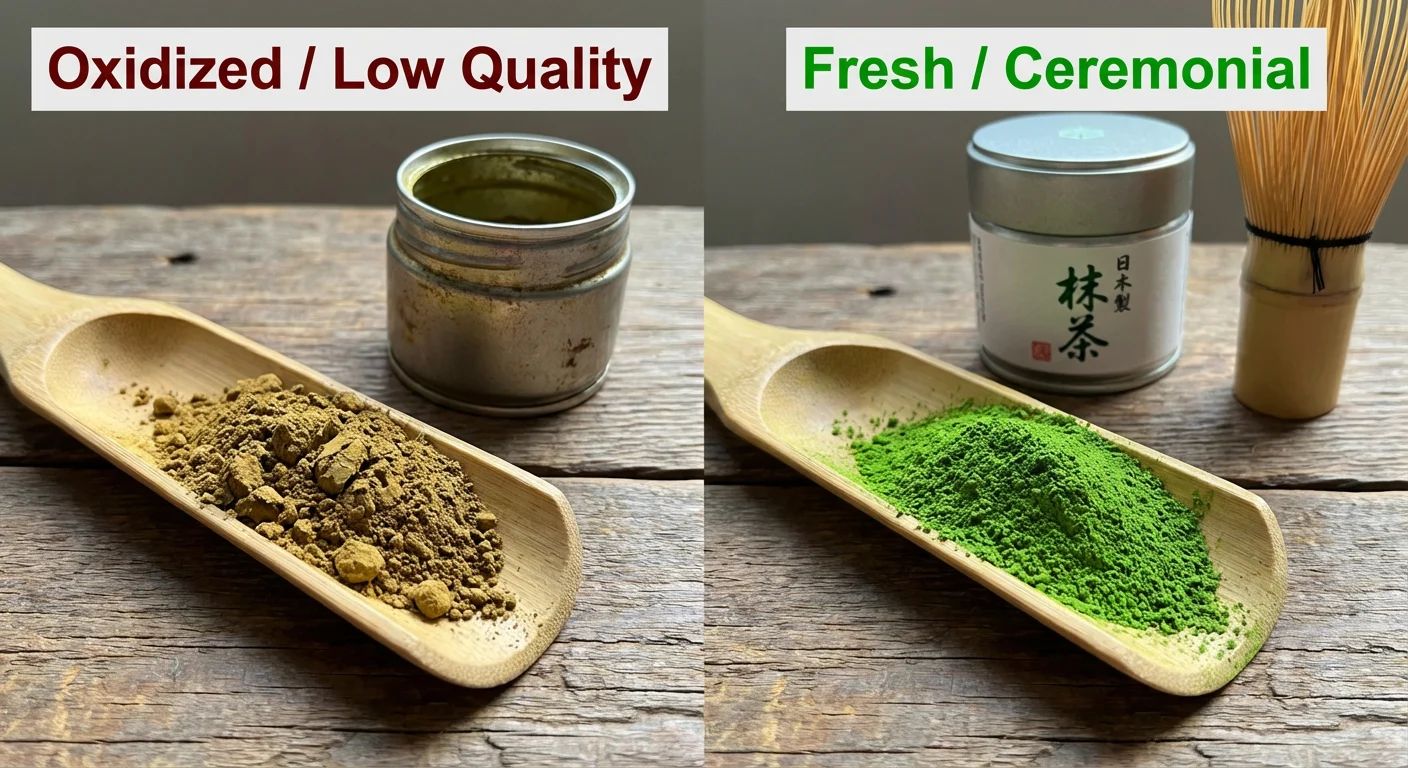
Indicateur visuel : Le matcha authentique doit être d'un vert vif et électrique. Une teinte olive terne ou brunâtre indique une oxydation et un profil aromatique probablement médiocre.
2. L'amertume “terreuse” : Qualité et taille des particules
Si le matcha a un goût excessivement amer ou une texture rugueuse et sablonneuse (souvent décrite comme de la “saleté à boire”), il s'agit probablement d'un problème lié à la matière première ou au processus de broyage.
- Teneur élevée en tanins (qualité culinaire) : Les qualités inférieures de matcha sont récoltées à partir de feuilles plus âgées, plus tard dans la saison. Ces feuilles ont été davantage exposées à la lumière du soleil, ce qui a transformé leurs acides aminés doux (L-théanine) en catéchines amères (tanins). Ce type de matcha est destiné à la pâtisserie, où le sucre masque l'amertume, et non à la consommation pure.
- Taille des particules : Le matcha de qualité supérieure est moulu en particules d'une taille de 5 à 10 microns. Cela lui permet de se suspendre sans effort dans l'eau, créant ainsi une sensation crémeuse en bouche. Une production moins coûteuse donne des particules plus grossières qui ne se dissolvent pas bien, créant une texture crayeuse ou granuleuse.
Le profil authentique : Umami, végétal et sucré
L'authentique matcha Ceremonial Grade offre une expérience sensorielle complexe due à sa composition chimique.
1. Umami (le cœur du goût)
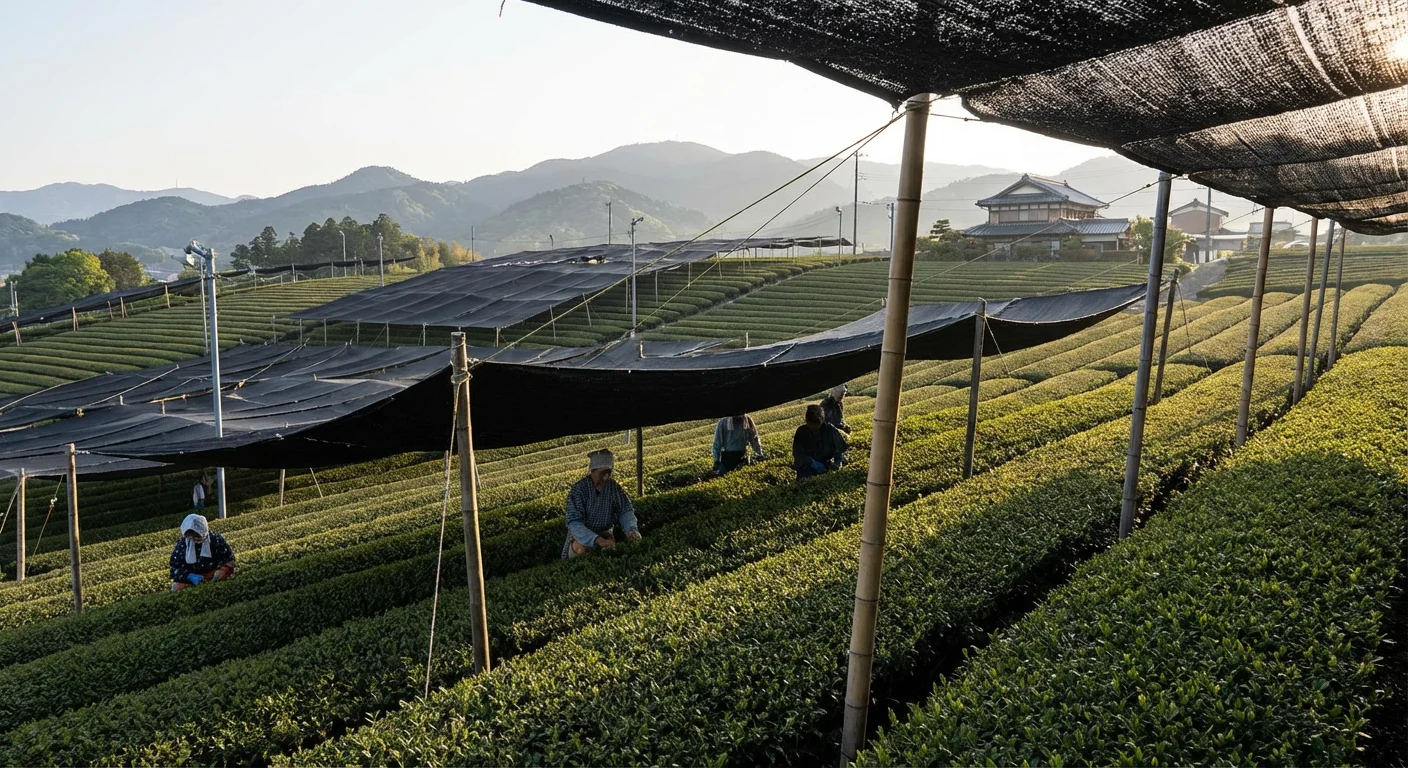
Le matcha de haute qualité se caractérise par Umami. Ce goût savoureux est dérivé de L-théanine, un acide aminé qui s'accumule lorsque les théiers sont ombragés pendant 3 à 4 semaines avant la récolte.
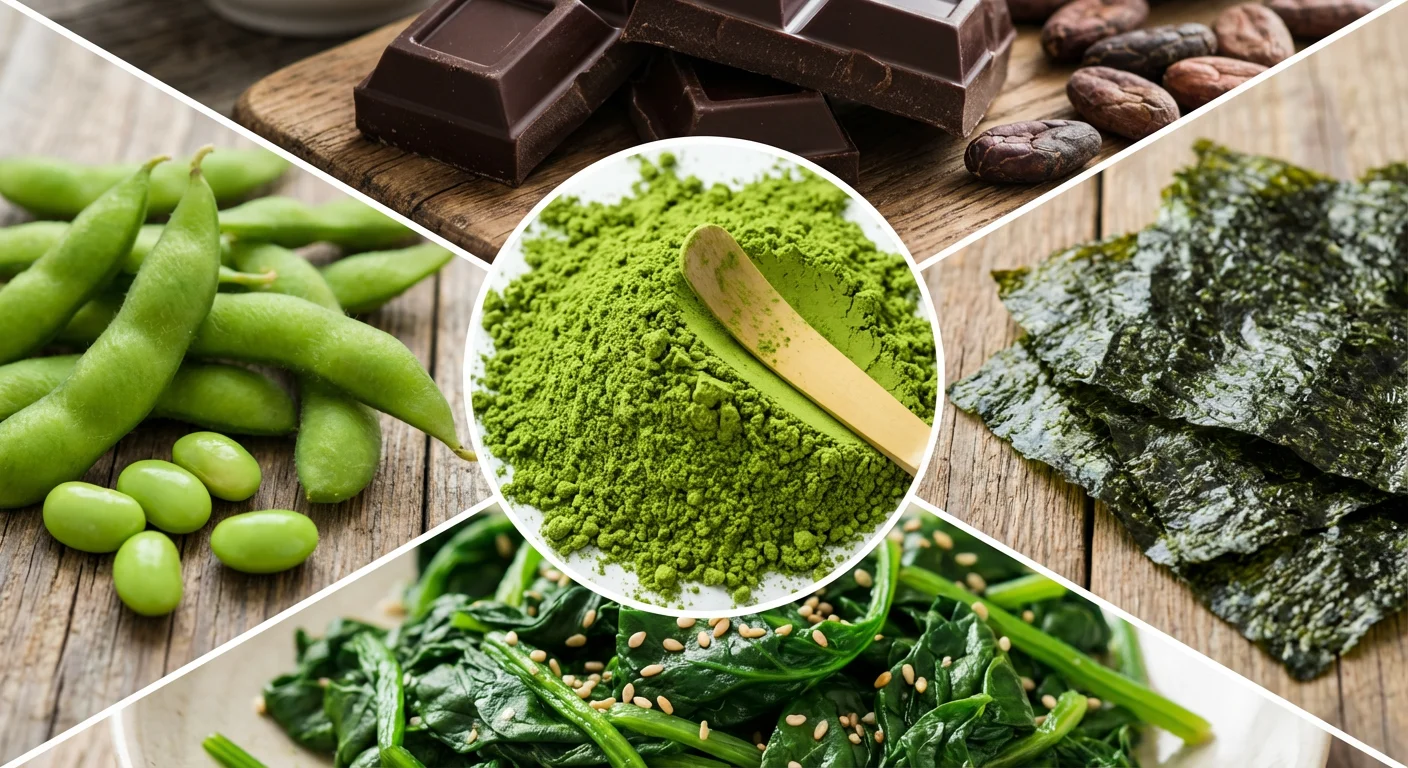
- Le profil : Elle est semblable à la profondeur savoureuse que l'on trouve dans les bouillons d'algues, les légumes verts cuits à la vapeur ou les tomates cerises. Il procure une sensation de plénitude en bouche.
2. Notes sur les végétaux
En tant que produit d'origine végétale, le matcha possède des qualités végétales inhérentes. Il existe toutefois une distinction entre “frais” et “rassis”.”
- Souhaitable : Notes d'edamame frais, de jeunes épinards ou de pois mange-tout.
- Indésirable : Notes de foin sec, de paille ou d'herbe marécageuse.
3. Amami (douceur naturelle)
Le matcha de haute qualité possède une douceur naturelle, connue en japonais sous le nom de Amami. Il ne s'agit pas d'une douceur sucrée, mais d'un arrière-goût persistant qui équilibre les notes végétales. Elle est souvent comparée à la douceur subtile que l'on trouve dans le maïs doux ou les petits pois cuits.
4. Sensation en bouche et texture
La saveur est aussi une question de texture. En raison de la suspension des microparticules, le matcha bien préparé doit avoir une texture corps crémeux et velouté. Elle doit être consistante en bouche, comme un café au lait, même lorsqu'elle est préparée avec de l'eau.
Distinguer le “marin” du “poissonneux”
La comparaison avec les algues est souvent source de confusion. Il est essentiel de faire la distinction entre les notes marines fraîches et le goût désagréable du poisson.
- Nori (algue) Notes : Le matcha japonais authentique a souvent un arôme propre et océanique, semblable au nori frais et séché utilisé dans les sushis. Cet arôme est le résultat d'un sol riche en minéraux (terroir) et est considéré comme un attribut positif.
- Odeur de poisson : Une odeur lourde et piquante ressemblant à des fruits de mer périmés est un défaut causé par la détérioration ou une mauvaise transformation.
La règle de base : L'arôme doit être frais et vif (comme une brise marine), et non lourd ou rance (comme dans un marché aux poissons).
Facteurs influençant la saveur : Qualité et terroir
Le goût du matcha est strictement déterminé par sa qualité et sa région d'origine.
1. Grade cérémoniel ou grade culinaire
- Grade de cérémonie : Récolté au printemps. Contient la plus forte concentration de L-théanine et de chlorophylle. La saveur est délicate, sucrée et douce.
- Grade culinaire : Récolté en été ou en automne. Contient des niveaux plus élevés de catéchines astringentes. La saveur est forte et amère, conçue pour couper les autres ingrédients dans les recettes.
2. L'impact du terroir (origine)
- Matcha japonais (par exemple, Uji, Nishio) : Connu pour ses notes marines et salées (Umami) plus prononcées en raison de la composition spécifique du sol et des méthodes de cuisson à la vapeur.
- Matcha chinois : Il présente souvent un profil plus axé sur les noix, les fleurs ou la torréfaction, avec moins d'influence marine. Le matcha cérémoniel chinois haut de gamme peut offrir une douceur et un rapport qualité-prix excellents, en proposant une alternative distincte au profil japonais classique.
Optimiser l'expérience : Conseils de préparation
Même le matcha de qualité supérieure peut avoir un goût médiocre s'il est mal préparé. Suivez les protocoles suivants pour garantir une saveur optimale :
- Contrôle de la température :Ne jamais utiliser d'eau bouillante. L'eau à 100°C (212°F) ébouillante la poudre de thé et libère les tanins en excès, ce qui provoque une amertume immédiate. La température optimale est de 80°C (175°F).
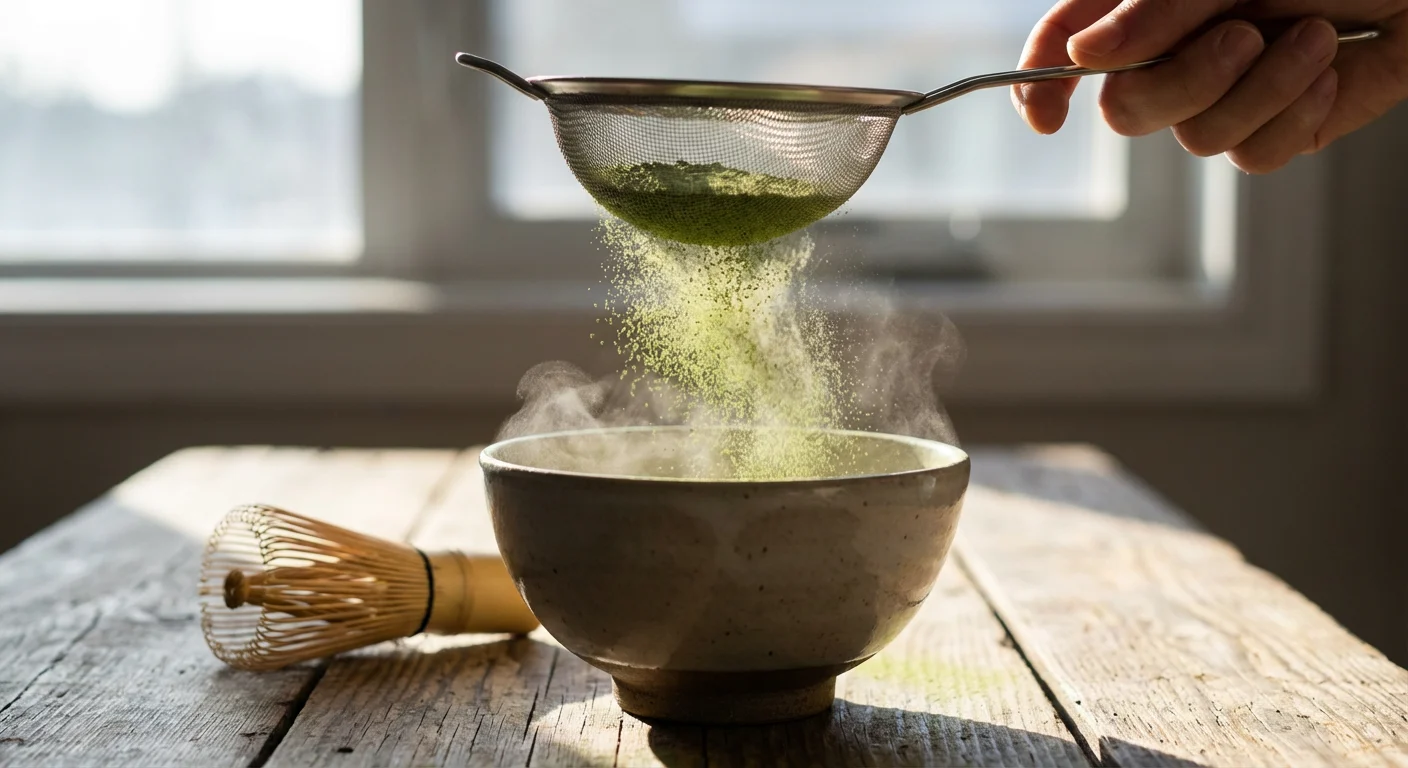
- Le tamisage est essentiel : L'électricité statique provoque la formation de grumeaux dans la poudre de matcha. Ces amas ne s'hydratent pas correctement et donnent une texture granuleuse. Passez toujours la poudre au tamis fin avant de la fouetter.
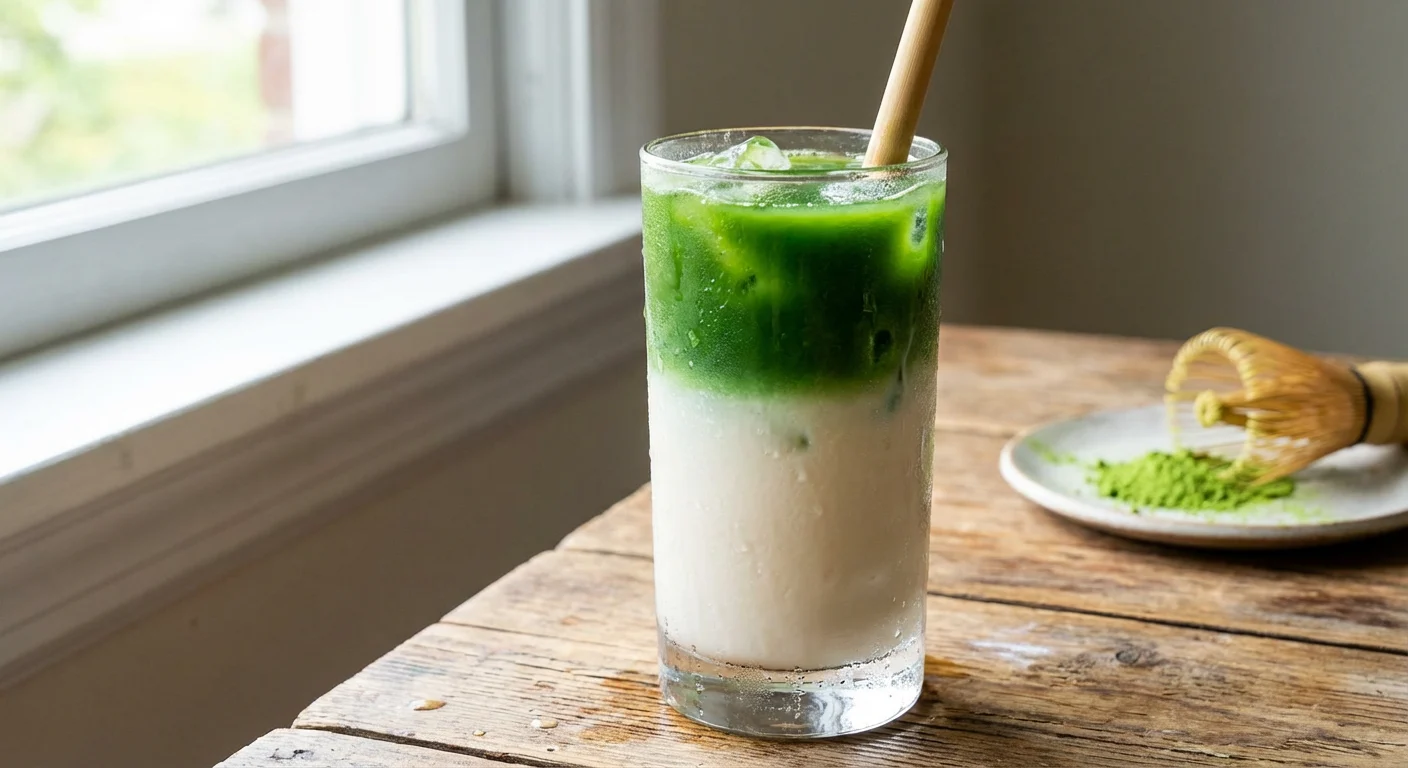
- L'option café au lait : Pour les personnes sensibles aux saveurs terreuses, les matières grasses (lait ou lait d'avoine) se lient aux tanins et neutralisent l'amertume, mettant en valeur la douceur naturelle du thé.
Pour les chefs d'entreprise : Décrire le Matcha aux clients
Pour les cafetiers et les détaillants, la description précise des saveurs est essentielle pour répondre aux attentes des clients.
- Éviter : Des mots comme “algues”, “amer” ou “herbeux”, qui peuvent avoir des connotations négatives pour les débutants.
- Utiliser : Des termes comme “Terreux”, “salé”, “noisette”.” et “En douceur”.”
- Le pitch : “Il a un profil riche et terreux semblable à celui du chocolat noir, avec une finale crémeuse et une note salée naturelle.”
Foire aux questions (FAQ)
Q : Le matcha est-il censé avoir le goût du thé vert ?
R : Oui, mais plus intense. Comme vous consommez la feuille entière plutôt qu'une infusion, la saveur est nettement plus concentrée, plus riche et plus corsée que celle du thé vert infusé.
Q : Le matcha est-il un goût acquis ?
R : Souvent, oui. Comme pour le chocolat noir, le café ou le vin sec, il faut du temps pour apprécier l'équilibre complexe entre les notes savoureuses et amères.
Q : Cela a-t-il le goût des épinards ?
R : C'est possible. La teneur élevée en chlorophylle confère au matcha une note végétale fraîche qui rappelle à certains palais les légumes verts cuits à la vapeur ou les épinards. C'est un signe de fraîcheur.
Q : Le matcha est-il amer ?
R : Une légère astringence agréable est normale (comme pour le vin rouge), mais une amertume agressive suggère un thé de mauvaise qualité, une température de l'eau trop élevée ou des rapports inappropriés.
Q : Pourquoi mon matcha n'a-t-il aucun goût ?
R : Si l'arôme est faible ou aqueux, vous avez probablement utilisé trop d'eau ou pas assez de poudre. Le rapport standard est d'environ 2 grammes de poudre pour 70 ml d'eau.
Conclusion
La saveur du matcha est le reflet direct de sa qualité. Si votre expérience a été définie par des odeurs de poisson ou des textures sablonneuses, vous n'avez pas fait l'expérience du véritable matcha.
Le matcha authentique offre un équilibre raffiné entre l'umami, la fraîcheur végétale et la douceur. C'est un profil de saveur qui impose le respect et qui, lorsqu'il est obtenu correctement, offre une expérience sensorielle délicieuse.