
What Is Matcha Powder?
Matcha is shade-grown green tea leaves that have been stone-ground into a fine, bright-green powder. Unlike regular steeped tea where you discard the leaves, with matcha you consume the entire leaf — which means you get more antioxidants, amino acids, and nutrients in every cup.
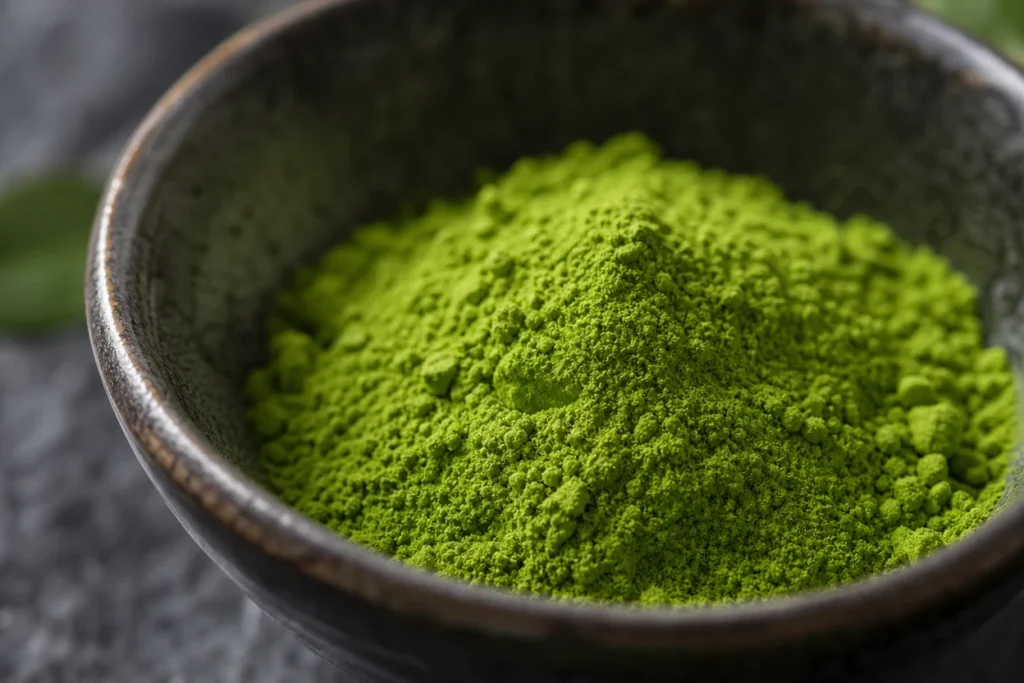
The practice originated in China during the Tang Dynasty (618–907 AD), but it was Japan that refined matcha into the ceremonial product we know today. Japanese farmers shade tea plants for about 20 days before harvest, which increases chlorophyll and L-theanine content — giving matcha its distinctive sweet, umami-rich flavor.
The nutritional edge is real. WebMD notes that matcha contains up to 137 times the EGCG (a powerful antioxidant) found in regular green tea, citing a study published in the Journal of Agricultural and Food Chemistry. That’s not a marketing claim — it’s the leaf-in-leaf difference.
I first tried matcha at a small Japanese tea house in San Francisco’s Japantown. The tea master whisked it in front of me with a bamboo chasen, and the flavor was nothing like the bitter green powder I’d seen at coffee shops. That moment — realizing matcha could taste smooth, sweet, and creamy — is what got me hooked. But it took me several months of experimentation to learn how to use matcha powder properly at home.
Matcha Grades — Ceremonial vs Culinary vs Premium
Understanding matcha grades is the single most important thing before you buy. Using the wrong grade for the wrong purpose will make your drink taste bitter or your cake taste bland.
Matcha grades are determined by the age and quality of the tea leaves, when they were harvested, and how they were processed. Here’s how they break down:
| Grade | Best For | Flavor Profile | Color | Price Range (per 100g) |
|---|---|---|---|---|
| Ceremonial | Traditional tea, plain lattes | Smooth, sweet, umami-rich | Bright, vibrant green | $30–$80 |
| Premium | Versatile — tea, lattes, and light cooking | Balanced, slightly less sweet | Vivid green | $15–$35 |
| Culinary | Baking, smoothies, ice cream, cooking | Bold, slightly bitter | Dull green-yellow | $10–$25 |
The key distinction: Ceremonial grade is designed to be drunk on its own — just matcha and water. It’s made from the youngest, most tender leaves, with stems and veins removed. Culinary grade uses older leaves that hold up better when mixed with other flavors (milk, sugar, flour, etc.).
I spent two months testing a $45 ceremonial grade from Ippodo against a $12 culinary grade from a local grocery store. For plain tea? The ceremonial grade won hands-down — it was noticeably smoother, with a natural sweetness I didn’t need to add sugar to. For my matcha cookies? The culinary grade actually tasted better — it had the boldness to cut through butter and sugar.
My recommendation: If you’re starting out, go with a premium grade — it’s the sweet spot between price and versatility.
Essential Tools and Alternatives
You don’t need expensive equipment to make good matcha, but the right tools make a real difference.
Here’s what I use and what you can get away with:
| Tool | Purpose | Do You Need It? | Alternative |
|---|---|---|---|
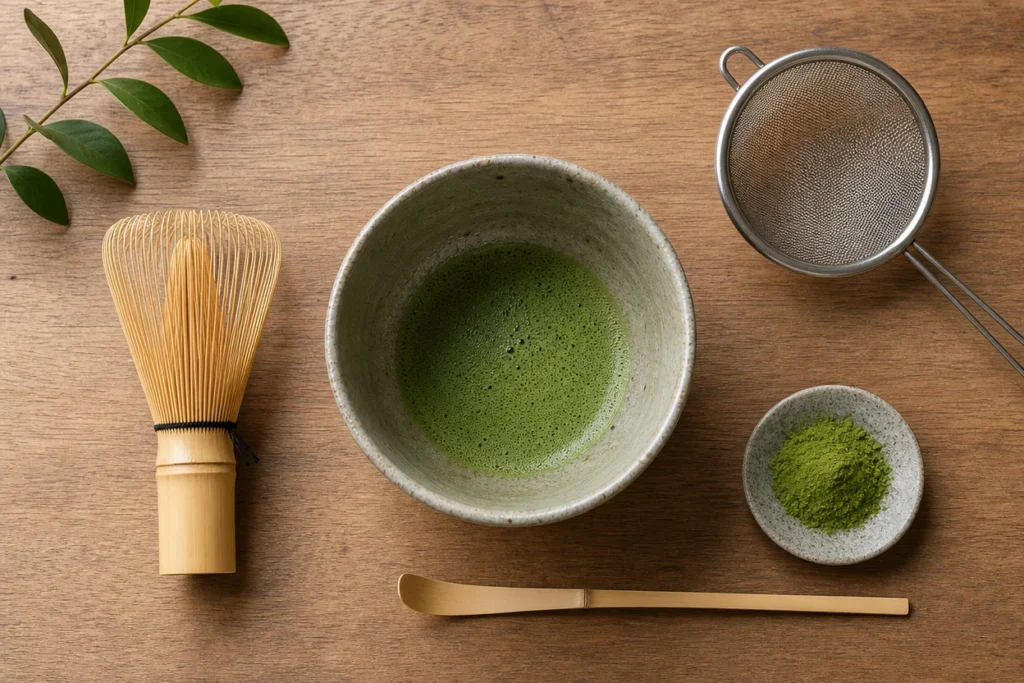
| Chasen (bamboo whisk) | Creates frothy, lump-free tea | Best for traditional preparation | Electric milk frother, small whisk, or fork |
| Chawan (matcha bowl) | Wide, low bowl for whisking | Helpful but not essential | Any wide, shallow bowl |
| Fine mesh strainer | Sifts powder, removes clumps | Highly recommended | Tea strainer or small sieve |
| Chashaku (bamboo scoop) | Measures matcha | Convenient | 1 teaspoon measuring spoon |
| Digital thermometer | Hits the right water temperature | Recommended if you want consistency | Kitchen thermometer or kettle with temp control |
I went six months using a small wire whisk before buying my first chasen, and the difference was noticeable but not dramatic. The chasen produces a finer, more even froth, but a regular small whisk gets the job done for daily drinking. If you’re making matcha lattes with milk (which I do most mornings), a handheld electric frother actually works better than a chasen — it aerates the milk while blending the matcha.
The one tool I strongly recommend: A fine mesh strainer. Sifting matcha before whisking is non-negotiable. Without it, you’ll get clumps that no amount of whisking can fix.
How to Make Traditional Matcha Tea
The basic formula: sift 1–2 teaspoons of matcha, add 2–3 oz of water at 175°F (80°C), and whisk in a “W” motion until frothy.
Here’s the step-by-step process I use every morning:
Step 1: Sift the matcha
Use a fine mesh strainer to sift 1–2 teaspoons of matcha into a bowl. This breaks up any clumps and ensures smooth texture. I made the mistake of skipping this step for weeks and couldn’t figure out why my tea was always lumpy.
Step 2: Heat your water
Water temperature is critical. You want 175°F (80°C) — that’s about 30 seconds off the boil. Boiling water (212°F) will scorch the matcha, making it taste bitter and harsh. If you don’t have a thermometer, heat water to boiling, then let it sit for 30 seconds before pouring.
Step 3: Add water and whisk
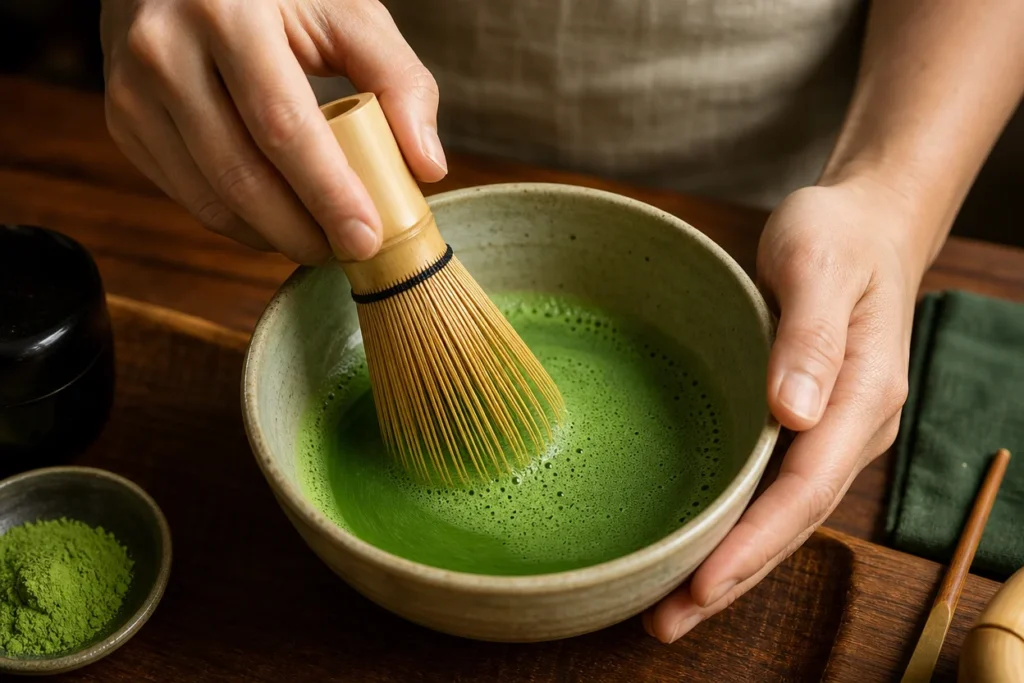
Pour 2–3 oz of hot water over the matcha. Using a chasen or small whisk, whisk vigorously in a “W” or “M” motion (not circles) for 15–30 seconds until a thin layer of foam appears on top.
Step 4: Drink immediately
Matcha is best fresh. The foam settles within a few minutes, and the flavor starts to oxidize. Pour into your favorite cup and enjoy.
Pro tip: For a stronger, more concentrated “koicha” (thick tea) style, use less water — about 1 oz per 2 tsp of matcha. For a lighter “usucha” (thin tea), use more water — about 3 oz per 1 tsp.
How to Make a Matcha Latte
A matcha latte is simply whisked matcha plus steamed or warmed milk. The standard ratio is 1 tsp matcha to 2 oz water to 6–8 oz milk.
I tested several ratios over the past year to find what works best:
| Matcha | Water | Milk | Result |
|---|---|---|---|
| 1 tsp | 2 oz | 6 oz | Light, balanced — good for beginners |
| 1.5 tsp | 2 oz | 6 oz | Stronger matcha flavor — my daily go-to |
| 2 tsp | 2 oz | 8 oz | Bold, rich — better for iced lattes |
My matcha latte routine:
- Sift 1.5 tsp matcha into a bowl
- Whisk with 2 oz water at 175°F
- Steam 6 oz oat milk (or heat and froth)
- Pour matcha into the milk (not the other way around — it mixes better)
- Add ice if you prefer it cold
On dairy vs plant milks: Oat milk froths best and has a natural sweetness that complements matcha. Almond milk works but can taste thin. Regular dairy milk is fine — just use whole or 2% for richness.
For iced matcha lattes, I whisk the matcha with cold water first, then add ice and cold milk. It’s faster and avoids the diluted taste that comes from pouring hot matcha over ice.
Common Mistakes to Avoid
These are the five mistakes I made (and still see people making) that ruin good matcha:
1. Using boiling water
This is the #1 mistake. Water at 212°F (100°C) burns the matcha, creating a harsh, bitter flavor. Always aim for 175°F (80°C). I ruined my first three bags of ceremonial grade matcha before I learned this.
2. Skipping the sifter
Matcha clumps in the bag. If you dump powder directly into water, you’ll get lumps that no amount of whisking can smooth out. A fine mesh strainer takes 10 seconds and saves you frustration.
3. Using too much matcha
More is not better. A standard serving is 1–2 teaspoons (about 1–2 grams). I once used 3 teaspoons in a latte and couldn’t finish it — it was overwhelming, bitter, and made me feel jittery all afternoon.
4. Using old, oxidized matcha
Fresh matcha is bright green. If your matcha has turned brown or yellowish, it’s past its prime. I learned this when I found a bag in the back of my pantry that was eight months old — it tasted flat and looked like dust. Store opened matcha in the fridge.
5. Using culinary grade for straight tea
Culinary grade is fine for lattes with milk and sweetener, but if you’re drinking matcha with just water, it tastes noticeably more bitter than ceremonial grade. Match the grade to the purpose.
Other Ways to Use Matcha Powder
Matcha isn’t just for tea — it works in smoothies, baking, and even savory dishes.
Here are the ways I use matcha beyond traditional tea:
Smoothies
Add 1–2 teaspoons to any green smoothie. My go-to: matcha + frozen banana + handful of spinach + oat milk + honey. The matcha adds an earthy depth that balances the sweetness of the banana.
Baking
Use 1–2 tablespoons in cookies, brownies, cakes, or pancakes. Culinary grade works best here. My favorite: matcha white chocolate cookies — the bitterness of the matcha cuts through the white chocolate perfectly.
Ice cream and yogurt
Whisk matcha into softened vanilla ice cream or stir into plain Greek yogurt with honey. Quick, no-cook, and delicious.
Overnight oats
Stir 1 tsp matcha into your overnight oats mix. It infuses overnight and you wake up to a green, slightly earthy breakfast.
Savory dishes
Sprinkle a small amount over rice, avocado toast, or mix into salad dressings (whisk with olive oil, lemon juice, and a touch of honey).
How to Store Matcha for Maximum Freshness
Matcha is sensitive to heat, light, and air — the three enemies of freshness. Store opened matcha in an airtight container in the fridge, and use it within 4–6 weeks for peak flavor.
Here’s how to keep your matcha fresh longer:
- Unopened matcha: Store in a cool, dark place. It’s good for up to 6 months past the production date.
- Once opened: Transfer to an airtight container (the original bag usually isn’t resealable enough) and refrigerate immediately.
- For long-term storage: Freeze it. Matcha freezes well for up to 12 months — just pull out a portion and let it come to room temperature before opening the container (to avoid condensation).
- Always use a dry spoon. Moisture is the fastest way to ruin matcha. I once left a damp spoon in my matcha container and found mold within a week.
How do you know if your matcha is still good? Fresh matcha should be bright green with a fresh, grassy aroma. If it’s turned brown, smells stale, or tastes flat, it’s time to replace it.
Matcha Health Benefits and Safety
One teaspoon of matcha contains about 70mg of caffeine — about half a cup of coffee — along with L-theanine, an amino acid that promotes calm, focused energy.
Here are the key health facts worth knowing:
Caffeine content
Matcha has approximately 70mg of caffeine per teaspoon (1–2g), compared to about 95mg in a cup of coffee and about 30mg in regular green tea. For most adults, 1–2 cups of matcha per day is well within safe limits (the FDA suggests up to 400mg of caffeine daily).
The calm alertness effect
The L-theanine in matcha creates a different kind of energy than coffee. Instead of a spike and crash, matcha drinkers often describe a “calm focus” — alert but not jittery. I switched from my third afternoon coffee to matcha and noticed I stopped getting the 3pm energy crash.
Antioxidant content
Multiple studies (cited by WebMD and the American Journal of Clinical Nutrition) have found matcha contains significantly more antioxidants than regular green tea, particularly EGCG, which has been linked to anti-inflammatory and cell-protective effects.
Who should be cautious:
- Pregnant or nursing individuals should consult a healthcare provider — caffeine intake matters
- People sensitive to caffeine may want to start with half a teaspoon
- Those on blood thinners or certain medications should check with a doctor, as matcha contains vitamin K
Is matcha safe to drink every day? Yes, for most adults. Research suggests 1–3 cups per day (about 1–3 teaspoons) is safe and may offer health benefits. Moderation is key — and if you’re new to matcha, start with one cup.
FAQ
Does matcha have caffeine?
Yes. Matcha contains approximately 70mg of caffeine per teaspoon — about half the caffeine found in a standard cup of coffee. The L-theanine in matcha creates a more sustained, calm energy compared to coffee’s spike-and-crash pattern.
How much matcha powder should I use per cup?
Start with 1 teaspoon (about 1 gram) for traditional tea, or 1–1.5 teaspoons for lattes. You can increase to 2 teaspoons if you prefer a stronger flavor, but more than that can taste bitter.
Can I use culinary grade matcha for tea?
You can, but it will taste more bitter and less sweet than ceremonial grade. Culinary grade is designed for mixing with other ingredients (milk, sugar, flour). If you’re drinking matcha with just water, invest in ceremonial or premium grade.
What’s the difference between matcha and green tea?
Matcha is made from the entire tea leaf ground into powder, while regular green tea is brewed from leaves that are steeped and discarded. This means matcha provides more antioxidants, caffeine, and nutrients per serving.
Is matcha safe during pregnancy?
Consult your healthcare provider. Moderate caffeine intake (about 1–2 cups of matcha per day) is generally considered safe, but caffeine should be monitored carefully during pregnancy.
Can I make matcha without a whisk?
Yes. A small fork, a handheld electric milk frother, or even shaking it in a sealed jar with hot water will work. The results won’t be as smooth as a chasen, but they’re perfectly acceptable for daily drinking.
How long does matcha powder last?
Unopened matcha lasts 6–12 months in the freezer. Once opened, use within 4–6 weeks for the best flavor. Store in an airtight container in the fridge, away from light and moisture.
What does matcha taste like?
Good matcha tastes smooth, slightly sweet, and umami-rich — not bitter. Lower grades or incorrectly prepared matcha can taste harsh and bitter. Water temperature and grade choice make the biggest difference in flavor.
Final Thoughts
After a year of daily matcha, I’ve settled into a routine that works: a ceremonial grade matcha latte every morning, whisked with oat milk at 175°F. It took me months of experimenting with grades, temperatures, and ratios to find what I liked — and that’s the point. There’s no single “right” way to use matcha powder. Start with a good-quality powder at the right temperature, and adjust from there.
The biggest lesson I learned? Matcha rewards patience and attention. Sifting the powder, waiting for the water to cool slightly, whisking with intention — these small steps make a big difference in the final cup. And once you find your rhythm, matcha becomes less of a recipe and more of a daily ritual.
If you’ve been curious about matcha but haven’t tried it yet, start with a small bag of premium grade and a basic whisk. You’ll know within a few cups whether it’s for you — and I think you’ll be surprised at how much better it tastes when you use it properly.