
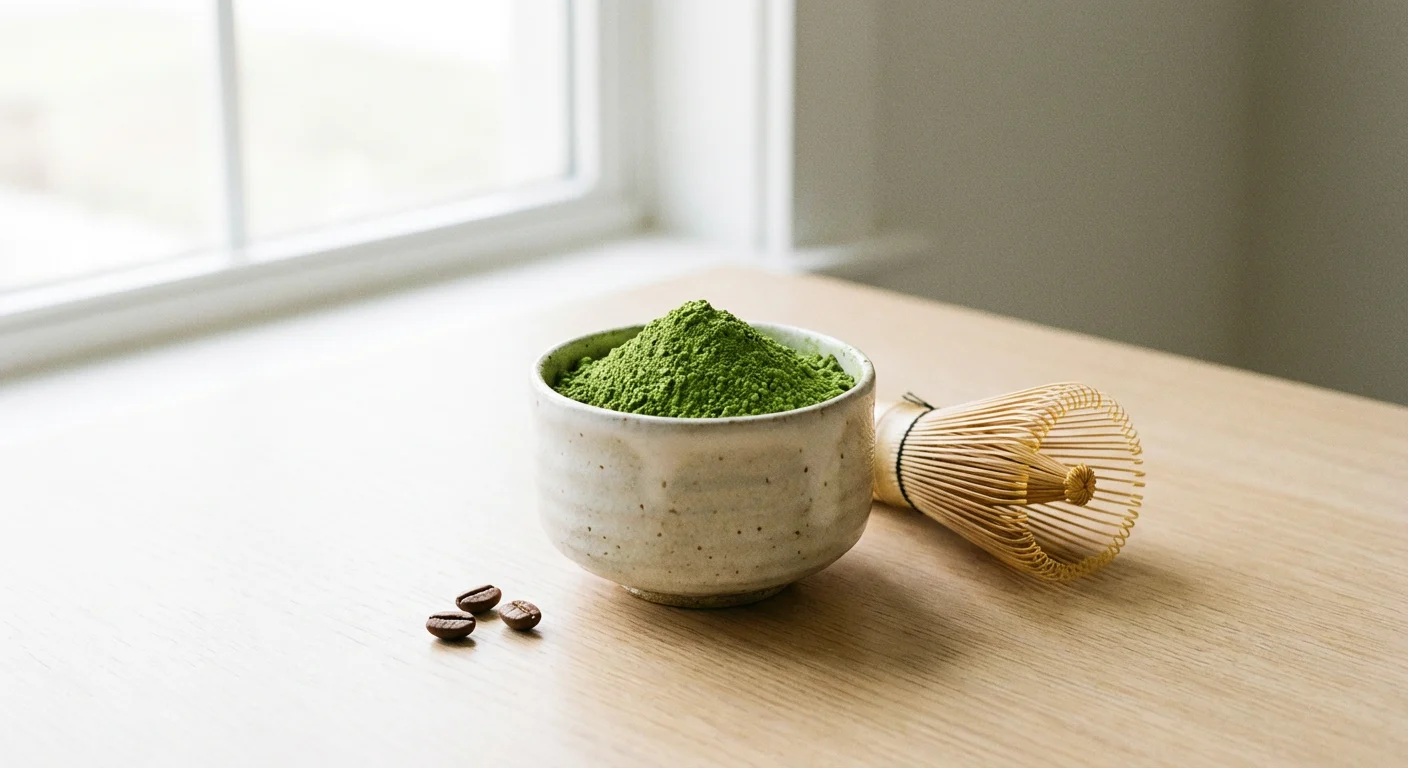
Viele Menschen suchen nach Alternativen zum Kaffee, um Nebenwirkungen wie Angstzustände, Nervosität oder einen Energieabfall am Nachmittag zu vermeiden. Wenn Sie Matcha in Betracht ziehen, sind die wichtigsten Fragen: Wie viel Koffein ist in Matcha enthalten?, und wie schneidet es im Vergleich zu anderen koffeinhaltigen Getränken ab?
Hier ist die direkte Antwort:
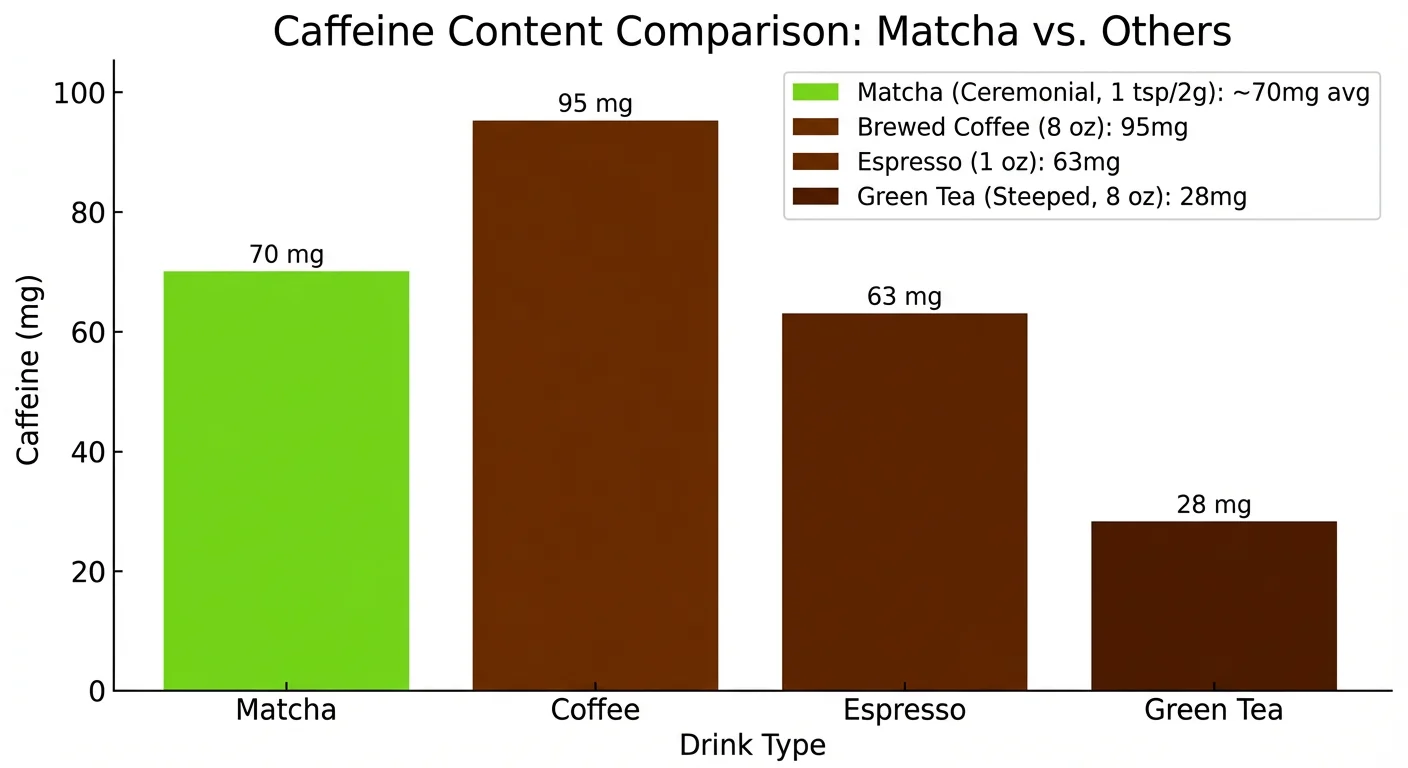
Im Durchschnitt enthält ein Teelöffel (ca. 2 Gramm) reines Matcha-Pulver zwischen 38-88 mg Koffein. Das ist im Allgemeinen weniger als eine Standardtasse aufgebrühten Kaffees (die im Durchschnitt 95 mg enthält), aber deutlich mehr als ein normaler grüner Tee, der aufgegossen wird.
Der Koffeingehalt ist jedoch nur ein Teil des Ganzen. Matcha enthält Verbindungen, die die Art und Weise verändern, wie der Körper Koffein verarbeitet, was zu einem Zustand ruhiger Wachsamkeit und nicht zu einem plötzlichen Energieschub führt.
In diesem Leitfaden bieten wir eine detaillierte Aufschlüsselung des Koffeingehalts nach Portionsgröße, vergleichen Matcha mit Espresso und Kaffee und erklären die biologischen Mechanismen, die das Energieprofil von Matcha einzigartig machen.
Matcha vs. Kaffee: Der Koffein-Breakdown
Der Koffeingehalt variiert je nach Zubereitungsmethode, Erntezeit und Wassertemperatur. Um einen genauen Vergleich zu ermöglichen, analysieren wir Standardportionsgrößen.
Hier sehen Sie, wie Matcha im Vergleich zu herkömmlichen koffeinhaltigen Getränken abschneidet:
Die Koffein-Vergleichstabelle
| Getränk Typ | Portionsgröße | Koffeingehalt (Avg) | Energie Dauer |
|---|---|---|---|
| Matcha (Zeremoniell) | 1 Teelöffel (2 g Pulver) | 38 - 88 mg | 4 - 6 Stunden |
| Gebrühter Kaffee | 8 oz (240ml) Tasse | 95 mg | 1 - 3 Stunden |
| Espresso | 1 oz (30ml) Schuss | 63 mg | 1 - 2 Stunden |
| Grüner Tee (gedünstet) | 8 oz (240ml) Tasse | 28 mg | 1 - 2 Stunden |
| Schwarzer Tee | 8 oz (240ml) Tasse | 47 mg | 1 - 3 Stunden |
Hinweis: Der Koffeingehalt hängt davon ab, ob Sie die zeremonielle Qualität (höherer Koffeingehalt) oder die kulinarische Qualität (etwas niedriger) verwenden.
Warum ist Matcha besser als normaler grüner Tee?
Matcha enthält deutlich mehr Koffein als eine normale Tasse aufgegossenen grünen Tees (88 mg gegenüber 28 mg).
Der Grund dafür ist die Verbrauchsmethode:
- Mit aufgegossenem Tee, Die Blätter werden in Wasser aufgegossen und dann weggeworfen. Dadurch wird nur ein Bruchteil des Koffeins und der Nährstoffe extrahiert.
- Mit Matcha, die ganzes Blatt Das Pulver wird in Wasser verquirlt und vollständig konsumiert. Die Einnahme des ganzen Blattes gewährleistet, dass 100% des verfügbaren Koffeins, der Antioxidantien und der Vitamine absorbiert werden.
Obwohl der Koffeingehalt mit dem einer schwachen Tasse Kaffee vergleichbar ist, unterscheiden sich die physiologischen Wirkungen aufgrund der chemischen Zusammensetzung des Matcha.
Warum Matcha keinen “Bammel” verursacht (Die Rolle von L-Theanin)
Wenn Matcha fast so viel Koffein wie Kaffee enthält, warum verursacht er dann in der Regel keine Angstzustände oder Zittrigkeit?
Der wichtigste Faktor ist eine Aminosäure namens L-Theanin.
Anders als Kaffee, der in erster Linie Koffein liefert, enthält Matcha eine hohe Konzentration von L-Theanin. Diese Verbindung wirkt synergistisch mit Koffein und mildert dessen stimulierende Wirkung.
Unterschiede in der Energiefreisetzung
Die Aufnahme und Wirkung von Koffein ist bei beiden Getränken unterschiedlich:
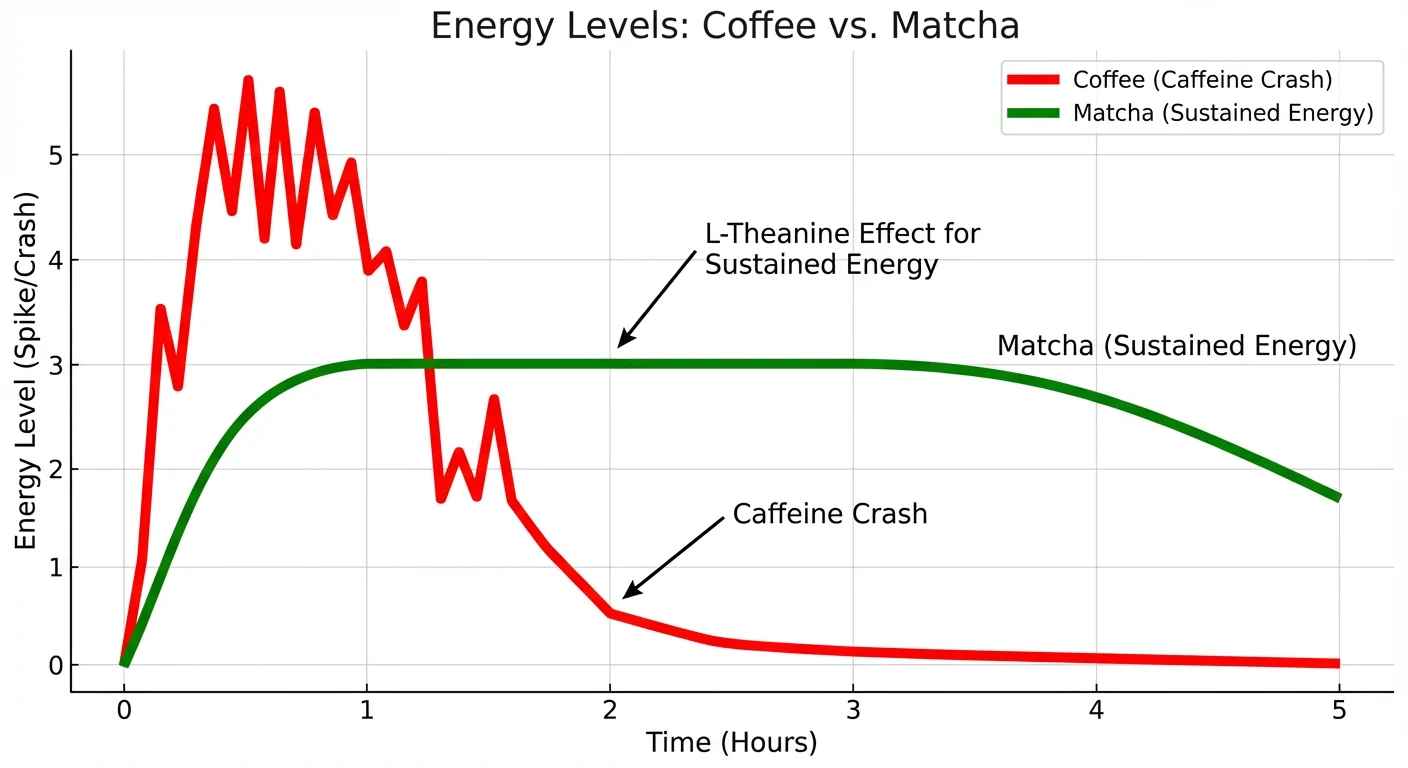
- Kaffee (schnelle Absorption): Kaffee wird schnell in den Blutkreislauf aufgenommen. Dies kann den Adrenalin- und Cortisolspiegel in die Höhe treiben, was zu einem schnellen Energieschub führt, dem oft ein Abfall des Energieniveaus (ein “Absturz”) 1-2 Stunden später folgt.
- Matcha (mit verzögerter Freisetzung): L-Theanin verlangsamt die Aufnahme von Koffein. Anstelle eines schnellen Anstiegs führt dies zu einer allmähliche Freisetzung von Energie, die normalerweise 4 bis 6 Stunden anhält.
Alphawellen und Fokus
Die Forschung zeigt, dass L-Theanin die Produktion von Alpha-Gehirnwellen, die mit einem Zustand der “wachen Entspannung” verbunden sind. Dies ermöglicht eine erhöhte Konzentration und Wachsamkeit ohne das hyperaktive Gefühl, das oft mit hohem Koffeinkonsum verbunden ist.
Wie viel ist in Ihr Schaufel? (Gramm, Löffel und Noten)
Eine genaue Dosierung ist wichtig für die Steuerung der Koffeinaufnahme. Da in den meisten Küchen keine Mikroskalen vorhanden sind, werden hier Schätzungen auf der Grundlage gängiger Messgeräte vorgenommen.
1. Der “Scoop”-Konverter
Die Koffeinaufnahme hängt von der Menge des verwendeten Pulvers ab. Matcha hat eine hohe Dichte, daher wirken sich kleine Mengenschwankungen auf die Gesamtmenge an Milligramm aus.
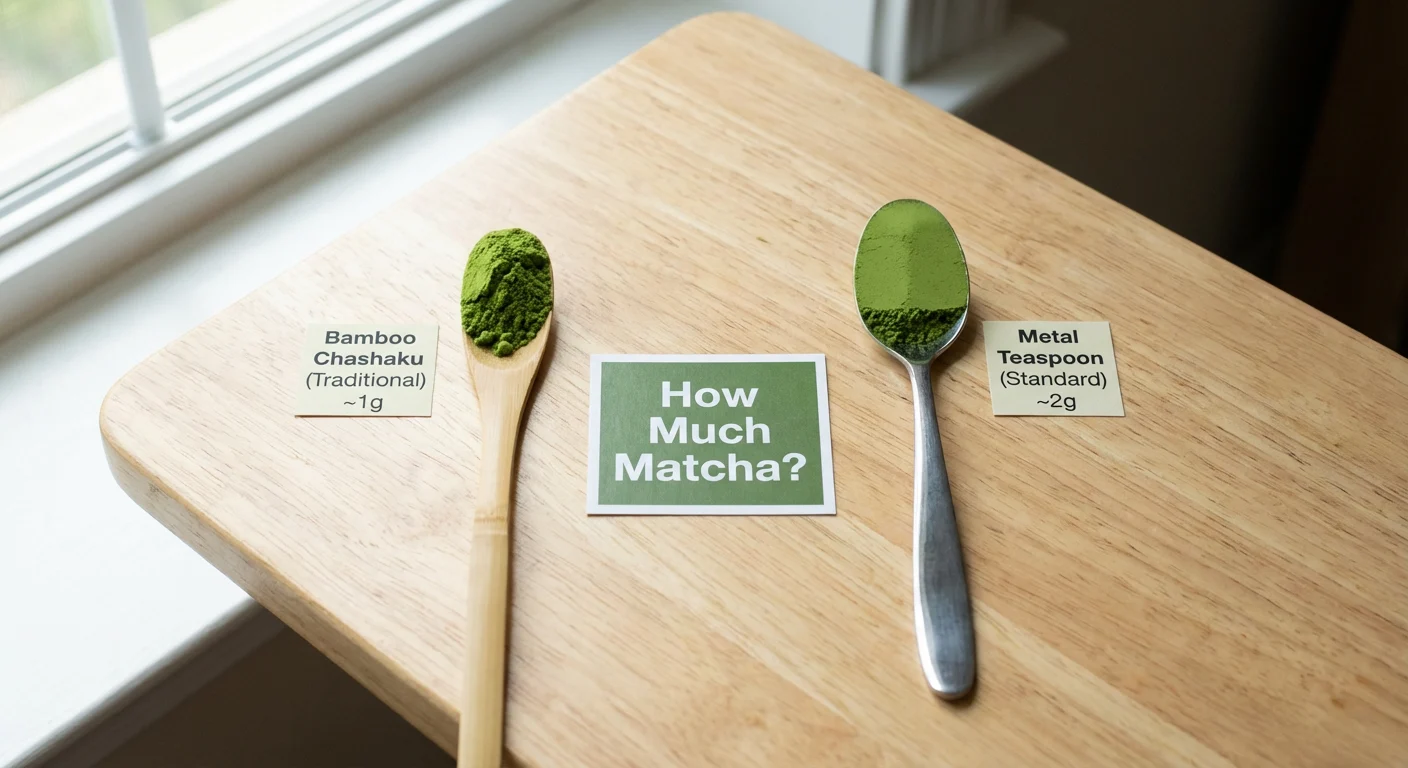
- Die traditionelle Bambus-Schaufel (Chashaku):
- Menge: ~1 Gramm (mandelgroßer Haufen)
- Koffein:~35 mg
- Hinweis: Für die traditionelle Zubereitung (Usucha) werden in der Regel 2 Messlöffel (2 g) verwendet.
- Standard-Teelöffel (Stufe):
- Menge: ~2 - 2,5 Gramm
- Koffein:~70 - 88 mg
- Hinweis: Dies ist die Standardportionsgröße für die meisten Matcha Lattes.
- Standard-Teelöffel (gehäuft):
- Menge: ~3,5 - 4 Gramm
- Koffein:~120 - 140 mg
- Warnung: Diese Menge entspricht in etwa der Koffeinstärke eines doppelten Espressos.
2. Zeremonielle vs. kulinarische Qualität
Auch die Qualität des Matcha-Pulvers beeinflusst den Koffeingehalt.
- Zeremonieller Grad (junge Blätter): Wird aus den jüngsten Teeblättern an der Spitze der Pflanze gewonnen. Diese Blätter werden für längere Zeit im Schatten angebaut, was die Chlorophyll- und Koffeinproduktion erhöht.
- *Ergebnis:*Mehr Koffein, Hoher L-Theanin-Gehalt, Bohnenkraut/Umami-Geschmack.
- Kulinarische Qualität (Ältere Blätter): Wird aus den Blättern am unteren Ende des Stängels gewonnen, die mehr Sonnenlicht abbekommen. Das Sonnenlicht wandelt einen Teil des Koffeins und des L-Theanins in Catechine um.
- *Ergebnis:*Weniger Koffein, Weniger L-Theanin, mehr bitterer/herber Geschmack.
Zusammenfassung: Hochwertiger zeremonieller Matcha enthält im Vergleich zu kulinarischen Sorten in der Regel eine höhere Konzentration an Koffein und L-Theanin.
Ist es sicher? Tägliche Grenzwerte & Nebenwirkungen
Da Matcha leicht zu konsumieren ist, empfiehlt es sich, die tägliche Einnahme zu überwachen.
Die 400mg-Regel
Nach Angaben der FDA (US-amerikanische Lebensmittel- und Arzneimittelbehörde), Der sichere Grenzwert für Koffein liegt für die meisten gesunden Erwachsenen bei 400mg pro Tag.
Basierend auf dem Koffeingehalt von Matcha:
- Wenn 1 Teelöffel Matcha = ~70mg Koffein...
- Unbedenkliche Tageshöchstmenge = ca. 5 bis 6 Tassen.
Die meisten Menschen finden jedoch, dass 1 bis 2 Tassen ist ausreichend, um sich den ganzen Tag über zu konzentrieren.
Ist Matcha während der Schwangerschaft sicher?
Die Amerikanisches Kollegium der Geburtshelfer und Gynäkologen (ACOG) rät schwangeren Frauen, den Koffeinkonsum auf weniger als 200mg pro Tag.
- Leitfaden: Die meisten schwangeren Frauen können konsumieren 1 bis 2 Tassen Matcha (ca. 2-3 g insgesamt) pro Tag und bleibt dabei unter dem Grenzwert von 200 mg.
- Haftungsausschluss: Individuelle Bedingungen variieren. Konsultieren Sie einen Arzt, bevor Sie Ihre Ernährung umstellen.
Mögliche Nebenwirkungen
Übermäßiger Konsum oder Überempfindlichkeit gegenüber Koffein kann zu Problemen führen:
- Kopfschmerzen
- Magenverstimmung (insbesondere bei Einnahme auf nüchternen Magen)
- Schlaflosigkeit
Empfehlung: Koffein hat eine Halbwertszeit von etwa 5 Stunden. Um Schlafstörungen zu vermeiden, sollten Sie den Verzehr von Matcha vermeiden nach 14:00 Uhr.
FAQ: Häufige Fragen über Matcha-Koffein
Enthält Starbucks Matcha Latte Koffein?
Ja. Ein Grande (16oz) Matcha Latte von Starbucks enthält etwa 80 mg Koffein. Beachten Sie, dass das Matcha-Pulver in einigen Regionen eine zuckerhaltige Vormischung ist, was das Nährwertprofil beeinträchtigt.
Kann ich Matcha auf nüchternen Magen trinken?
Es wird im Allgemeinen nicht empfohlen. Matcha ist stark, und wenn man ihn auf nüchternen Magen trinkt, kann sich der Säuregehalt des Magens erhöhen, was zu vorübergehender Übelkeit führen kann. Am besten konsumiert man ihn nach einer leichten Mahlzeit.
Entwässert Matcha Sie wie Kaffee?
Koffein wirkt leicht harntreibend, aber Matcha ist im Allgemeinen weniger dehydrierend als Espresso-Getränke, da bei der Zubereitung mehr Wasser verwendet wird und die Absorption langsamer erfolgt.
Die Quintessenz
Für diejenigen, die ein sofortiges, hochwirksames Stimulans suchen, ist Espresso nach wie vor die stärkste Option.
Für diejenigen jedoch, die anhaltende Konzentration und Produktivität ohne die damit verbundene Unruhe oder den Energieabsturz, ist Matcha eine ausgewogene Alternative. Durch die Kombination von moderatem Koffein (38-88 mg) mit L-Theanin liefert es gleichmäßige Energie, die für die tägliche Arbeit und Konzentration geeignet ist.