
抹茶の調達は、精査に耐えない主張で満ちている。「セレモニアルグレード」には法的定義がない。オーガニックのロゴは有効な証明書なしに印刷されている。米国は2026年2月に10%第122条関税を追加し、EUは2026年3月に残留農薬規制値を検出下限値まで引き下げた。数十の抹茶サプライチェーンを監査し、日本、中国、ベトナムの40以上のサプライヤーのCOAを確認した結果、信頼できるB2Bパートナーとコンプライアンスの頭痛の種との違いは、通常6つの検証ステップに集約されることがわかった。このガイドでは、必要なすべての品質基準、認証、食品安全要件、コンプライアンス・チェックポイントを、具体的な数字、基準参照、そして私が実際に見てきたレッドフラッグとともに解説する。.
“「セレモニアル・グレード」はマーケティングであって基準ではない - 代わりに何を尋ねるべきか
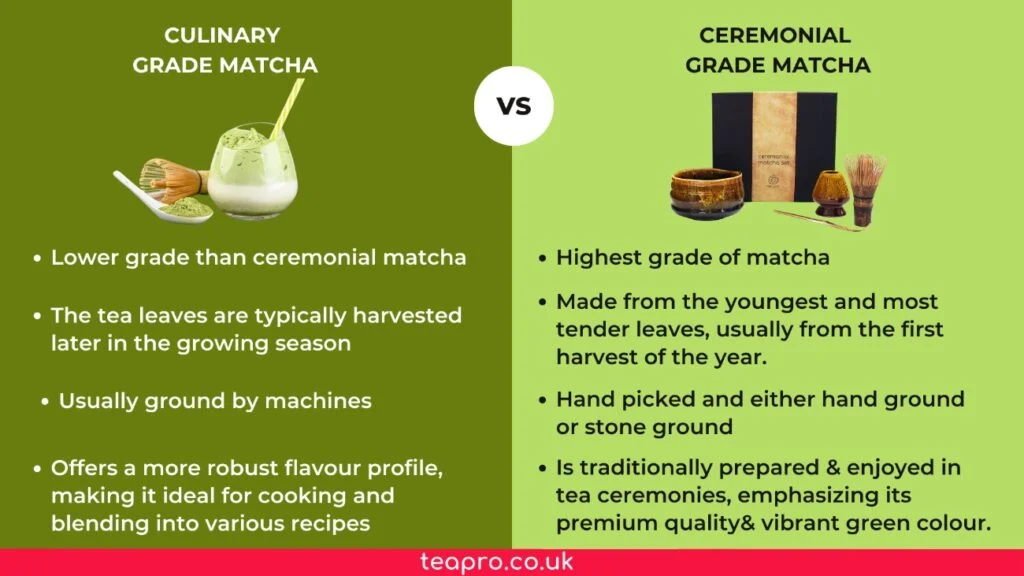
B2Bの抹茶バイヤーがまず知っておくべきこと: セレモニアルグレード」の規制上の定義は、世界のどこにもない。. JASでもUSDAでも日本の政府機関でもない。これは西洋のマーケティング用語で、サプライヤーが自由に使っている。.
私は、粒子径25μm以上、L-テアニン含有量0.8%以下の「儀式用」抹茶に$180/kgを請求する業者を見たことがある。参考までに、日本の石臼で挽かれた本物のセレモニーグレードの抹茶は、通常D50が5-10μmで、L-テアニンは2%以上である。.
グレード名の代わりに何を要求するか
| パラメータ | セレモニー・ベンチマーク | ラテ/プレミアム・ベンチマーク | 料理のベンチマーク | 試験方法 |
|---|---|---|---|---|
| 粒子径(D50) | 5-10 μm | 10-15 μm | 15-30 μm | レーザー回折 (ISO 13320) |
| L-テアニン | >2.0% | >0.6% | <0.6% | HPLC(アミノ酸分析装置) |
| カラーa*(CIELAB) | -14~18 | -10~14 | -4~-10 | 分光光度計 |
| クロロフィル | >0.3% | 0.1-0.3% | <0.1% | 紫外可視分光光度計 |
| 水分 | <5.0% | <5.5% | <6.0% | オーブン乾燥法(ISO 3720 参照) |
| EGCG | 13-19 mg/g | 8-13mg/g | 5-8 mg/g | HPLC(保持~4.5分) |
ISO/TR 21380:2022リファレンス は、抹茶の国際規格に最も近いものである。抹茶とは、日陰で栽培された茶葉を蒸して乾燥させ(碾茶として)、石臼で挽いて平均粒径10~30μmにしたもので、添加物は一切使用していないものと定義されている。しかし、これは技術報告書であり、拘束力のある規則ではない。 でなければならない。, どの執行機関もチェックしない。.
私の推薦だ: 上の表を使って独自の社内仕様書を作成し、サプライヤーには、“儀式用 ”と書かれたラベルではなく、自社の仕様に対応した分析証明書(COA)の提出を求める。”
抹茶の品質検査:重要な方法と基準
抹茶を商業規模で調達する場合、検査インフラを理解する必要がある。ここでは、主要なパラメータが有能な食品ラボで実際にどのように測定されているかを紹介する:
粒度分布 は、最も信頼できる唯一の品質指標です。レーザー回折法(ISO 13320)では、D10/D50/D90の分布が得られる。伝統的な花崗岩の石臼で挽かれた儀式用の抹茶は、通常D50が5~10μmである。粒子径が大きいと、ジェット粉砕(安価だが、クロロフィルを分解する熱を発生させる)か、粉砕時間が不十分であることを意味する。私が「セレモニアル」グレードを謳う3つの中国サプライヤーのCOAを確認したところ、3つともD50値は18~28μmで、客観的な指標からすると料理用グレードに近かった。.
測色(CIELABラボ)* は迅速かつ非破壊的である。a*値(緑軸-赤軸)は重要な数値で、セレモニー用の抹茶は-14以下、つまり緑が強いことを意味する。a*値が-8を超えると、遮光が不十分(20日未満)か、不適切な保管による酸化を示す。私はサプライヤー施設で携帯型の分光光度計を使い、この値をその場で確認したことがある。.
L-テアニンとアミノ酸プロファイリング には、専用のアミノ酸カラムを使用したHPLCが必要である。L-テアニンは抹茶のうま味と鎮静効果をもたらす化合物である。日陰で栽培された茶葉(タナの樹冠の下で20日以上)には乾燥重量で2~4%のL-テアニンが蓄積されるが、日向で栽培された茶葉や日陰で栽培された茶葉は0.3~0.6%に低下する。これは儀式用と料理用を分ける化学的指紋であり、合成L-テアニンを抹茶パウダーに添加してもアミノ酸プロファイルに現れないため、偽物を作るにはコストがかかる。.
EGCG(エピガロカテキンガレート) はC18カラムを用いたHPLCで測定され、保持時間は約4.5分。プレミアム・グレードは平均13~19mg/g。EGCG含有量は収穫時期と相関しており、ファーストフラッシュ(一番茶、5月収穫)が最もカテキン含有量が高い。.
抹茶の試験で参照される主なISO規格:
| スタンダード | 内容 |
|---|---|
| ISO/TR 21380:2022 | 抹茶特有:粒度、シェーディング、ミリング、純度 |
| ISO 3720:2011 | 紅茶の規格(酸不溶性灰分最大1%、水抽出物最小32%) - ISO 11287による緑茶の参照。 |
| ISO 1839 | お茶のサンプリング・プロトコル |
| ISO 1572 | 試料調製(粉砕) |
| ISO 14502-1 | 総ポリフェノール含有量 |
| ISO 10727:2002 | HPLCによるカフェイン含有量 |
| ISO 13320 | レーザー回折法による粒子径測定 |
有機認証の比較:JAS、USDA、EU - 完全マトリックス
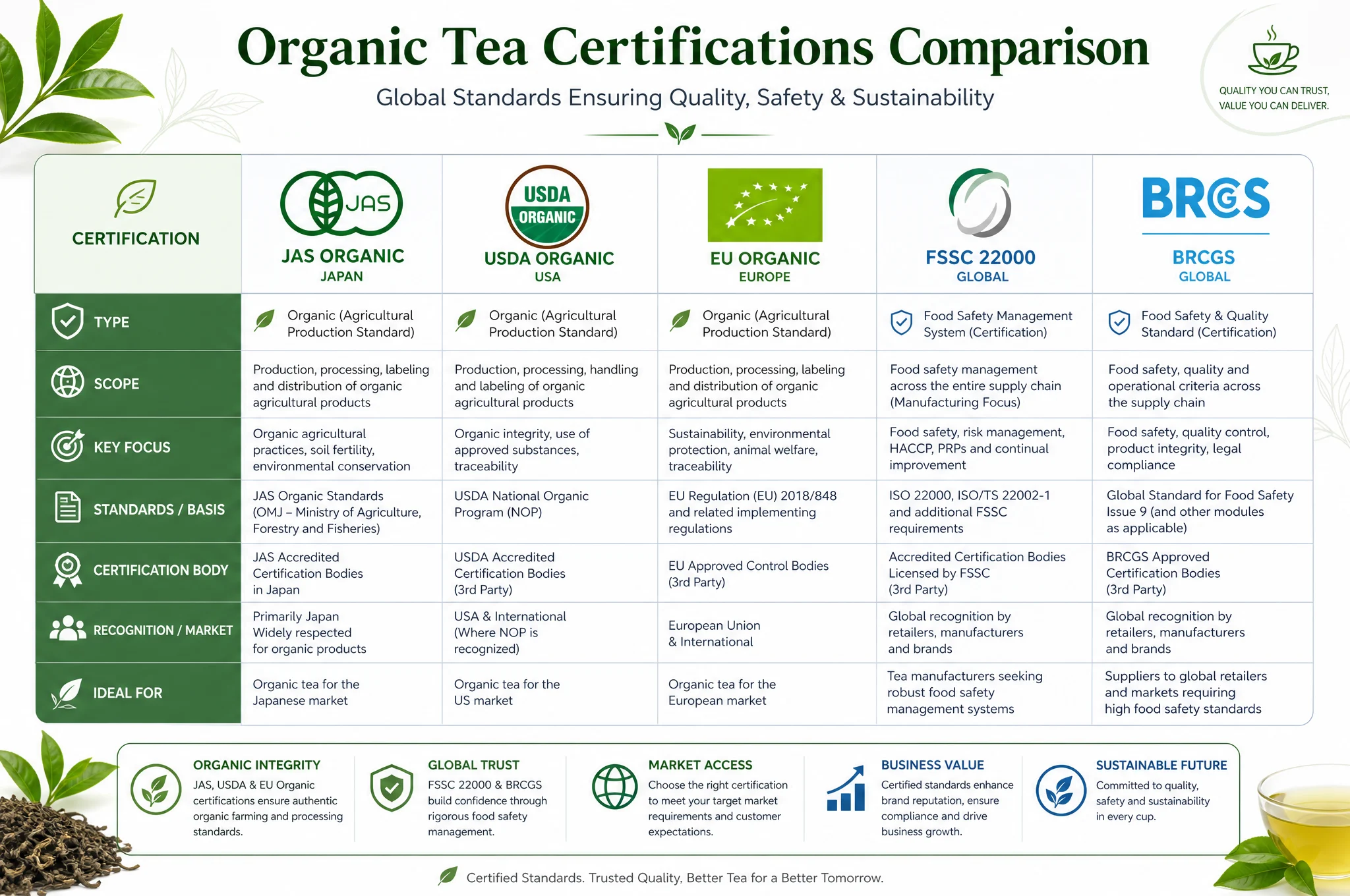
抹茶の有機認証は実に紛らわしいからだ。. 日本、米国、EUはそれぞれ異なる枠組みを持っており、同等性協定はさらに別のレイヤーを追加している。以下はその内訳である:
| 認証 | 運営組織 | 変換期間 | 監査頻度 | コスト(農場/年) | 出荷あたりのTC | 主な要件 |
|---|---|---|---|---|---|---|
| 有機JAS | 農林水産省 | 2~3年ケミカルフリー | 年間 | $2,500-8,000 | $50-150 | 95%+オーガニック含有量、認定生産管理者 |
| USDA NOPオーガニック | USDA/AMS | 3年間禁止物質なし | 年間 | 異なる($500~5,000ドル以上) | 証明書に含まれるもの | 75%のコストシェアが利用できる。 |
| EUオーガニック(EC 2018/848) | EC+認証機関(ECOCERTなど) | 2年コンバート | 年間 | 変動あり | 必須 | 日本の輸出業者向けにJAS認定を取得 |
| FSSC 22000 | FSSC財団 | 該当なし(食品安全、オーガニックではない) | 年間+サーベイランス | $5,000-15,000 | 該当なし | ISO 22000 +セクターPRP;GFSI認定 |
| BRCGS 食品安全 | BRCGS | 該当なし(食品安全) | 年間 | $8,000-20,000 | 該当なし | ハザード分析、前提条件プログラム |
重要な同等性の詳細:
- JAS ↔ EUの同等性 は、EU規則2018/848に基づき、2026年12月31日を再交渉期限として、引き続き有効である。日本の有機JAS抹茶は、別途EU認証を取得することなくEU域内で有機抹茶として販売することができるが、輸出業者は有機JAS認証とEUが認める取引証明書の両方を保有していなければならない。.
- JAS ↔ USDA同等 は2014年1月1日から有効である。JAS有機抹茶は、有効なJAS-NOP同等証明書を添付することで、USDA有機シールを貼ることができる。.
- USDAコストシェア FSAは、2026年晩春に2025年+2026年の統合発行を計画している。.
取引証明書(TC)のトラップ: 私が最もコンプライアンス上の失敗を目の当たりにしたのはこの点である。あるサプライヤーは、有効な有機JAS認定証をウェブサイトに表示していても 各貨物には独自のTCが必要 その特定のロットが有機プロトコルの下で生産されたものであることを確認するためである。あるサプライヤーの書類一式を確認したことがあるが、JAS認証は最新のものであったが、TCは14ヶ月前のものであった。.
オーガニック価格プレミアム: 慣行価格より20~40%高くなると予想される。これは、有機農法による収量減少(およそ30%)、手作業による雑草管理コスト、有機肥料費(慣行の$0.30-0.50/kgに対して$0.80-1.40/kg)を反映している。.
食品安全基準:FDA、EU、日本 - 地域別
抹茶に関する食品安全要件は、仕向け地によって大きく異なります。各規制当局が実際に要求していることは以下の通りです:
米国FSMAとFSVP
食品安全近代化法(FSMA)以来、FDAは輸入業者-外国サプライヤーだけではない-に食品安全遵守の確認を求めている。外国サプライヤー検証プログラム(FSVP)がその実施メカニズムであり、FDAはこれまで 執行を大幅に強化 2024年以降、茶葉や植物の輸入を対象とした警告状が増加している。.
FSVPが抹茶輸入業者に求めること:
- ハザード分析 - 抹茶に関する既知または合理的に予見可能なハザードを特定する:重金属(鉛、カドミウム、ヒ素)、残留農薬、微生物学的汚染(サルモネラ菌、大腸菌、全血球数)、放射線(日本産の場合)
- サプライヤー評価 - 海外サプライヤーの食品安全慣行、コンプライアンス履歴、生産国の食品安全環境を評価する。
- 検証活動 - サプライヤー施設の年次現地監査または遠隔監査、COA のレビュー、定期試験
- 有資格者 - FSVPのトレーニングを受けた者を指名し、プログラムを監督させる。
- 記録保持 - FSVPの全記録を最低2年間保存すること。
2026年の新製品: アメリカは 10% 第122条追加料金 2026年2月24日から輸入が開始される。 臨時150日勤務 (2026年7月24日まで)が既存の関税に上乗せして適用される。既存の茶の基本関税6.4%と合わせると、この期間の陸上関税総額はCIF価格で約16.4%となる。これにより、有効期間中の小口セレモニー輸入の経済性は大きく変化する。.
欧州連合規則2023/915とMRLs
EUは輸入食品に対して、世界で最も厳しい汚染物質規制を維持している。現在の規制は 規則(EU)2023/915, EC1881/2006に代わって2023年5月25日に発効する:
重金属: EU規則2023/915は、茶(カメリアシネンシス)に含まれる鉛とカドミウムについて特定の上限値を定めていない。調和された基準値が存在しない場合、ALARA(合理的に達成可能な限り低く)の原則が適用され、各加盟国は国内基準値を設定することができる。バイヤーは、抹茶の保守的な内部基準として、鉛は1.0mg/kg未満、カドミウムは0.1mg/kg未満を目標とすべきである。.
農薬の最大残留基準値(MRL):
- EUのデフォルト: 0.01 mg/kg 未承認物質(規則(EC)No.396/2005に基づく検出下限値)の場合
- 2026年3月7日発効: 規則 (EU) 2023/334 により、クロチアニジンとチアメトキサムの MRL は以下に引き下げられた。 茶およびコーヒー豆の場合、0.05 mg/kg (0.01mg/kgではない-茶は特定の経過的MRLを受けている)。その他の食品分類はすべて0.01mg/kgに下がる。.
日本食品衛生法
厚生労働省が管轄する日本の国内基準は、輸出要件よりも厳しいことが多い。日本は ポジティブリスト制度 農薬の場合、認可リストにない物質は0.01ppmの許容誤差がデフォルトとなる。国内消費用に生産された日本の抹茶は通常、輸出ロットよりもクリーンな検査が行われるため、サプライヤーの一貫性を評価するのであれば、知っておいて損はない。.
コーデックス参照: CAC/GL 92-2017は、食品と飼料中の汚染物質と毒素に関する一般基準を定めており、CCPR(コーデックス残留農薬委員会)データベースの下、茶の特定のMRLを定めている。.
重金属、農薬、微生物学的限界値:数字
曖昧な主張が役に立たないセクションです。ここでは、B2B調達の意思決定に必要な、具体的な限度額と典型的な試験結果について説明します。.
重金属-代表的なものと規制値
| メタル | EU規制値 (mg/kg) | 米国FDAガイダンス | 典型的な日本の抹茶(2026年ラボデータ) | リスクレベル |
|---|---|---|---|---|
| リード | 調和限界なし(ALARAが適用される) | 特に制限なし(飴は0.5ppm) | 0.03-0.12 mg/kg | 低い |
| カドミウム | 調和限界なし(ALARAが適用される) | 特に制限なし | 0.01-0.035 mg/kg | 低い |
| ヒ素 | 調和限度なし | 特に制限なし | <0.01mg/kg(合計) | 低い |
なぜ抹茶は淹れたお茶よりも検査が必要なのか: 淹れた緑茶を飲むと、捨てるティーバッグから水溶性成分を摂取することになる。抹茶の場合、水溶性成分を摂取していることになる。 地葉全体 - 重金属、残留農薬、葉のマトリックスに結合した微生物汚染物質を含む。このため、全葉検査は必須であり、オプションではない。.
ICP-MS (誘導結合プラズマ質量分析計) は抹茶中の重金属検査のゴールドスタンダード法です。鉛、カドミウム、ヒ素、水銀、アルミニウムを同時に10億分の1検出することができる。AAS(原子吸光光度法)のような古い方法では、微量レベルの汚染を見逃してしまう可能性があります。.
市場別残留農薬規制値
| 農薬 | 日本(ポジティブリスト) | EU(規則396/2005) | 米国環境保護庁許容値 |
|---|---|---|---|
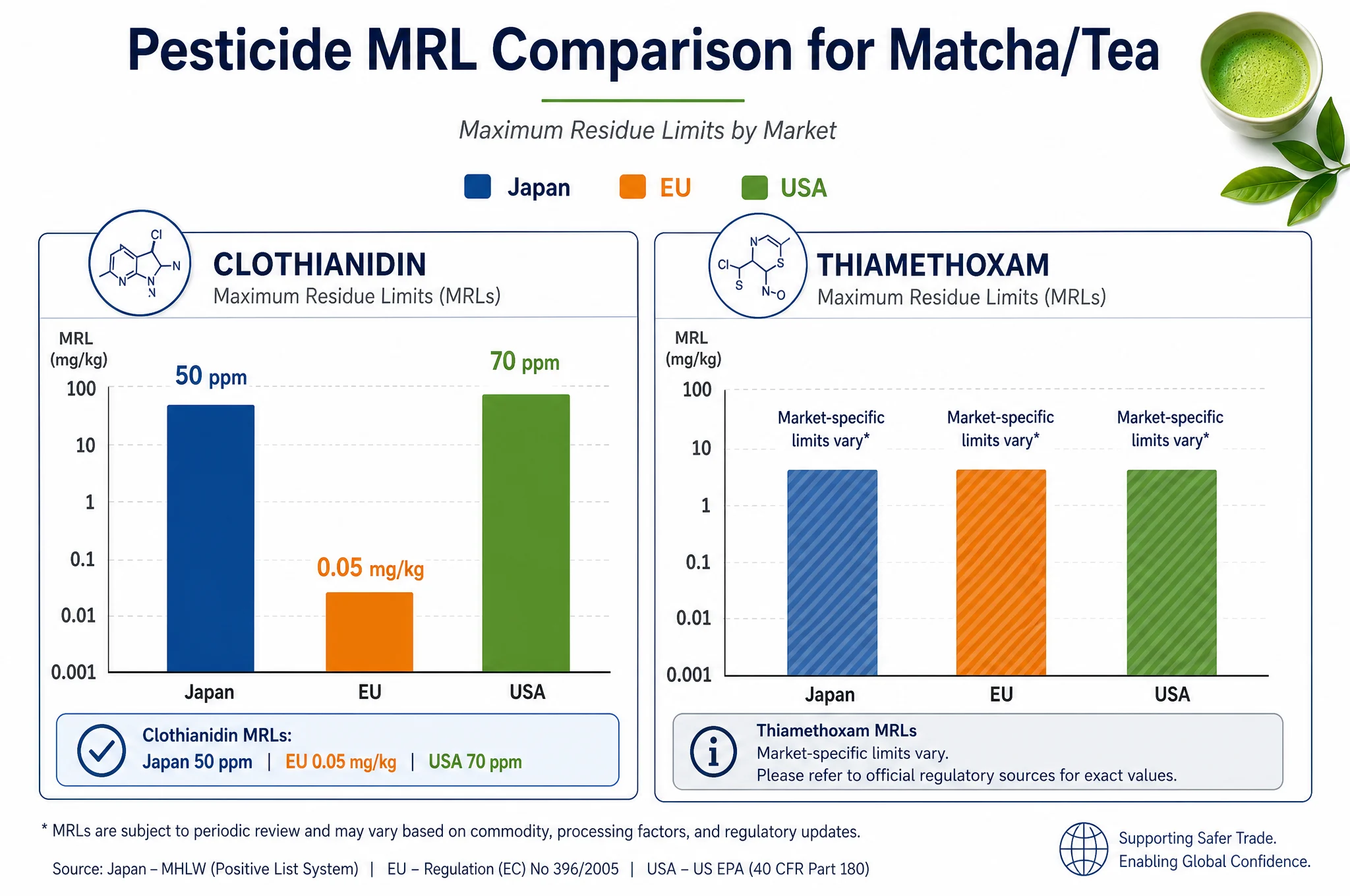
| クロチアニジン | 50ppm(お茶) | 0.05 mg/kg (2026年3月、2023/334規則) | 70 ppm(茶、乾燥) |
| チアメトキサム | 0.01 ppm(デフォルト) | 0.05 mg/kg (2026年3月、2023/334規則) | 20 ppm(茶、乾燥) |
| イミダクロプリド | 50ppm(お茶) | 0.01 mg/kg (既定LOQ) | 0.50 ppm(乾燥茶) |
| グリホサート | 25ppm(お茶) | 0.01 mg/kg (既定LOQ) | 1.0ppm(お茶) |
EUと米国と日本のMRLギャップは現実であり、それは重要である。. 日本の基準には簡単に合格する抹茶ロットでも、EUのネオニコチノイド検査では不合格になる可能性がある。EUに輸出する場合は、日本の基準ではなくEUのMRLに対する出荷前検査が不可欠である。日本は茶葉に50ppmのクロチアニジンを許容しているが、EUの茶葉MRLは0.05mg/kg(1,000倍低い)である。サプライヤーが日本の基準値に照らして検査し、欧州に出荷したところ、通関でロットが拒否されたというケースを見たことがある。.
微生物学的要件
| パラメータ | 許容範囲 | 懸念の閾値 | 試験方法 |
|---|---|---|---|
| 総菌数 | <3,000 CFU/g | >10,000 CFU/g | ISO 4833 |
| 大腸菌群 | <100 CFU/g | >100 CFU/g | ISO 4832 |
| 大腸菌 | 25gには含まれていません | 検出があれば | ISO 16649-2 |
| サルモネラ菌 | 25gには含まれていません | 検出があれば | ISO 6579-1 |
| 酵母・カビ | <100 CFU/g | >500 CFU/g | ISO 21527 |
抹茶は低水分粉末(水分活性<5%)であるため、保管中の微生物増殖の可能性は低い。汚染は通常、加工や包装の過程で発生するため、GMP認証を受けた施設が重要となる。.
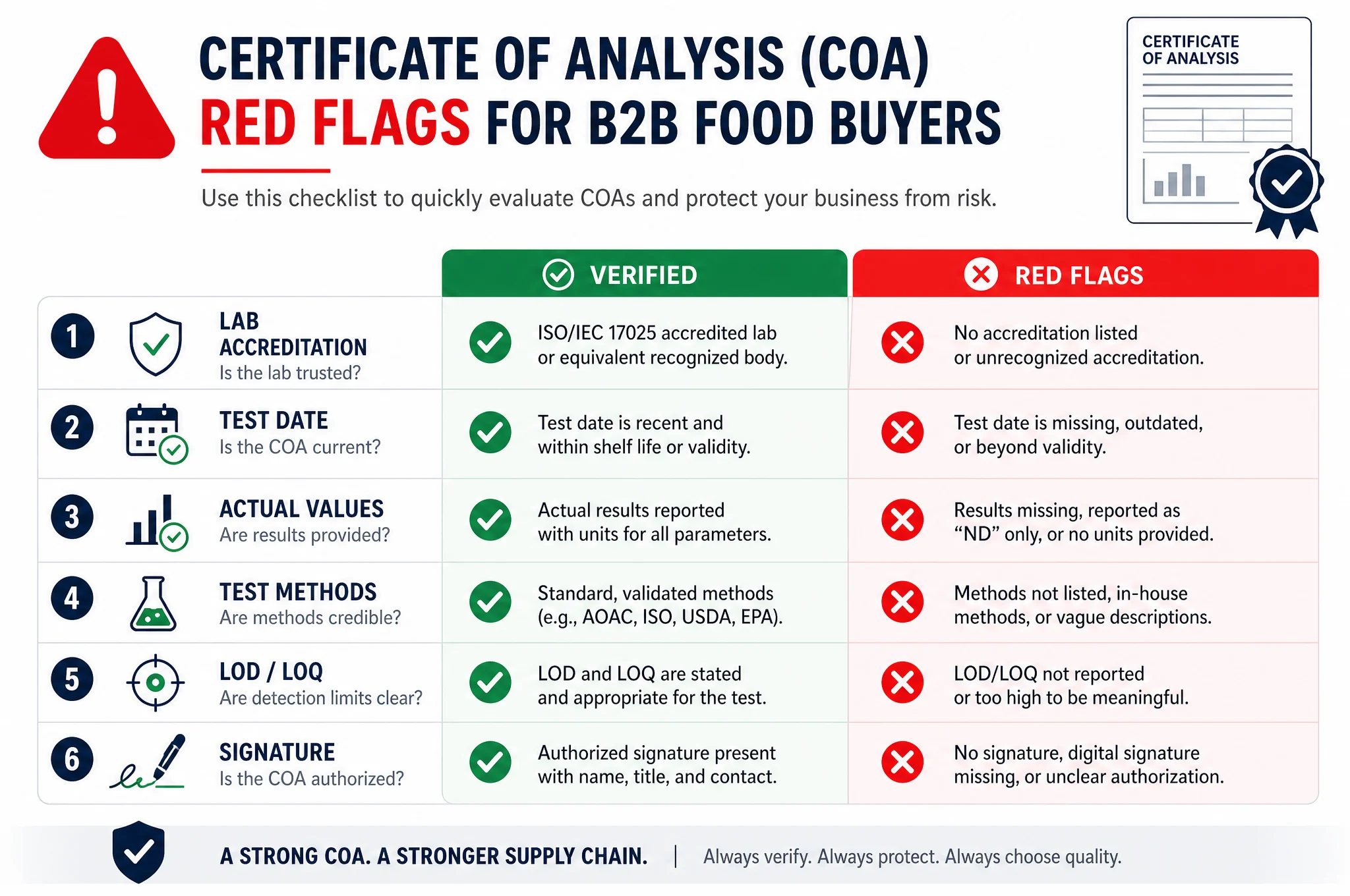
抹茶のCOAの見方――そして危険信号の見分け方
分析証明書(COA)は、B2Bの抹茶調達において最も重要な書類です。しかし、すべてのCOAが同等の価値を持つわけではありません。私が確認している点と、バイヤーが躓きがちな点について、以下に説明します。
正当なCOAには以下の事項が含まれていなければならない:
- 研究所名および認定状況 — ISO/IEC 17025の認定は必須です。Eurofins、SGS、Bureau Veritas、Intertekなどの検査機関は信頼性が高いです。サプライヤーの社内検査室が発行した分析証明書(COA)は、第三者による検証ができません。.
- 試験日およびロット番号/バッチ番号 — 受け取る荷物と一致している必要があります
- 単位付きの具体的な試験結果 — 「合格」や「基準内」といった表現ではなく、具体的な数値(例:「鉛:0.04 mg/kg」)
- 参照された試験方法 — 金属の分析にはICP-MS、農薬・アミノ酸の分析にはHPLC、微生物の分析にはISO法
- 検出限界(LOD)および定量限界(LOQ) — 検査報告書にLOD(検出限界)が明記されずに「ND」(検出されず)と記載されている場合、その結果には意味がない
- 署名および捺印 — 認定検査機関の担当者より
私が遭遇した危険信号:
- 発行から6ヶ月以上経過したCOA 出荷されるロットについては、その粉末が別の製造ロットのものである可能性があります
- 一般的な「規格に準拠」“ 実際のテスト値の代わりに — これはテンプレートであり、テスト結果ではありません
- 重金属に関するセクションが完全に欠落している — ICP-MS分析に投資していないサプライヤーのCOAによく見られる
- 3~5種類の化合物しか記載されていない農薬リスト — 適切な検査機関であれば、EUの規制に準拠するため、100種類以上の農薬について検査を行うべきである
- 6%を超える湿度 — は、保存状態が悪い、または製品が古くなっていることを示しています。抹茶は、水分含有量が5%を超えると急速に劣化します。
- 粒子径のデータなし — 信頼できる式典用品のサプライヤーは、これが品質の証となるため、必ずこれを盛り込んでいます
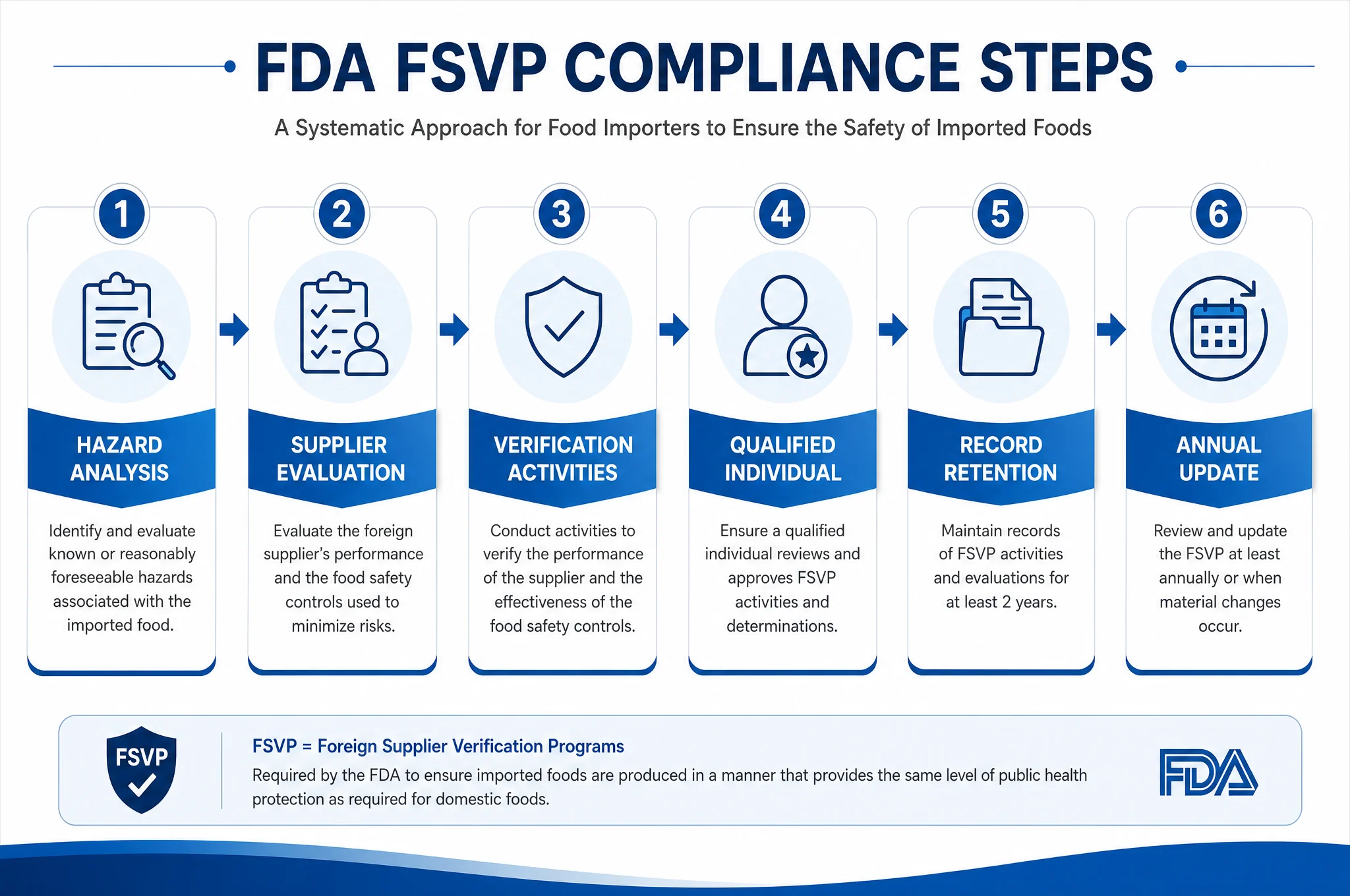
米国輸入業者向けのFSVPコンプライアンス:ステップバイステップの手順
抹茶を米国に輸入する場合、FSVPへの準拠は必須であり、その要件は多くの輸入業者が想像しているよりも詳細です。私が推奨するワークフローは以下の通りです:
ステップ1:ハザード分析の実施 抹茶に関して、既知または合理的に予見可能なすべての危険要因(重金属、農薬残留、微生物汚染、放射能(日本産の場合はセシウム134/137)、物理的汚染物質)を文書化すること。.
ステップ2:海外のサプライヤーを評価する サプライヤーの食品安全認証(FSSC 22000、BRCGS、HACCP)、コンプライアンスの実績(FDAからの警告書、輸入警告)、および日本における食品安全環境(概して極めて良好であり、日本は最も安全な茶の産地の一つに数えられる)を確認してください。.
ステップ3:確認活動を選択する
- 実地監査 (推奨):毎年または2年ごとに施設を訪問し、GMP、HACCP計画、害虫駆除、衛生管理、検査能力を確認する
- COAの審査: すべての出荷分についてCOAを入手・確認し、検査機関の認定状況および検査項目の網羅性を確認する
- 定期的な検査: クロス検証のため、年に1~2回、ご自身の検体を米国にある独立系検査機関に送付してください
ステップ4:適格な担当者を指定する この担当者は、FSVP研修を修了している必要があり(FDAが認定するコースはAFDOやその他の提供機関を通じて受講可能です)、FSVP記録に氏名が記載されている必要があります。.
ステップ5:記録を保管する すべてのハザード分析、サプライヤー評価、監査報告書、分析証明書(COA)、および是正措置の記録は、最低2年間保存してください。FDAは、査察の際にいつでもこれらの記録の提出を求めることがあります。.
ステップ6:毎年更新する 少なくとも年1回、危険要因およびサプライヤーのパフォーマンスを再評価すること。サプライヤーのプロセスにおける変更、新たな試験結果、または規制の変更(2026年のセクション122の義務など)については、すべて文書化すること。.
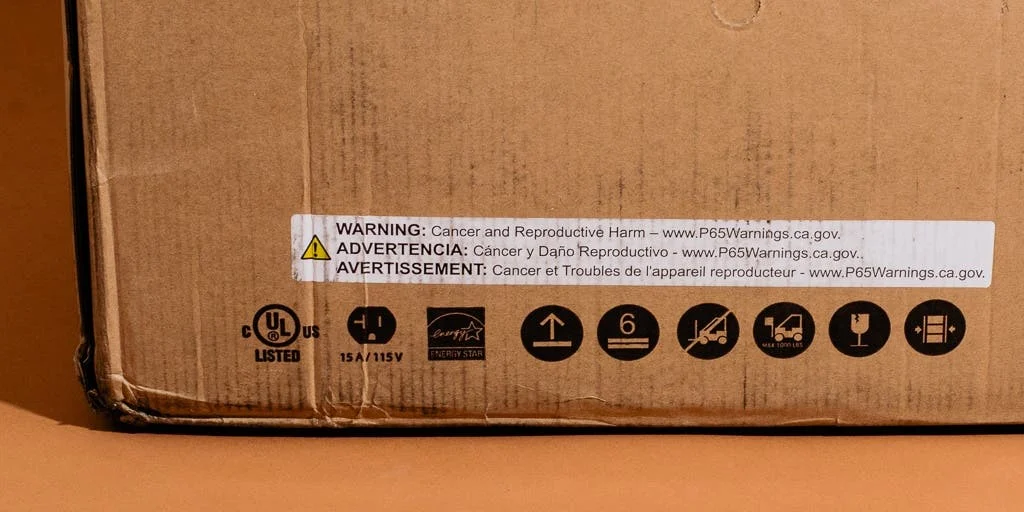
プロポジション65、放射線検査、およびその他のコンプライアンス上の落とし穴
カリフォルニア州プロポジション65
これは、他のどのコンプライアンス上の問題よりも多くの抹茶ブランドが該当することになります。. カリフォルニア州の「プロポジション65」では、発がん性や生殖毒性があるとされる化学物質を含む製品に警告ラベルの表示が義務付けられており、鉛もその対象リストに含まれています。.
プロポジション65における鉛のセーフハーバーレベルは、0.5 μg/日(最大許容摂取量、MADL)です。 抹茶の一般的な1回分の量は1~2グラムです。抹茶に0.1 mg/kg(100 ppb)の鉛が含まれている場合、2グラムの摂取で0.2 μgの鉛が摂取されますが、これはセーフハーバーの範囲内に十分収まっています。 しかし、鉛の含有量が0.3 mg/kgの場合、2グラムの1回分では0.6 μgが摂取されることになり、これは閾値を上回るため、プロポジション65に基づく警告が必要となります。.
プロポジション65への準拠に向けた私の試験戦略: サプライヤーに対し、鉛の含有量を0.1 mg/kg以下に抑えるよう検査を義務付ける。この濃度であれば、3グラムという多めの摂取量であっても、1日あたり0.5 μgという安全基準の範囲内に収まる。 現在、いくつかの有名な抹茶ブランドには「プロポジション65」の警告表示が付けられています。これは、それらの製品の鉛含有量が0.25 mg/kgを超えていることを示しています。.
福島事故後の放射線検査
日本は茶の輸出に際し、特にセシウム134およびセシウム137の検査を含む放射能検査を義務付けています。日本政府が定める一般食品の基準値は100 Bq/kgです。この検査は2011年から定期的に実施されており、宇治や西尾の主要生産者からの検査結果では、一貫して検出限界を大幅に下回る数値が示されています。.
確認事項: サプライヤーに最新の放射能検査証明書を請求してください。その証明書は、日本政府が認定した検査機関が発行したもので、Cs-134とCs-137の両方が記載され、測定値がBq/kg単位で示されている必要があります。 もしサプライヤーが「15年も経っているから放射能検査は行っていない」と言うなら、それは安心材料ではなく、警戒すべきサインです。検査要件が存在するのには理由があり、一部のバイヤー(特にEUや米国)はこれを具体的に要求しています。.
UAE/サウジアラビア — アレルゲン表示の新たな取り組み
2026年12月31日より、UAEおよびサウジアラビアに輸入される新製品には、アレルゲンの表示が義務付けられます。抹茶自体はアレルゲンではありませんが、他の成分(粉ミルク、砂糖、香料など)とブレンドされている場合は、アレルゲン表示がGCC標準化機構の要件に準拠している必要があります。.
地域ごとの生産、価格設定、およびサプライチェーンの実情
抹茶の産地を知ることは、品質、価格、そして供給の安定性にとって重要です。2025年から2026年時点における日本の抹茶生産の現状は以下の通りです。
主要な生産地域
| 地域 | 特徴 | 価格ポジション | 2025年の状況 | 最適 |
|---|---|---|---|---|
| 宇治(京都) | 由緒ある歴史、伝統的な石臼 | プレミアム(平均より+30-60%上) | 2025年までに気候変動による被害により供給が制限される | フォーマル、ラグジュアリーブランド |
| 西尾(愛知県) | 工業規模、安定した品質 | 市場平均 | 安定した供給 | B2Bの取扱量、ラテ/料理 |
| 鹿児島 | 販売台数トップ、機械化 | 平均以下(-20-30%) | #1の初摘み生産量で静岡を上回った(8,440トン対8,120トン) | 取引量の多いB2Bの、価格に敏感な購入者 |
| 静岡 | 伝統的な煎茶の産地 | 平均 | 煎茶から焙茶への生産への転換 | 過渡期の供給 |
価格ベンチマーク(FOB日本、2026年):
| グレード | 価格帯(米ドル/kg) | 偽造の「レッドフラッグ」 |
|---|---|---|
| 伝統/厳選 | $300-600+ | $250未満 |
| 標準的な儀式 | $100-250 | $120未満 |
| 入場の儀式 | $60-100 | $50未満 |
| ラテ/プレミアム | $40-70 | $35未満 |
| 料理 | $25-45 | $20未満 |
世界市場の概況: 抹茶市場は2025年に$4.55~4.95億と評価され、2032~2034年までに$7.5~9.1億に達すると予測されており、6~10%のCAGRで成長すると見込まれています。 アジア太平洋地域は、世界市場シェアの50~60%+を占めている。 2023年、日本の茶の輸出額は過去最高の29.2億円に達し、2024年から2025年にかけての実際の輸出額は、世界的な需要の急増に伴い、当初の予測を大幅に上回り、約36~72億円に達した。 2010年以降、碾茶の遮光栽培面積は大幅に拡大しており、年間生産量は7~8%の伸びを示している。.
B2B向け抹茶コンプライアンス・チェックリスト
サプライヤーとの契約書に署名する前に、以下の事項を確認してください:
必要書類(すべての出荷に必須):
- [ ] ISO 17025認定試験所発行の分析証明書(COA)
- [ ] 当該ロットに関する有機取引証明書(TC)
- [ ] GMP/HACCP/FSSC 22000 認証書(当年度)
- [ ] ロットと農場/加工業者を結びつけるトレーサビリティ記録
- [ ] 放射線試験証明書(日本発行)
- [ ] 製品安全データシート(MSDS)/技術データシート
品質確認(入荷検査):
- [ ] 粒子径分布(レーザー回折法)
- [ ] CIELAB色測定(式典用はa*が-14未満)
- [ ] L-テアニン含有量(HPLC)
- [ ] 重金属分析(ICP-MS:鉛、カドミウム、ヒ素)
- [ ] 農薬残留パネル(EU市場向け:100種類以上の化合物)
- [ ] 微生物検査項目(総菌数、大腸菌、サルモネラ菌、酵母・カビ)
規制遵守(市場別):
- [ ] 米国:FSVP関連書類の整備完了;第122条に基づく義務額の算出
- [ ] EU:2026年の閾値に基づき検証された最大残留基準値(クロチアニジン/チアメトキサム:茶において0.05 mg/kg、規則2023/334)
- [ ] カリフォルニア州:プロポジション65のセーフハーバー基準として、鉛含有量が0.1 mg/kg未満であること
- [ ] 日本:ポジティブリスト制度への準拠が確認された
- [ ] 中東:アレルゲン表示の準備完了(2026年12月31日までに)
よくある質問
抹茶を国際貿易で扱うには、どのような認証が必要ですか?
抹茶の輸出には、品質認証(有機表示の場合はJASオーガニック、USDAオーガニック、またはEUオーガニック)と食品安全認証(FSSC 22000、BRCGS、またはHACCP)の両方が必要となります。 各出荷には、ISO 17025認定試験所が発行した分析証明書および有機取引証明書(TC)を添付する必要があります。また、米国の輸入業者は、FSVP準拠に関する文書を整備しておく必要があります。.
「儀式用」の抹茶は、規定された基準となっているのでしょうか?
第 「セレモニアルグレード」とは、日本、米国、EUにおいて規制上の定義がないマーケティング用語で、最も近い参照先はISO/TR 21380:2022 で、抹茶の粒径や製造方法を定義しているが、グレード分類は定めていないため、購入者は客観的なパラメーター、すなわち粒径 (儀式用の場合は5-10µmのD50) 、L-テアニン含有量 (>2%) 、CIELAB色値 (-14 以下のa*) によって品質を検証する必要があります。.
抹茶に含まれる重金属はどのように検査するのですか?
標準的な分析法はICP-MS(誘導結合プラズマ質量分析法)であり、これにより鉛、カドミウム、ヒ素、水銀、アルミニウムを10億分の1レベルで検出することができる。 日本の抹茶では、通常、鉛が0.03~0.12 mg/kg、カドミウムが0.01~0.035 mg/kg検出されます。抹茶は、抽出液だけでなく、粉砕された葉全体を摂取することになるため、食品安全基準への準拠のため、重金属検査が義務付けられています。.
抹茶の輸入業者に対するFSVPの要件とは何ですか?
FSMAに基づく海外供給業者検証プログラム(FSVP)では、米国の輸入業者に対し、以下のことを義務付けています。(1)抹茶特有のリスクに関するハザード分析の実施、(2)海外供給業者の食品安全対策の評価、(3)年次検証活動(監査、COAの審査、または検査)の実施、 (4) FSVPに関する研修を受けた「有資格者」を指定すること、および (5) 記録を2年間保存すること。FDAは2024年以降、FSVPの執行を強化している。.
2026年の抹茶に関するEUの農薬残留基準はどのようになっていますか?
EUでは、規則(EC)第396/2005号に基づき、未承認物質に対して0.01 mg/kgというデフォルトの最大残留基準値(MRL)を適用している。 2026年3月7日現在、特に茶およびコーヒー豆については、クロチアニジンおよびチアメトキサムのMRLが0.05 mg/kgに引き下げられた(規則(EU)2023/334)一方、その他のすべての食品カテゴリーについては0.01 mg/kgに引き下げられた。 EU向け抹茶については、日本の国内基準ではなく、EUのMRLに基づく出荷前検査が不可欠である。.
なぜ一部の抹茶ブランドには、カリフォルニア州プロポジション65に基づく警告が表示されているのでしょうか?
1日当たりの摂取量あたり0.5 μgを超える鉛を含む抹茶製品には、プロポジション65に基づく警告表示が記載されます。 一般的な1回分の摂取量が1~2グラムであることを考慮すると、これは抹茶の鉛含有量が約0.25 mg/kgを超えていることを意味します。購入者は、サプライヤーに対し、鉛含有量を0.1 mg/kg以下に抑えるよう検査を義務付けることで、プロップ65の警告表示を回避できます。これにより、3グラムという多めの1回分の摂取量であっても、安全基準値内に収めることが可能になります。.
概要
B2B向けの抹茶の調達においては、品質確保と同様にコンプライアンスの遵守も重要な課題となります。 基準は存在します――抹茶の原産地証明に関するISO/TR 21380:2022、試験のためのISO 17025認定試験所、有機表示に関するJAS/USDA/EU、米国への輸入に関するFSVP――しかし、これらの基準を貴社の代わりに強制する者はいません。 「茶道用」と謳う場合は、粒子径やL-テアニンのデータによる検証が必要です。有機認証ロゴを掲げる場合は、有効な取引証明書(Transaction Certificate)が必要です。そして、すべての出荷には、信頼できる検査機関発行の分析証明書(COA)が必要です。.
私の経験上、トラブルを回避できているバイヤーは、独自の仕様書を作成し、特定の試験方法(金属についてはICP-MS、アミノ酸についてはHPLC)を要求し、少なくとも2年に1回は自らサプライヤーを監査している人たちです。 規制環境はますます厳しくなる一方です。2026年のEUの最大残留基準(MRL)の変更(茶中のネオニコチノイド類について0.05 mg/kg)、米国セクション122に基づく一時的な関税、そしてFDAによる取り締まりの強化は、すべて同じ方向を指し示しています。 もし現在、コンプライアンスに関する文書が万全であれば、すでに市場の大部分をリードしていると言えます。.